As an Amazon Associate, we earn from qualifying purchases. Some links on this site are affiliate links at no extra cost to you. Our recommendations are based on thorough research and editorial judgment.


5 Best Guitar Recording Interfaces for Perfect Studio Sound

If you want perfect studio sound for guitar recordings, consider these five top audio interfaces: the M-AUDIO M-Track Solo for its simplicity, the highly portable Synido A20, the versatile PreSonus AudioBox 96 with its software bundle, the lightweight Synido Solo USB C, and the high-resolution MAONO PS22 Lite Black. Each brings unique features and sound quality that can elevate your recordings. Discover what fits your needs best and enhance your creative journey!
Key Takeaways
- The Synido Portable Guitar Audio Interface (A20) offers studio-grade 24-bit/96 kHz audio quality, ideal for professional recordings.
- The PreSonus AudioBox 96 features two channels and Class-A mic preamps, perfect for detailed sound capture and versatility.
- MAONO USB Audio Interface (PS22 Lite Black) supports high-quality recordings at 24-bit/192 kHz, making it suitable for musicians and podcasters alike.
- M-AUDIO M-Track Solo provides easy setup with plug-and-play functionality, zero latency monitoring, and a transparent crystal preamp for quality sound.
- The Synido Solo USB C Audio Interface is lightweight and portable, with intuitive controls and multiple monitoring modes for enhanced user experience.
| M-AUDIO M-Track Solo USB Audio Interface | 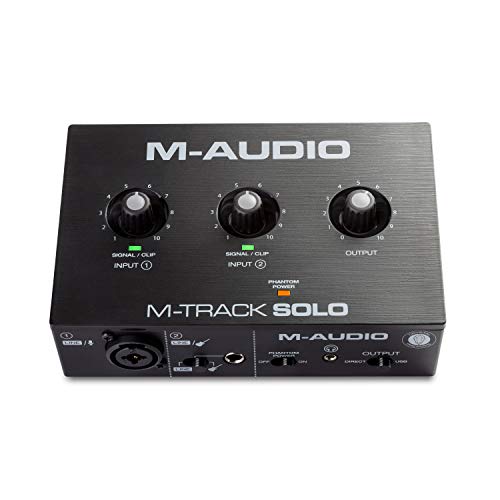 | Best for Beginners | Audio Resolution: 48 kHz | Phantom Power: Yes (48V) | Compatibility: Mac and PC | VIEW LATEST PRICE | Read Our Analysis |
| Synido Portable Guitar Audio Interface (A20) | 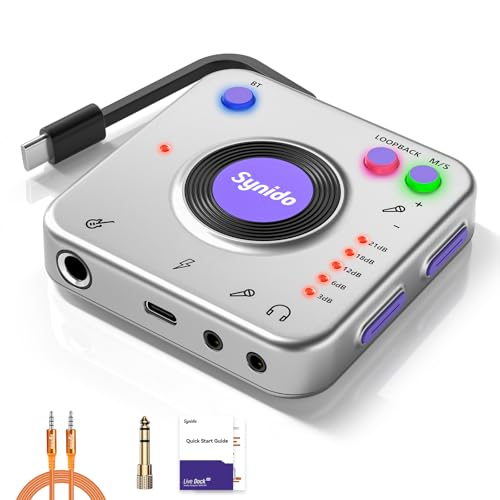 | Portable Convenience | Audio Resolution: 24-bit/96 kHz | Phantom Power: Yes (Adaptive gain control) | Compatibility: iPad, iPhone, Android, Mac, PC, Laptop | VIEW LATEST PRICE | Read Our Analysis |
| PreSonus AudioBox 96 USB Audio Interface with Software |  | Best Software Bundle | Audio Resolution: 24-bit/96 kHz | Phantom Power: Yes (48V) | Compatibility: PC, Macs, various DAWs | VIEW LATEST PRICE | Read Our Analysis |
| Synido Solo USB C Audio Interface for Recording | 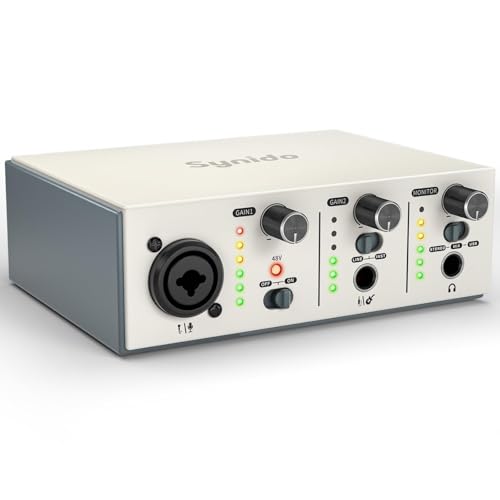 | Versatile Monitoring | Audio Resolution: 48 kHz | Phantom Power: Yes (48V) | Compatibility: PCs, laptops, Macs, iPhones, iPads, Android devices | VIEW LATEST PRICE | Read Our Analysis |
| MAONO USB Audio Interface for PC (PS22 Lite Black) |  | High-Quality Sound | Audio Resolution: 24-bit/192 kHz | Phantom Power: Yes (48V) | Compatibility: Mac, Windows, iPads, major DAWs | VIEW LATEST PRICE | Read Our Analysis |
You may be interested


More Details on Our Top Picks
M-AUDIO M-Track Solo USB Audio Interface
If you’re an aspiring musician or podcaster looking for a user-friendly interface, the M-AUDIO M-Track Solo USB Audio Interface is the perfect choice for you. This compact device offers 48 kHz audio resolution, ensuring crisp sound quality for your recordings. It features one combo XLR/Line input, a dedicated 1/4″ instrument input, and several outputs including RCA and a convenient headphone jack.
With zero latency monitoring and a transparent Crystal Preamp, your mic performance shines through. Plus, it’s compatible with various devices and comes with MPC Beats software, so you’re ready to create right away!
- Audio Resolution:48 kHz
- Phantom Power:Yes (48V)
- Compatibility:Mac and PC
- Input Options:1 combo XLR/Line, 1 instrument input
- Monitoring Capability:USB/Direct switch for zero latency
- Software Bundle:MPC Beats software, tools from Akai
- Additional Feature:USB/Direct switch for monitoring
- Additional Feature:Compact and portable design
- Additional Feature:Includes MPC Beats software
Synido Portable Guitar Audio Interface (A20)
For musicians enthusiastic to stream their performances with high-quality audio, the Synido Portable Guitar Audio Interface (A20) stands out as an exceptional choice. It offers studio-grade 24-bit/96kHz audio quality, ensuring your sound is crisp and clear. The dual-core chip enhances performance, while the built-in gain control optimizes levels for various instruments like electric guitars and MIDI keyboards.
Its compact design and built-in wire storage make it remarkably portable. Plus, with a one-touch wireless switch, connecting to your smartphone is easy. Ideal for live streaming, the A20 allows simultaneous charging, so you can perform without interruptions.
- Audio Resolution:24-bit/96 kHz
- Phantom Power:Yes (Adaptive gain control)
- Compatibility:iPad, iPhone, Android, Mac, PC, Laptop
- Input Options:Gain control for various instruments
- Monitoring Capability:Loopback and monitor functions
- Software Bundle:None specified
- Additional Feature:Unique instrument gain control
- Additional Feature:One-touch wireless switch
- Additional Feature:Pocket-sized integrated design
PreSonus AudioBox 96 USB Audio Interface with Software
The PreSonus AudioBox 96 USB Audio Interface is an ideal choice for aspiring musicians and home producers looking to step up their recording game. It features 2 channels and studio-grade converters that support recording and playback at up to 24-bit/96 kHz. With two Class-A mic preamps, you can capture the finest details of your guitar and other instruments. The bundled software includes over $1000 worth of resources, like Studio One Artist and Ableton Live Lite, ensuring you’re ready to create immediately. Plus, its USB bus-power makes it portable, and the zero-latency monitoring lets you track with confidence.
- Audio Resolution:24-bit/96 kHz
- Phantom Power:Yes (48V)
- Compatibility:PC, Macs, various DAWs
- Input Options:2 XLR/line inputs, MIDI I/O
- Monitoring Capability:Mixer control for zero latency monitoring
- Software Bundle:Studio One Artist, Ableton Live Lite, Studio Magic Plug-In suite
- Additional Feature:MIDI I/O support
- Additional Feature:Global +48V phantom power
- Additional Feature:Includes Studio Magic Plug-In
Synido Solo USB C Audio Interface for Recording
Whether you’re a budding musician or an experienced audio engineer, the Synido Solo USB C Audio Interface is designed with you in mind. This compact interface delivers exceptional sound quality, thanks to its high-quality audio chip that minimizes latency. You’ll enjoy 24-bit depth and 48kHz sampling for precise sound restoration.
With three monitoring modes—stereo, mix, and USB—you can seamlessly switch between recording, live mixing, and post-editing. Weighing only 300g, it’s easy to transport, and the intuitive controls make it user-friendly. Compatible with various devices and software, the Synido Solo is an excellent choice for anyone looking to create amazing audio.
- Audio Resolution:48 kHz
- Phantom Power:Yes (48V)
- Compatibility:PCs, laptops, Macs, iPhones, iPads, Android devices
- Input Options:XLR and 6.35mm inputs
- Monitoring Capability:Three monitoring modes
- Software Bundle:None specified
- Additional Feature:Three monitoring modes
- Additional Feature:Intuitive design with indicators
- Additional Feature:Plug-and-play connectivity
MAONO USB Audio Interface for PC (PS22 Lite Black)
When it comes to versatile sound capture, the MAONO USB Audio Interface (PS22 Lite Black) stands out as a fantastic option for recording enthusiasts, including musicians and podcasters. With a stunning 24-bit/192kHz resolution and a dynamic range of 106dB, it guarantees high-quality recordings every time.
Compatible with Mac, Windows, and even iPads, you can plug it into major DAWs like Pro Tools and Ableton Live easily. It features an XLR input for microphones and delivers 48V phantom power, making it perfect for vocals or instruments. Whether you’re starting your podcast or recording guitar, this interface has you covered!
- Audio Resolution:24-bit/192 kHz
- Phantom Power:Yes (48V)
- Compatibility:Mac, Windows, iPads, major DAWs
- Input Options:XLR input for microphones
- Monitoring Capability:Direct monitoring switch
- Software Bundle:ProStudio Routing Software and compatibility with several DAWs
- Additional Feature:24-bit/192kHz resolution
- Additional Feature:ProStudio Routing Software
- Additional Feature:Dynamic light ring indicator
Factors to Consider When Choosing a Guitar Recording Interface

When you’re choosing a guitar recording interface, there are several key factors to keep in mind. You’ll want to evaluate audio resolution quality, input and output options, and how well it works with monitoring. Don’t forget about portability and design, as well as software compatibility, because these elements can really impact your recording experience.
Audio Resolution Quality
How can you guarantee the best possible sound when recording your guitar? Audio resolution quality is key! Look for an interface that offers at least 24-bit depth and a sampling rate of 48 kHz. This setup captures more detail, giving you a dynamic range with less noise. If you want crystal-clear recordings, consider interfaces that support higher rates, like 96 kHz, to pick up those intricate nuances in your music. Higher audio quality means more flexibility when you’re editing and mixing later on. You’ll have more headroom for adjustments without losing sound integrity. So, when choosing a guitar recording interface, prioritize audio resolution—your ears will thank you!
Input and Output Options
Choosing the right guitar recording interface means paying attention to the input and output options available. Start by considering the number and type of inputs, like combo XLR/Line inputs, to guarantee compatibility with your microphones and instruments. For outputs, look for balanced options to minimize noise during recording, especially over long cable runs.
Don’t forget about phantom power; if you plan to use condenser microphones, you need that +48V supply. Check for dedicated headphone outputs, too, since they allow for real-time monitoring without any latency issues. Finally, assess additional connectivity options like MIDI I/O or USB-C ports, which can enhance the versatility of your setup, letting you easily integrate various devices and software into your recording process.
Monitoring Capabilities
Have you ever wondered just how much monitoring capabilities can enhance your recording experience? These features are essential for real-time feedback, allowing you to hear your performance without any delay. Zero latency monitoring is a must-have; it lets you monitor your input signal directly, ensuring precise timing.
You’ll also want multiple monitoring modes, like stereo, mix, and USB options, to adapt to your recording needs. Plus, indicators like LED lights help you gauge audio levels, minimizing distortion risks. High-quality outputs—both headphone and line—make a significant difference in clarity, helping you evaluate your sound effectively. Investing in these monitoring capabilities will elevate your recordings to the next level, making your music shine!
Portability and Design
When you’re on the move, a guitar recording interface that combines compactness and durability is a game-changer. A lightweight design makes it easy to transport, perfect for those spontaneous recording sessions or live gigs. You’ll love integrated features like built-in wire storage, which simplifies setup and keeps everything organized. The versatility of USB-C or standard USB connections guarantees you can hook up to various devices without hassle. Plus, many interfaces offer plug-and-play functionality, letting you start recording in no time. Look for a durable construction, too, as this secures your gear can handle the bumps of travel and performance. With the right interface, you’ll capture your sound wherever your music takes you!
Software Compatibility
Before diving into your recording journey, it’s essential to understand how your guitar recording interface will fit with software. Start by ensuring the interface supports popular digital audio workstations (DAWs) like Ableton Live, Pro Tools, or Logic Pro. This compatibility will make your recording process smooth and enjoyable.
Check if the interface comes with bundled software; these can offer valuable tools and plugins at no extra cost. You’ll also want to verify it works with both Mac and PC systems, expanding your options. Additionally, look for low-latency monitoring support, vital for real-time performances. Finally, confirm that it can handle multiple software platforms, giving you flexibility for different projects or creative ideas you might explore.
Connectivity Features
Connectivity features play a significant role in your overall recording experience. When choosing a guitar recording interface, consider the input options available. Look for interfaces with multiple inputs, like XLR for microphones and 1/4” for instruments, to match various recording setups. USB connectivity is essential, allowing you to connect easily to computers and mobile devices, streamlining your workflow.
Additionally, MIDI input/output lets you connect keyboards and other MIDI instruments, expanding your creative possibilities. Compatibility with USB-C and USB-A guarantees a hassle-free connection with modern devices. Ultimately, interfaces featuring direct monitoring capabilities can help eliminate latency issues, giving you real-time audio playback for a smoother recording experience. With these features, you’ll be well-equipped for studio success!
Ease of Use
Choosing the right guitar recording interface can make a real difference in your recording experience, especially when it comes to ease of use. Look for interfaces that offer plug-and-play functionality, so you can get started quickly without complicated setups. Intuitive controls and clear indicators are essential too; they’ll help you manage audio levels and connections effortlessly.
Consider models with multiple monitoring modes, allowing smooth shifts between recording and playback. This efficiency can enhance your workflow tremendously.
Additionally, choose interfaces that come with user-friendly software bundles, so you can start recording right away. Integrated features like gain controls and direct monitoring options are also perfect for beginners, simplifying the process and minimizing errors. Happy recording!
Price and Value
When you plunge into the world of guitar recording interfaces, understanding price and value can greatly enhance your experience. Start by considering audio resolution; interfaces with higher bit depths and sample rates, like 24-bit/96 kHz, come at a premium but deliver excellent sound quality. Check for software bundles too. Some interfaces include professional recording software worth over $1000, adding immense value. Examine the number and types of inputs and outputs, which influence both cost and usability. Zero-latency monitoring is essential for live recording, justifying a higher price. Finally, while portable designs might be pricier, their convenience for musicians on the go can’t be overlooked. Balance quality with your budget to find the perfect fit!
Frequently Asked Questions
Can I Use These Interfaces With Other Instruments Besides Guitar?
Absolutely, you can use these interfaces with other instruments, too! In fact, many recording artists use their interfaces to capture everything from vocals to keyboards. Did you know that around 60% of home studio owners also record various instruments beyond guitars? This versatility allows you to experiment, enhancing your sound. Just make sure the interface has enough inputs and supports different formats. Immerse yourself and explore the possibilities; you’ll love the results!
Are These Interfaces Compatible With Both Mac and Windows Systems?
Yes, most guitar recording interfaces are compatible with both Mac and Windows systems. When you’re choosing an interface, check if it has drivers available for both operating systems. This guarantees smooth functionality no matter which platform you use. Many interfaces also offer USB connections, making them easy to plug into your computer. By selecting a versatile interface, you can enjoy hassle-free recording with your favorite tools, whether you’re on a Mac or a PC!
What Cables Are Required to Connect My Guitar to These Interfaces?
When you’re connecting your guitar to an interface, you’ll need a few specific cables. First, grab a standard 1/4-inch instrument cable; this plugs directly into your guitar. Then, use the same cable to connect to your interface’s input. If you’re going for higher quality sound, consider a balanced TRS cable for better signal. Remember: “The right tool for the job makes all the difference!” Enjoy the recording process!
How Important Is Latency in Choosing a Recording Interface?
Latency is super important when choosing a recording interface. It’s the delay between playing your guitar and hearing the sound. If latency‘s too high, it can mess up your timing, making it tricky to play along with tracks. Ideally, look for an interface with low latency, typically under 10ms. This’ll help you capture your creativity smoothly, ensuring you stay in the groove while recording or monitoring your sound. It really makes a difference!
Can I Use Multiple Interfaces Simultaneously for Recording?
Yes, you can use multiple interfaces simultaneously for recording! You’ll need a computer with enough USB ports and some software that supports multiple devices, like DAWs (Digital Audio Workstations). Make sure your interfaces have drivers that allow them to work together. It’s a great way to expand your input options and capture different sound sources. Just be mindful of potential latency issues and make sure everything’s aligned for a smooth recording session!