As an Amazon Associate, we earn from qualifying purchases. Some links on this site are affiliate links at no extra cost to you. Our recommendations are based on thorough research and editorial judgment.

How Guitar Straps Distribute Weight and Affect Posture

Guitar straps play a vital role in distributing weight evenly across our shoulders, making a big difference during long jam sessions. Wider straps, between 2.5 to 4 inches, help alleviate pressure and reduce muscle strain. Padded options enhance comfort, keeping us feeling great while playing. Plus, adjustable heights improve posture and playing technique. By prioritizing the right materials and fit, we can enhance our overall playing experience. Stick with us to explore more on optimizing our guitar setup!
Key Takeaways
- Wider straps (2.5 to 4 inches) help distribute weight evenly across the shoulder, enhancing comfort during long playing sessions.
- Padded straps reduce muscle strain and fatigue, promoting better posture while playing the guitar.
- Proper strap height is essential for freedom of movement and minimizes shoulder and wrist tension, improving overall technique.
- Using materials like neoprene and memory foam enhances cushioning and conforms to body shape, providing tailored comfort.
- Adjustability in strap length is crucial for quick height changes during performances, enabling better posture and endurance.
Understanding the Importance of Weight Distribution in Guitar Straps
You may be interested

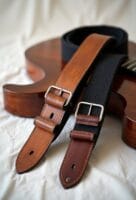
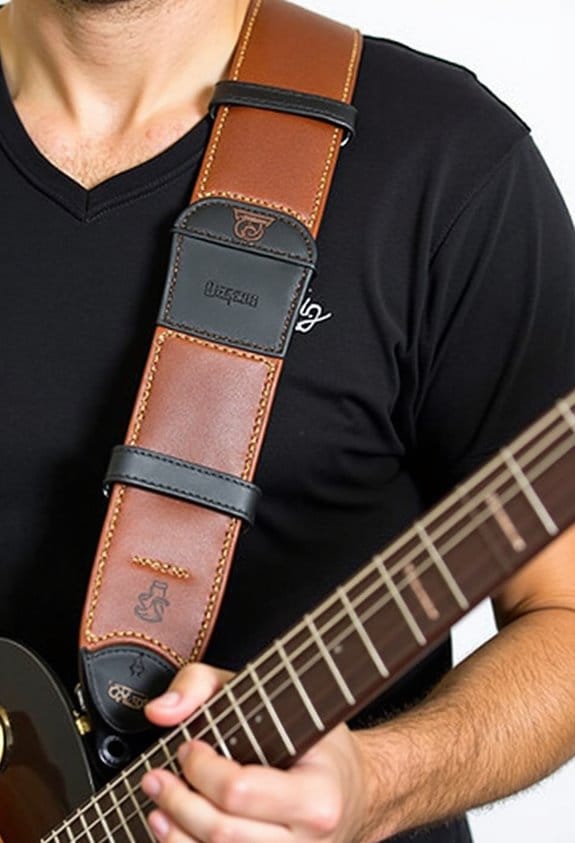
Hey, have you ever thought about how important weight distribution is when it comes to guitar straps? It’s something that often gets overlooked, but the right strap can really make a difference. If you go for a wider strap—like one that’s between 2.5 to 4 inches wide—it helps spread the weight of your guitar evenly across your shoulder. Trust me, this makes those long jam sessions way more comfortable and less straining on your body.
Another thing to consider is padding. Padded straps can add a ton of comfort, making it easier to stand and play for hours without feeling sore. Plus, they can actually help you keep better posture by making sure your spine and shoulders are in line. If you can find adjustable ergonomic straps, even better! They allow you to customize the fit, reducing the risk of any long-term discomfort while enhancing your playing experience. Choosing materials with durability and wear qualities ensures the strap maintains support over time, similar to how Aquila ukulele strings offer long-lasting performance.
The Role of Strap Width and Padding in Posture

You know, when it comes to playing guitar, a lot of musicians zero in on their technique and sound, but we often overlook something just as crucial: strap width and padding. Think about it: a wider strap, ideally between 2.5 to 4 inches, spreads the weight of your guitar across a larger area. This really takes the pressure off your shoulders, which is super helpful during those long jam sessions or when you’re playing at a gig for hours.
Now, adding some padding, like memory foam or neoprene, can make a world of difference for your comfort level. For instance, a strap with good cushioning can help you feel more supported and less fatigued. I remember a friend who switched to a padded strap during her practice sessions and noticed she could play longer without feeling sore afterward. It’s also important to consider how weight impacts the guitar’s balance and your overall posture while playing.
Choosing the Right Materials for Comfort in Your Strap
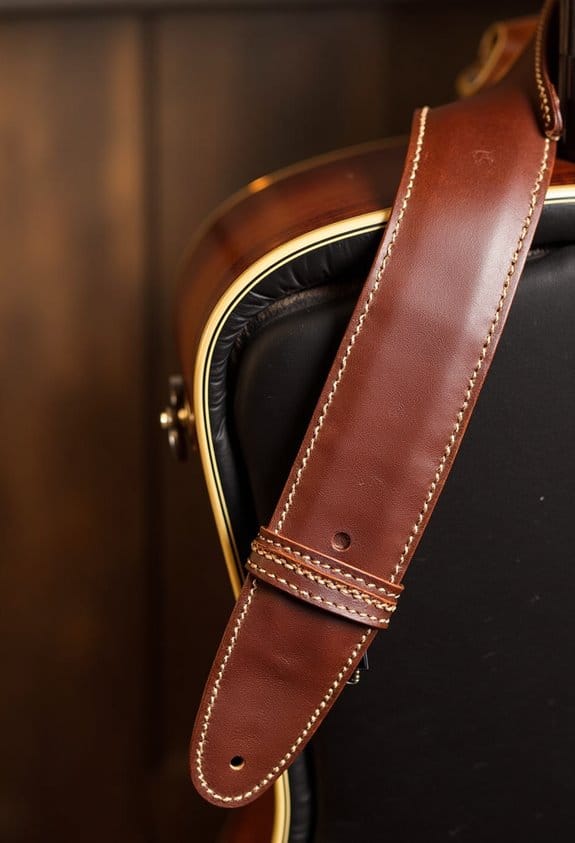
Hey there! You know, picking the right materials for your guitar strap can really make a difference in how comfortable you feel while playing. For instance, neoprene offers fantastic cushioning, which is perfect if you’re jamming for hours on end. Memory foam is another great option, as it conforms to your body, making those long sessions much more enjoyable.
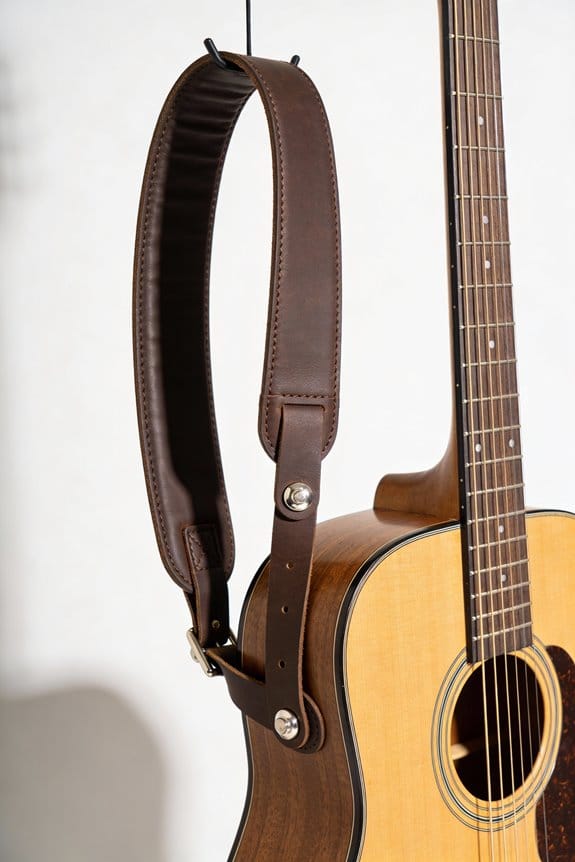
If you’re looking for something that feels premium, leather straps are a solid choice. They tend to mold nicely to your shape over time, giving you this really nice custom fit. On the other hand, if you prefer something soft and breathable, cotton is the way to go. And if you’re keeping an eye on your budget, polyester and nylon are quite durable, although they may not offer as much padding as you’d want.
Oh, and have you considered the width of your strap? Wider straps, around 2.5 to 4 inches, really help distribute the weight across your shoulders and back, which can cut down on fatigue. Plus, you want a strap that grips well—nobody wants to be adjusting their strap mid-performance! So, by thinking about these materials and features, you can make playing even more enjoyable. Ready to explore strap options or other gear?
When choosing your strap, also consider materials that align with material durability to ensure your gear lasts through all your gigs.
Strap Height and Its Impact on Playing
Hey there! Let’s talk about strap height and how it affects your guitar playing. Finding the right height for your guitar strap is super important for your comfort and effectiveness. When the strap is too low, you might notice tension building in your shoulders or wrists, which can make playing feel less enjoyable.
Imagine you’re jamming on stage, and if your strap is raised just a notch, you can move around more freely, and your posture naturally improves. This not only feels better in the moment but also can help avoid those pesky long-term injuries that come from bad habits. So, whether you’re sitting or standing to play, taking a few moments to adjust your strap to a comfortable height is crucial.
Try experimenting with the strap height the next time you grab your guitar. You might be surprised at how much better your technique and endurance can get with just a small tweak. It’s all about finding that sweet spot that works for you! Speaking of comfort, let’s chat about the best playing techniques to maximize your enjoyment. Using a strap with wide padded areas can further reduce shoulder strain and enhance your playing comfort over long sessions.
Essential Tips for Selecting the Perfect Guitar Strap
Hey there! When you’re on the hunt for the perfect guitar strap, comfort and support should really top your list. Trust me, a good strap makes all the difference in how you play and enjoy your music. Aim for one that’s wide and padded, around 2.5 to 4 inches. This width helps spread the weight of your guitar evenly across your shoulder, which can do wonders to reduce any aching after a long jam session.
If you’ve got a longer guitar, consider grabbing an Extra Long strap, somewhere between 55 and 70 inches. This will allow you to find just the right height for your instrument, making it easier to play without straining. And let’s not forget about the material! Neoprene straps are fantastic for heavier guitars since they offer that extra support, while cotton straps are a breathable option for those hot summer gigs. Also, keep an eye out for straps that come with a shoulder pad; they add a layer of comfort that you’ll appreciate.
Another key feature to look for is easy adjustability. Being able to quickly change the height of your strap can help with your posture. For example, if you’re playing a quick set, you might want it higher for ease, then lower it for a more relaxed vibe later on. A good strap isn’t just an accessory; it can enhance your whole playing experience. And once you’ve got your strap sorted out, you can focus more on your music and less on discomfort! What’s next? Let’s chat about picking the right guitar for your playing style!
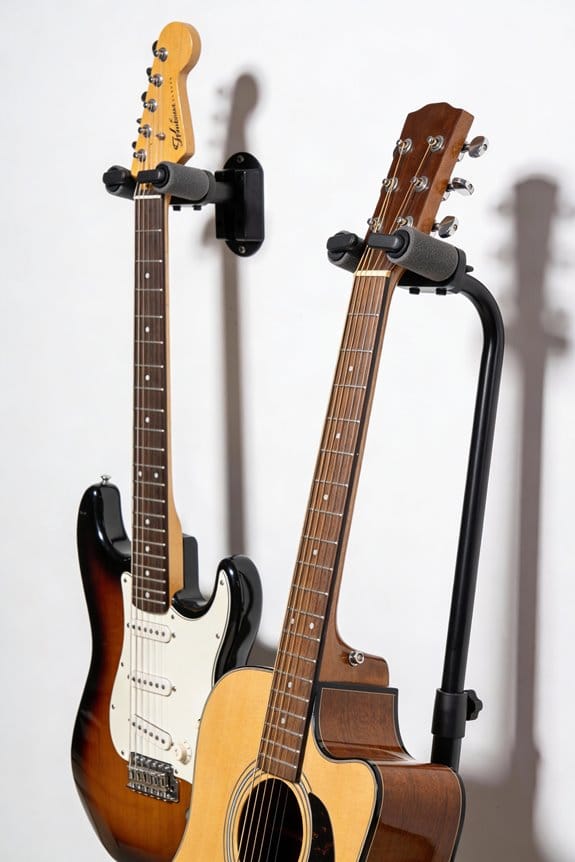
Additionally, pairing your guitar and strap with a quality guitar stand can greatly enhance your instrument’s safety and accessibility.
Frequently Asked Questions
How to Stop Slouching While Playing Guitar?
To stop slouching while playing guitar, we should adjust strap length for ideal guitar posture, practice sitting tall, focus on finger positioning, and take breaks to ease back pain and reinforce proper playing ergonomics.
Should You Use a Guitar Strap When Sitting?
Yes, using a guitar strap while sitting enhances our guitar posture and sitting comfort. It helps with weight distribution and posture alignment, allowing us to play longer without discomfort. We should choose a strap that fits our preference.
Do Wider Straps Improve Playing Comfort?
Absolutely, wider straps improve our playing comfort. With diverse strap materials and adjustable options, we can adapt to different playing styles, markedly reducing shoulder pressure and enhancing our overall comfort levels during longer sessions.
How Does Guitar Weight Affect Tone?
Guitar weight greatly grows guitar material impact, with sound projection factors shifting, neck stiffness playing a pivotal role, body shape influencing resonance, and string gauge effects enhancing overall tone richness. We feel these differences distinctly!