As an Amazon Associate, we earn from qualifying purchases. Some links on this site are affiliate links at no extra cost to you. Our recommendations are based on thorough research and editorial judgment.


Active vs Passive Bass Electronics: Which Is Right for You?

When we’re choosing between active and passive bass electronics, it’s important to evaluate our specific needs and musical style. Active basses give us higher output and more tonal control, ideal for genres like funk and metal. Meanwhile, passive basses deliver a warm, rich sound perfect for classic rock and jazz. Hybrid models offer the best of both worlds with active/passive switches. Let’s explore how these options can suit our playing style and help us achieve the perfect sound!
Key Takeaways
- Choose active basses for modern sounds and enhanced tone control, perfect for genres like funk and metal.
- Opt for passive basses if you prefer a warm, organic tone, ideal for classic rock and jazz styles.
- Consider cable length: active basses maintain signal quality over longer runs, while passive may experience degradation.
- Hybrid basses offer versatility, switching between active and passive modes to adapt to various playing needs.
- Regular maintenance is essential for both types; ensure batteries are replaced and cables are of high quality to preserve sound integrity.
Active vs. Passive Basses: Which Is Right for You?

You may be interested


When you’re trying to decide between active and passive basses, it helps to know what each type offers. Active basses come with built-in preamps powered by batteries, which means they can crank out a higher output and give you more control over your tone. This makes them a great choice for styles like funk or metal where you want that crisp, modern sound. Plus, they help reduce unwanted noise, making your playing cleaner.
On the flip side, passive basses rely on simpler circuits with basic pickups. This setup gives you a warm, organic tone that’s perfect if you’re into classic rock or jazz tunes. For example, you might find that a Fender Precision Bass gives you that rich sound, while still being straightforward to use.
And if you can’t decide, some basses even come with an active/passive switch. This feature lets you easily flip between the robust tonal shaping of active electronics and the natural touch sensitivity of passive designs. Ultimately, it all boils down to your personal taste—what kind of sound are you after? Once you’ve figured that out, you’ll be on your way to grabbing the perfect bass for your music! Choosing the right electronics also depends on the pickup configurations of your bass, which greatly impact the overall sound versatility.
Pros and Cons of Passive Basses
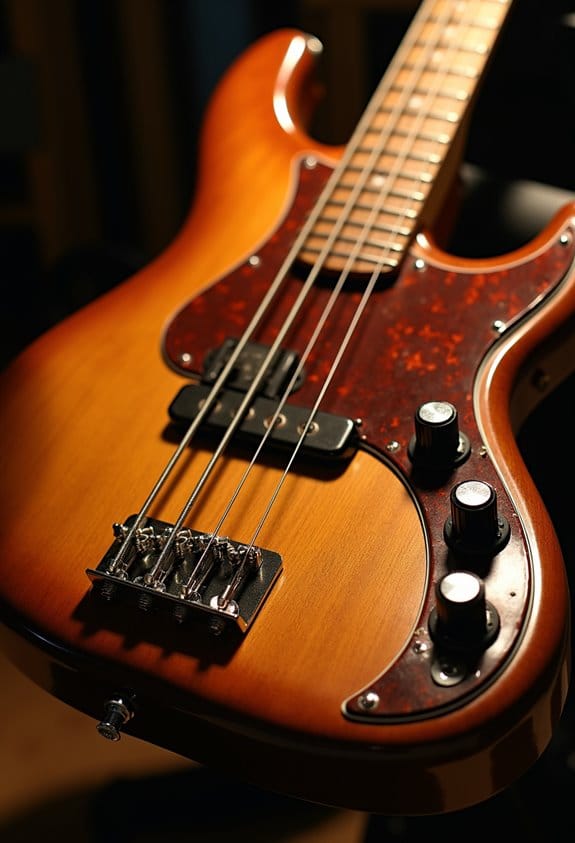
Hey! So, have you ever thought about getting a passive bass? There’s something pretty special about these instruments, especially if you love that classic sound. Passive basses use pickups to create a pure tone that’s super responsive to your playing style, and guess what? They don’t need batteries! This simplicity means that during live shows, there’s less chance of something going wrong, which is always a relief.
Now, if you’re into genres like classic rock or jazz, you’ll find that the tone control functions like a lowpass filter. This can really help you achieve that fat, round, and earthy tone we all love. Think of iconic players like Paul McCartney or Jaco Pastorius—both often used passive basses to get that warm sound.
But, here’s the catch: passive basses generally have a weaker signal output. So if you’re using long cables, you might run the risk of losing some signal. Luckily, there are ways to tackle this, like using high-quality cables or active DI boxes to boost your signal before it reaches the amp.
In the end, passive basses have their quirks, but their unique character is something a lot of players can’t get enough of. If you’re considering one, you might just find the perfect sound for your music! Additionally, using ergonomic tools can make maintaining your passive bass easier and more efficient.
Advantages and Disadvantages of Active Basses

Hey there! Let’s chat about active basses. These bad boys really amp up your playing experience. They come with built-in battery-powered preamps that boost your signal, meaning you can run long cables without any quality loss. This is super handy if you’re jamming on a big stage or need to connect to a sound system far away.
Another cool feature of active basses is their onboard EQ controls. This lets you tweak your sound easily. For instance, if you’re playing funk, you can dial in the punchy highs, or if you’re laying down some smooth grooves, you can boost the lows. This flexibility makes active basses a favorite among many players, especially in genres like metal and funk.
But, not everything is sunshine and rainbows. You do have to keep an eye on the battery—if it dies, it’s game over mid-song, which can be pretty inconvenient. Plus, some musicians just really miss that classic passive tone with its warmth and simplicity. So, while the versatility of active basses is hard to ignore, it’s essential to weigh these pros and cons based on your playing style and preferences. What’s your take on it? Additionally, to maintain the best sound quality, many players incorporate true bypass pedals, which ensure the original tone is preserved when effects are not in use.
Hybrid Basses: Active vs. Passive Switches
Hey there! Let me tell you about hybrid basses—these instruments are super versatile thanks to their active and passive switches. Basically, you get to enjoy the rich sound of active pickups paired with onboard EQ when you’re in active mode. This setup is fantastic for creating unique sounds, especially if you’re jamming in a rock band or experimenting with funk music.
But here’s the cool part: when you flip the switch to passive mode, the bass gives you a more natural tone. This means you can keep playing even if your battery runs low! Imagine you’re in a tight spot during a gig, and having that option really saves the day. So, whether you’re performing on stage or just playing with friends, a hybrid bass adapts to your needs, enhancing your overall experience.
It’s pretty clear why so many bass players love these instruments—let’s talk about how to choose the right one for your style! Many bass guitars also feature pickup and amplifier options that further expand your tonal possibilities and versatility on stage.
Choosing Your Bass Type for Different Genres
Hey, let’s chat about choosing the right bass type for different genres! Picking the right bass can really influence your sound, especially when you’re jumping between styles. For those heavier, more aggressive genres like metal or funky grooves, active basses are fantastic. They come with built-in preamps and EQ controls, which means you get a higher output and more tonal options. Picture something like an Ibanez SR series bass; it just screams clarity and punch.
On the other hand, if you’re leaning towards classic rock or country, you can’t go wrong with a passive bass, like a Fender Precision Bass. Those beauties offer that warm, organic vibe that fits right into those genres. A lot of players find their sweet spot with active setups for that clear sound, while others enjoy the straightforward feel of passive basses.
Some basses even have an active/passive switch, which is super handy! This lets you flip between the two modes depending on what you’re playing. So whether you’re rocking out or laying down a smooth country groove, you’ve got options. Doesn’t it feel great to know you can easily adapt your sound to fit any performance? Let’s explore how different playing techniques can further enhance your musical expression! It’s also important to consider how your tone control features on your bass amplifier can help tailor your sound to complement your active or passive bass electronics.
Keeping Your Active and Passive Basses in Tip-Top Shape
Hey there! Let’s chat about keeping your active and passive basses in top shape. It’s super important to maintain your basses so they sound their best. For your active bass, one of the first things to check is the battery. It’s amazing how a weak battery can turn your rich tones into something dull! So, make it a habit to swap out that battery regularly—maybe every couple of months or whenever you start to notice a drop in sound quality.
Now, alongside that, keep an eye on the input jack and all the connections for both active and passive basses. Dust and grime can sneak in, creating noise or even cutting your signal. A simple habit is to take some rubbing alcohol on a cotton swab to clean those areas. It only takes a minute, but it makes a huge difference!
When it comes to passive basses, long cable runs can be a sneaky culprit for signal loss. Invest in good-quality cables—think of them as the lifelines for your sound. Companies like Radial offer systems that can help boost your signal over long distances, making sure your tone stays pristine.
And let’s not forget about looks! Regularly wiping down your bass with a soft, dry cloth keeps it shining and helps prevent corrosion on strings and hardware. Just a little care goes a long way in preserving that beauty! So, whether you’re rocking out on stage or jamming at home, your bass will be ready to deliver its best performance. Speaking of jamming, let’s discuss how to improve your playing technique next! Additionally, ensuring the use of true bypass pedals in your effects chain can preserve your tone’s clarity and integrity when switching pedals.
Personalizing Your Tone: Active vs. Passive Electronics in Action
Hey there! If you’re looking to personalize your tone, you really should get to know the difference between active and passive electronics. Active basses come with built-in EQ controls, which means you can easily tweak your sound by boosting or cutting certain frequencies. Imagine jamming and being able to dial in exactly the tone you want for that particular song—it’s a great feeling!
On the flip side, passive basses are all about simplicity. They usually just have a volume knob and a basic tone control, which can be perfect for those classic rock or jazz vibes. Think of that raw sound you get from a vintage Fender Jazz Bass—there’s something special about it that’s hard to replicate.
Now, let’s not forget about the benefits of active basses. They tend to deliver a cleaner, more modern sound thanks to their internal preamps. Some cool hybrid models even let you flip between active and passive modes. This gives you the flexibility to easily switch up your sound based on what you’re playing.
Additionally, just like how piezo pickups capture natural tones in acoustic instruments, choosing the right electronics can profoundly influence the clarity and character of your bass’s sound.
Ultimately, both active and passive setups have their own charm. It really boils down to your playing style and what feels right for you. In the next section, let’s chat more about how to choose the right bass for your sound!
Frequently Asked Questions
Should I Use Active or Passive DI Box for Bass?
We recommend using an active DI box for better sound quality and impedance matching, especially in complex scenarios. However, passive DI boxes simplify setups without battery requirements. It depends on your tone shaping needs and usage scenarios!
What Are the Benefits of an Active Bass?
Active basses offer us active tone control and enhanced signal clarity through built-in preamp advantages. While we face battery longevity concerns, they provide direct recording benefits and unmatched tonal flexibility options for diverse musical styles.
What Are the Disadvantages of Active Pickups?
As we navigate the vibrant soundscapes, we can’t ignore active pickups’ cost considerations, tone variations, battery dependency, maintenance needs, installation complexity, and potential pickup noise that might disrupt our musical journey when least expected.
Are Fender Jazz Bass Active or Passive?
The Fender Jazz comes in both active and passive pickups. Player preference plays a big role here, as passive pickups offer dynamic tones while active models enhance sound characteristics with tone control for more versatility in our music.


