As an Amazon Associate, we earn from qualifying purchases. Some links on this site are affiliate links at no extra cost to you. Our recommendations are based on thorough research and editorial judgment.

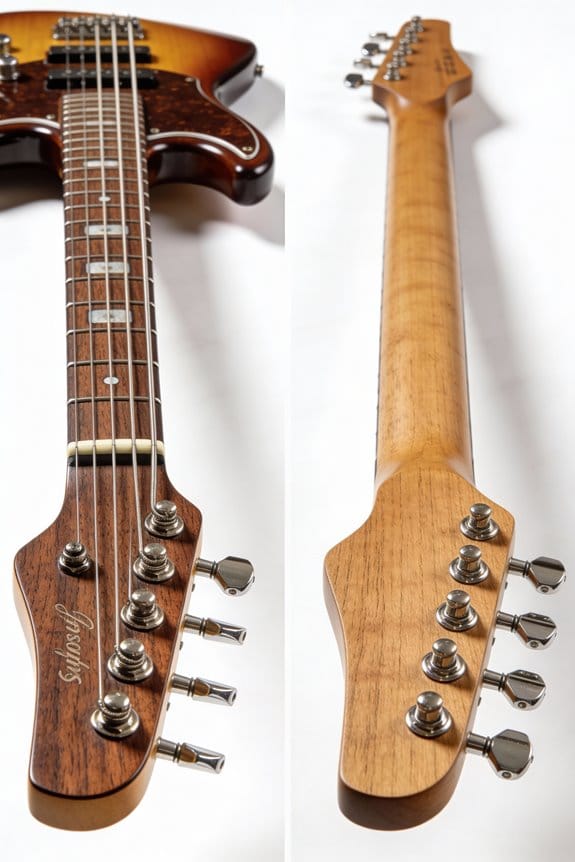
Fretted vs Fretless Bass: Techniques and Tonal Characteristics

When we compare fretted and fretless basses, we see unique techniques and tonal characteristics emerge. Fretted basses offer clear note guidance and are perfect for beginners, giving bright, punchy sounds that thrive in rock and funk. On the other hand, fretless basses provide a smooth fingerboard for expressive playing, producing warm tones ideal for jazz and fusion. Each has its distinct appeal, and our choice often reflects our musical goals. Stick with us to explore this topic further!
Key Takeaways
- Fretted basses feature clear metal frets, aiding beginners in note identification and playability for genres like rock and funk.
- Fretless basses provide a smooth fingerboard for expressive techniques, allowing for slides and unique microtonal variations.
- The tonal characteristics of fretted basses are bright and punchy, ideal for driving beats and slap techniques, while fretless offers warm, rounded tones.
- Beginners typically find fretted basses easier due to marked finger placements, whereas fretless requires strong ear training and muscle memory for accuracy.
- Fretless basses excel in jazz and fusion genres, offering smooth transitions, while fretted basses deliver defined pitches suitable for rock, pop, and metal.
Comparing Features and Techniques of Fretted vs. Fretless Basses

You may be interested


Hey there! Have you ever thought about the differences between fretted and fretless bass guitars? It’s pretty interesting! Fretted basses have those metal frets that make it super easy, especially for beginners, to find the right notes. Picture a rock band—those punchy, bright sounds from a fretted bass really drive the energy, and you can easily hear it in upbeat songs like “Smoke on the Water.”
Now, fretless basses are a whole different vibe. They don’t have those metal frets, which means you get a smooth fingerboard. This allows for some beautiful, fluid movements when playing. Imagine a jazz solo—using slides and glissandos to express emotions gives it a warm, rounded tone that just resonates. But, you need to be well-trained to hit the right notes without frets guiding you; your ear has to be spot on! Additionally, playing technique on a fretless bass involves mastering precise finger placement and expressive vibratos to fully utilize its unique sound qualities.
Exploring the Unique Sounds of Fretted and Fretless Basses
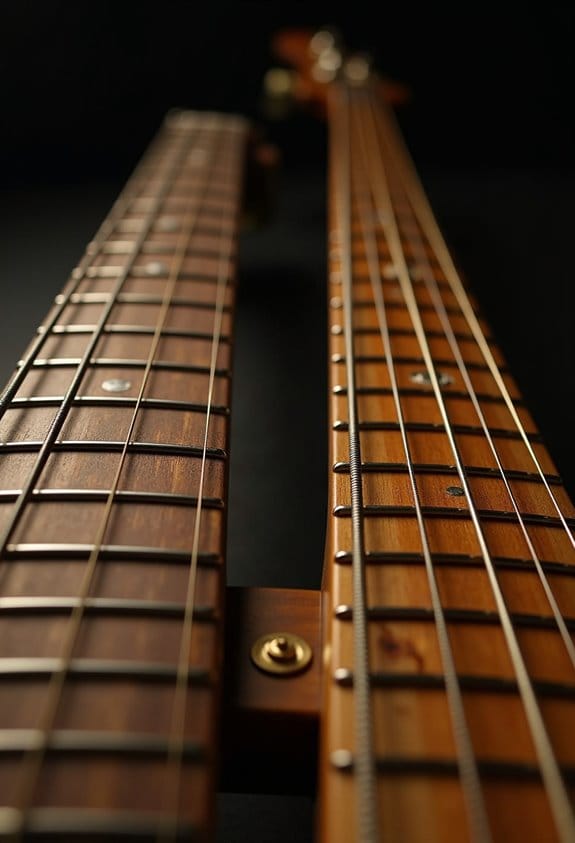
Hey there! Let’s chat about the fascinating world of bass guitars, specifically the differences between fretted and fretless instruments. You know, the sounds these two types produce are quite distinct and really shape the overall vibe of the music.
Fretted basses are renowned for their bright, punchy sound, which is ideal for rock and funk tunes. Think about classic funk lines like those by Flea from the Red Hot Chili Peppers—his fretted bass cuts through the mix with clarity and precision. The metal frets help with pitch accuracy and give the notes a snappy attack.
On the flip side, fretless basses bring a warm, smooth sound, making them a favorite in jazz and fusion genres. Players like Jaco Pastorius, known for his incredible fretless playing, use glissando techniques—sliding between notes seamlessly—which adds a rich expressiveness that you can’t achieve on a fretted bass. Without frets, players can create microtonal variations, leading to a unique sound palette.
Now, while fret noise can introduce some character to fretted basses, getting the right setup, like adjusting the action and choosing the right strings, is crucial for both types. It’s all about finding that sweet spot for your playing style. Embracing the different skills involved in each type of bass is key to appreciating all the unique sounds they offer. For musicians seeking versatility, exploring instruments with built-in EQ systems can greatly enhance tonal control for live and recorded performances.
Understanding Playability: Learning Curves for Fretted and Fretless Basses

Hey there! You know, when it comes to mastering the bass guitar, the choice between a fretted and fretless instrument can really shape your journey. If you’re just starting out, you’ll find that a fretted bass is usually more beginner-friendly. The frets give you clear markers for where to place your fingers, making it easier to pick up those foundational skills.
On the flip side, if you opt for a fretless bass, be prepared for a bit of a challenge. You’ll need to rely more on your ear and muscle memory to hit those notes accurately since there aren’t any frets to guide you. It’s kind of like trying to learn to ride a bike without training wheels from the beginning!
A good approach is to start on a fretted bass to build your confidence before transitioning to fretless if that’s where your heart is. Once you feel more comfortable, you can even use tape to mark note positions on a fretless bass as a helpful trick. It’s a fun way to ease into it without getting too overwhelmed. Also, understanding the differences in neck and fretboard design can significantly impact your comfort and playability as you switch between the two types.
How Do Fretted and Fretless Basses Excel in Specific Genres?
So, let’s chat about how fretted and fretless basses shine in different musical genres. Fretted basses really come into their own in rock, pop, and metal music. They provide that strong, crisp sound that drives the beat forward, which is essential for getting people moving. Think about how slap bass techniques explode in funk—those defined pitches from frets make it all crisp and poppy!
Now, when you switch gears to jazz and fusion, that’s where fretless basses truly shine. They give you such smooth tones, letting you slide between notes in a way that just sounds… magical. This fluidity lets bassists express deep emotions, crafting melodies that can really tug at your heartstrings. Also, in progressive rock, where you’ve got those intricate sounds and harmonics, fretless basses allow players to explore those complex textures effortlessly.
Both types bring something special to the table. While fretted basses focus on keeping the rhythm solid, fretless basses encourage a more expressive musical journey. It’s kind of fascinating how each type brings its own voice to the music, right? Additionally, the choice of body wood types can subtly influence the tonal characteristics that suit each genre.
Which Bass Should You Choose: A Direct Comparison?
Hey, let’s chat about choosing between a fretted and fretless bass! If you’re just starting out, going for a fretted bass might be the way to go. Why? Well, those frets act like guideposts for your fingers, making it a lot easier to hit the right notes. For example, if you’re trying to learn a rock song, those defined note positions really help you get your bearings quickly, especially when the tempo picks up!
Now, if you’re leaning more toward expressive playing, fretless basses can be incredibly rewarding. They let you slide between notes, making those smooth transitions that sound amazing in jazz or fusion. Think about a classic jazz solo where the bassist pulls off some microtonal shifts—it’s all about that freedom of expression.
While fretted basses tend to have that bright, punchy tone which works great for styles like funk, fretless instruments bring in this warm, rich sound that can make your music feel even more personal. So, it’s really about what fits your style best—easy learning or artistic expression. Just keep in mind how you want to play, and that will help you narrow down your choice! Next, let’s explore some popular models in both categories to see what’s out there.
Choosing the right bass can be complemented by selecting an amplifier that suits the tonal characteristics of your instrument, such as a hybrid tube amplifier for a warm sound or a Class-D amp for portability and power.
Frequently Asked Questions
What’s the Difference Between Fretless and Fretted Bass?
When we compare fretless advantages with fretted versatility, we see sound projection differences, technique variations, maintenance care needs, and unique playing styles, each catering to different genre suitability and player preferences in music.
What Is the 3 Fret Rule on Bass?
The 3 fret rule helps us optimize finger positioning and fret placement, ensuring note accuracy and smooth shifts. It enhances our playing dynamics across various performance styles while managing string tension and scale length effortlessly.
Is a Fretless Bass Harder to Play?
Yes, a fretless bass can be harder to play. We need precise finger placement for pitch accuracy, develop techniques like harmonics, and strengthen our fingers, which challenges sight reading and style adaptability for beginners.
Why Does Fretless Bass Sound Different?
Fretless bass sound is like a smooth river, flowing effortlessly. With our vibrato techniques, sliding notes can showcase tonal subtleties. Yet, intonation challenges and string choice affect sustain differences influenced by tone wood impact.


