As an Amazon Associate, we earn from qualifying purchases. Some links on this site are affiliate links at no extra cost to you. Our recommendations are based on thorough research and editorial judgment.

Common Guitar Finish Problems and How to Prevent Them

We often face common guitar finish problems like scratches, dullness, and damage from the environment. To prevent scratches, we should be mindful of hard surfaces and use soft cleaning materials. For dull finishes, regular cleaning with mild soap and guitar polish works wonders. It’s crucial to protect our guitars from harmful chemicals and maintain proper humidity levels. With these strategies in mind, we can keep our guitars looking fantastic. Let’s explore more tips to make certain our instruments shine!
Key Takeaways
- Regularly maintain humidity levels between 45-55% to prevent cracks, scratches, and mold damage to your guitar’s finish.
- Use soft cleaning materials and guitar-specific cleaners to avoid scratches and dulling of the finish.
- Clean your guitar with a mild soap and water mixture and polish it regularly to maintain its shine and appearance.
- For minor scratches, use high-quality polish and 2000 grit wet sandpaper for deeper scratches; inspect under bright light for consistency.
- Seek professional help for major cosmetic damage to ensure appropriate refinishing and to maintain the instrument’s value.
Common Guitar Finish Problems and Solutions

You may be interested



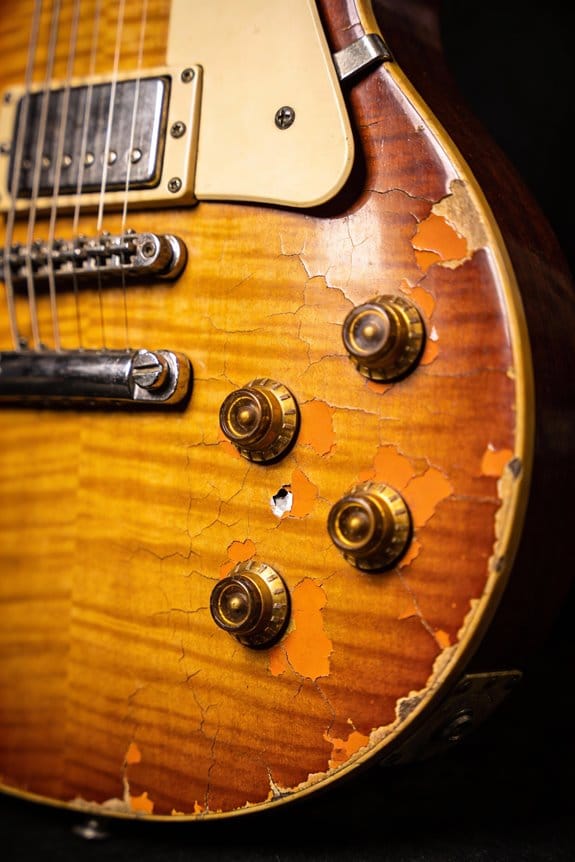
You know, finish problems with our guitars can really be a headache, right? Whether it’s scratches, dents, or cracks, these issues can not only affect how our instruments look but can also decrease their value. For instance, have you ever noticed tiny cracks showing up when the temperature swings drastically? Keeping your guitar in a stable environment, ideally with humidity levels around 45-55%, can really help prevent that kind of damage.
If you do spot some minor scratches, a good tip is to grab a bottle of high-quality polish like Meguiars Ultimate Polish. Just remember to mask off any areas you don’t want to polish—trust me, it’ll save you some extra work! Taking a few minutes after each play session to clean and polish your guitar can go a long way in keeping that finish looking sharp.
Regular maintenance is super important. It shows you care about your instrument and want to preserve its beauty and value for years to come. Plus, keeping an eye on those little details can make all the difference in how your guitar feels and sounds. So, let’s talk about some other common issues and how to fix them! Using guitar polish cleaners specifically designed for your guitar’s finish ensures gentle yet effective care, preventing damage over time.
Preventing Scratches: Understanding Their Causes

Hey there! So, when it comes to preventing scratches on your guitar, the first step is really understanding what causes them. You know how you might set your guitar down on a hard surface or accidentally bump it against something? That’s a common way scratches appear. Plus, if you’re using metal picks or playing a bit too aggressively, you might be adding to those risks.
And let’s not forget about jewelry—those rings and bracelets can easily create unintentional scratches while you’re getting lost in a solo. Another big culprit is storage. If you’re keeping your guitar in a case that doesn’t have enough padding, it can shift around and get scratched up. It’s also worth mentioning how important it is to choose the right cleaning materials. Using rough rags or paper towels might seem harmless, but they can actually create tiny scratches over time. Using a buffer bypass circuit in your gear can also help maintain tone clarity without adding unwanted noise or interference that could affect your instrument’s finish.
Solving Dull Finish Issues: Tips for Restoration
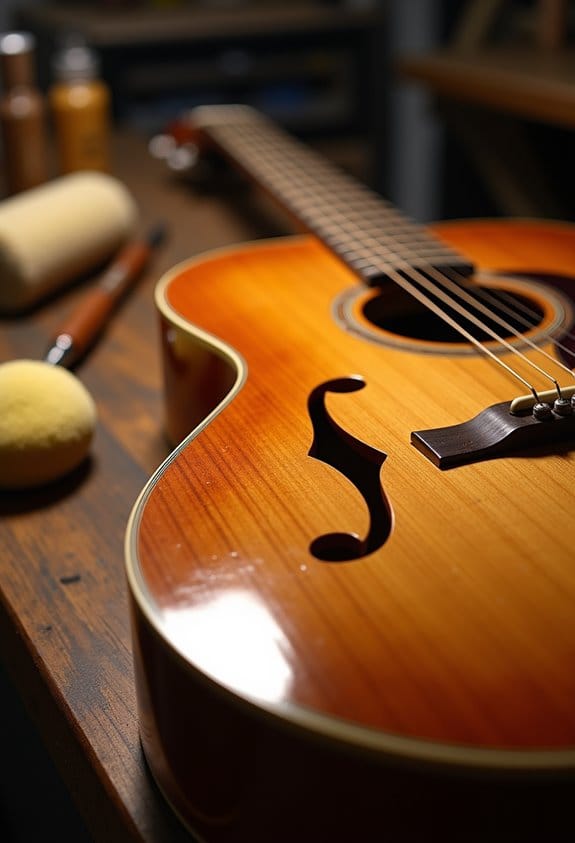
Hey there! So, if you’re dealing with a dull guitar finish, don’t sweat it—it’s way easier to fix than you might think! First things first, grab some mild soap and water to clean the surface. A simple wipe-down will help remove any grime that could be dimming that beautiful shine.
Once the guitar is clean, it’s time to bring back the luster with a high-quality guitar polish, like Meguiars Ultimate Polish. Just use a pure cotton cloth and work in small sections to ensure an even shine. If you spot any deeper scratches while you’re polishing, don’t worry! You can gently take care of those using Meguiars Ultimate Compound paired with 2000 grit wet sandpaper. Just remember, only use the sandpaper on areas that feel smooth to the touch—if you can catch a fingernail on a scratch, it’s best to leave it be for now.
Oh, and here’s a helpful tip: always keep different cloths for each product to avoid mixing them up. Once you think you’re done, check your work under bright light. This way, you can spot any areas that might need a little extra love. Using multi-step polishing systems can also help eliminate holograms and enhance the deep gloss of your guitar finish. Happy restoring, and let that guitar shine again! What’s next on your guitar care journey?
Protecting Your Guitar From Chemicals
Hey there! Let’s chat about why protecting our guitars from chemicals is super important. You know, using guitar-specific cleaners and polishes is the way to go. Household cleaners might seem convenient, but they can actually damage your guitar’s finish over time. Think about it, a simple spray on a dusty guitar could leave it looking worse instead of better!
When you’re done playing, take a microfiber cloth and give your guitar a quick wipe down. This is an easy way to get rid of any sweat or moisture that can sneak in and cause trouble later on. Plus, be mindful of where you store your guitar—keep it away from sprays and perfumes that might cause discoloration. A little care can go a long way!
Oh, and don’t forget about your hands! If you’ve been using lotion or oil, try to avoid touching your guitar until you’ve washed them. Those substances can be sneaky and gradually degrade the finish. Lastly, if you’re heading out and taking your guitar with you, definitely invest in a protective case. It’ll shield your instrument from any potential chemical exposure while you’re on the go. For optimal fretboard care, consider using natural lemon extract cleaners to safely clean and nourish your guitar wood.
Why You Should Clean Your Guitar Regularly
You know, when we chat about guitars, it’s easy to forget just how important cleaning your guitar regularly is. But trust me, keeping your guitar clean is crucial for both its appearance and sound. After you’ve been jamming out, take a moment to wipe it down. You’d be surprised at how much grease and dirt can build up from just your hands.
By using a soft microfiber cloth, you can easily remove those pesky oils and dust, which helps keep the finish looking fresh and shiny. Plus, it prevents grime from getting on your strings, which can make them sound dull or even rust over time. If you’re concerned about cleaning solutions, just a touch of mild soap mixed with water on that cloth will do the trick without harming your guitar.
Taking these simple steps not only helps your guitar look great but also extends its life. Honestly, who wouldn’t want a guitar that retains its resale value and continues to shine like new? So, make it a part of your routine to show your guitar a little love after each play! Using a microfiber polishing cloth is recommended because it lifts dirt and grime effectively without scratching your guitar’s delicate finish. Speaking of care, let’s move on to some tips for maintaining your guitar’s sound quality.
Safe Storage Practices to Avoid Damage
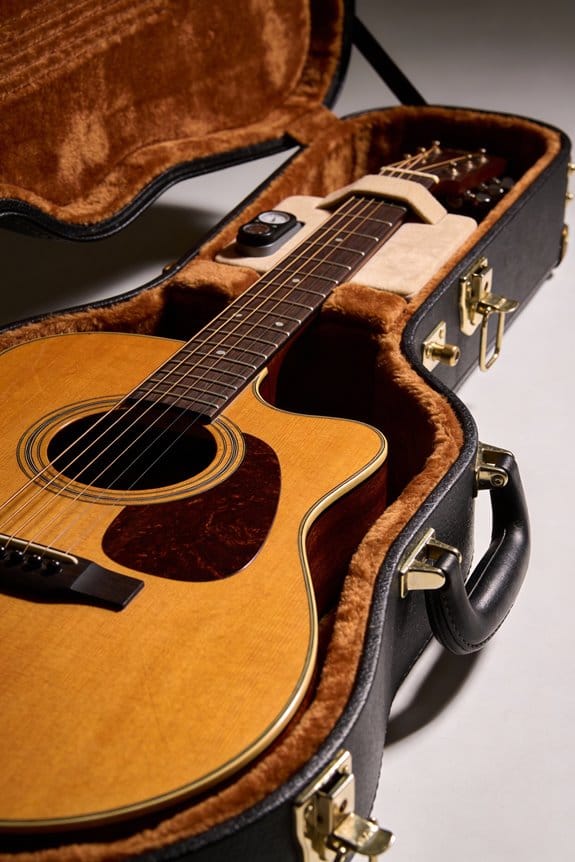
Hey there! So, you know how important it is to keep our guitars clean, right? Well, just as we take care of them on the outside, we need to think about safe storage practices to avoid any damage when they’re not being played. For starters, always keep your guitar in its case when you’re not using it. This simple step protects it from bumps and dust that can accumulate over time.
Another crucial factor is the environment where you store your guitar. Aim for a humidity level between 45-55%. Too much or too little moisture can lead to cracks in the wood or damage to the finish. A quick tip? You might consider using a hygrometer to monitor humidity levels, so you can keep everything in check.
Also, steer clear of placing your guitar too close to heat sources, like radiators or in direct sunlight, because that can warp the wood. Using a stand with a soft, non-reactive surface can help avoid any cosmetic nicks or scratches, too. Trust me, by following these easy storage practices, you’ll keep your guitar looking and sounding amazing for years! Now, let’s chat about the best cleaning methods to use—after all, keeping it safe is just the first step!
Consider using guitar humidifiers designed specifically for soundholes to maintain ideal humidity levels and prevent wood deformation.
How Environmental Factors Affect Your Finish?
Hey there! You know, understanding how environmental factors can affect your guitar’s finish is super important if you want to keep it looking and sounding great. Humidity and temperature are really the big players here. For example, when humidity creeps above 55%, it’s not just uncomfortable for us; it can actually make your guitar susceptible to mold and cause real damage to the finish because of all that excess moisture.
On the flip side, when humidity dips below 40%, the wood can dry out, which might lead to cracks or checks in the finish – kind of like how dry skin can crack in winter. And if you experience rapid temperature changes, things can get even trickier; it can cause the finish to separate from the wood.
So, what can you do to protect your strings and style? Store your guitar in a climate-controlled room where humidity is kept between 45-55% and the temperature sits around 70°F. By doing this, you not only save the finish but also help your guitar retain that rich, beautiful sound for years.
Using two-way humidity control devices can help maintain consistent moisture levels and protect your guitar from these environmental challenges.
Now, let’s look into some practical ways to set up your space for optimal guitar care!
Repair Methods for Damaged Finishes
Hey, did you ever notice a scratch on your guitar and felt like it was a disaster? Well, don’t sweat it! For those minor surface scratches, a dab of high-quality polish, like Meguiars Ultimate Polish, does wonders. Just take a soft cotton cloth, apply a bit of polish, and rub it in small circles over the area. It’s amazing how much better it can look!
Now, if you spot a deeper scratch that doesn’t catch your fingernail, you can get a little more hands-on. Grab some 2000 grit wet sandpaper and gently sand the area. It helps level the finish before you polish it out. Just make sure to protect the fretboard and bridge with masking tape so they don’t get damaged. Trust me, often, a quick inspection under bright lights can help you find these scratches before they become a bigger issue.
If you ever come across something that looks like major cosmetic damage, it’s worth reaching out to a pro for refinishing. They can really help keep your guitar looking sharp and maintain its value. Plus, it’s always reassuring to know your instrument is in good hands! Speaking of care, let’s talk about some preventive measures to keep your guitar in tip-top shape.
Using finishes with fast drying times can help reduce the risk of damage and accelerate the repair process for your guitar’s surface.
Tips for Choosing the Right Finish for Your Guitar
Picking the right finish for your guitar is more than just about aesthetics; it plays a crucial role in how the instrument sounds and lasts over time. When you’re choosing a finish, take a close look at the wood grain. If you have a beautiful piece of wood like Mahogany or Ash, a transparent finish will let those stunning patterns shine through. But if your wood has a bit of a patchy appearance, a solid color finish can smooth things out and give it a sleek appearance.
Always remember to test the finish on a scrap piece of wood before applying it to your guitar. This way, you’ll know exactly what it will look like in the end—no surprises! And don’t forget about safety; when you work with gloss finishes, make sure you’re in a well-ventilated space. It’s all about keeping it fun and safe! Choosing a finish with waterproof protection is especially important for maintaining your guitar’s longevity. Now that we’ve covered finishes, let’s chat about the types of wood you might want to consider for your next build.
Frequently Asked Questions
What Is the 80 20 Rule for Guitar?
The 80/20 rule for guitar tells us that by focusing on key techniques during our guitar practice, we can achieve significant tone improvement and greater mastery in learning techniques, maximizing our progress efficiently.
What Is the 10,000 Hour Rule for Guitar?
Like building a muscle, the 10,000-hour rule emphasizes dedication in our guitar journey. By employing effective routines and practice strategies, we can accelerate skill development and truly master our instrument over time.
What Is Guitar Syndrome?
Guitar syndrome’s the result of poor maintenance affecting your instrument’s finish. We should follow guitar maintenance tips, explore acoustic vs electric concerns, and employ effective finish restoration techniques to keep our guitars looking and sounding great.
How to Fix Damaged Guitar Finish?
Think of our guitar’s finish as a canvas. For repairs, we can use finish repair techniques, polishing methods, and finish preservation tips to restore beauty and protect our instrument for years of joyful playing.