As an Amazon Associate, we earn from qualifying purchases. Some links on this site are affiliate links at no extra cost to you. Our recommendations are based on thorough research and editorial judgment.


How String Winders and Cutters Make Restringing Easier

String winders and cutters, like the D’Addario Pro Winder, make restringing guitars and mandolins a breeze! They speed up the process by allowing us to quickly wind and cut strings without hassle. With manual winders, we get better control, especially for mandolins. Plus, using a string winder helps us avoid sharp ends from old strings, making the whole experience safer. If we want to keep our instruments in top shape, there’s more to discover about essential tools and tips!
Key Takeaways
- String winders speed up the restringing process, making it quicker and more efficient for guitars and mandolins.
- The D’Addario Pro Winder combines winding and cutting, providing a compact and portable solution for string replacement.
- Manual winders allow for better control, reducing wobbling and maintaining even tension on strings for improved tuning stability.
- Ergonomic designs of some winders minimize hand strain during lengthy restringing sessions, ensuring better comfort.
- Utilizing a string winder and cutter simplifies the removal of old strings, streamlining the entire restringing process.
The Essential Role of String Winders in Restringing

You may be interested


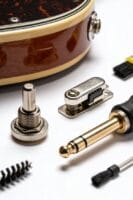
Hey, have you ever tried restringing your guitar or mandolin? It can be a bit of a pain, right? That’s where string winders come in handy! These little tools can really speed things up by quickly winding the strings around the tuning pegs. For example, the DAddario Pro Winder isn’t just a winder; it also cuts the old strings and helps you remove them, making your life a whole lot easier when it comes to guitar maintenance.
If you’re a mandolin player, there are specialized string winders that fit perfectly between the tuning keys. This design minimizes any wobbling and makes the process smoother. Plus, using a string winder helps keep the tension on each string even, which means your instrument stays in tune better. With a good string winder, changing strings becomes a quick task, leaving you more time to play your favorite songs. So, next time you’re ready to restring, consider grabbing a winder to make the job less tedious and more enjoyable! Many of these tools also feature ergonomic handles that reduce hand strain during extended restringing sessions.
How to Safely Remove Old Strings

Removing old strings from your guitar or mandolin can actually be pretty straightforward, and it doesn’t have to feel like a chore! First off, grab a string winder to help you loosen up those old strings with ease. It really speeds things up! Once you’ve done that, you can take some string cutters and snip the strings around the 12th fret. This little trick saves you a lot of trouble.
Now, when you’re working with an acoustic guitar, there’s a slight twist: you need to carefully remove those bridge pins. A pin puller can be your best friend here since it helps you pull them out without mishaps. Just make sure to keep everything organized as you go. Once everything’s loose, gently take the strings off from the tuning pegs—this way, you won’t risk scratching the guitar’s finish.
And remember, when you’re done, coil up the excess string and dispose of the old strings properly. You don’t want those sharp ends lying around! With that done, you’re all set for fresh new strings, and we’ll get into how to put them on next! Using a 3-in-1 string winder that includes a cutter and pin puller can make this entire process quicker and more efficient.
Clean Your Guitar for Optimal Maintenance

Hey there! So, you know how cleaning your guitar while the strings are off isn’t just about making it shine? It’s actually a super important part of keeping your instrument performing well and lasting longer. When you take a soft cloth or a microfiber rag and give the body, fretboard, and pickups a gentle wipe down, you’re preventing dust and grime from building up.
Regular cleaning helps maintain not only the look of your guitar but also its sound quality. For instance, if you leave dust on the fretboard for too long, it can lead to sticky fretboards or even damage over time. Plus, using a bit of lemon oil on the fretboard can work wonders—it brings life back to the wood and helps prevent those pesky cracks that can develop.
If you want to streamline the cleaning process, consider grabbing a guitar cleaning kit. These usually come with specialized cleaners, polishes, and fretboard conditioners. Trust me, a little bit of regular maintenance goes a long way, and before you know it, you’ll have a guitar that not only sounds amazing but looks fantastic too! Some kits even include a string cleaner that helps prevent corrosion and extends string life. Ready to see how to get that next level shine on your strings? Let’s jump into string care next!
Manual vs. Electric String Winders: Which Is Right for You?
Hey there! So, you’re trying to figure out whether a manual or electric string winder is the best fit for your guitar setup? It’s a pretty common dilemma when it comes to restringing your guitar. Manual string winders, like the D’Addario Pro Winder, are super popular because they’re efficient and come with handy built-in string cutters. They’re also lighter on your wallet!
Now, electric string winders might catch your eye—they seem tempting at first—but they can be a bit pricier, and honestly, they don’t save you that much time. Many users feel that manual winders provide more control, especially if you’re working on instruments like mandolins. Plus, they’re compact and easy to transport, so you won’t have any dust collecting on them!
In the end, it really comes down to your personal preference and how you like to work on your instruments. Whether you go for the simplicity of a manual winder or the convenience of an electric one, both can get the job done. So, let’s discuss some tips on restringing your guitar effectively—you’ll be ready to play in no time!
For best results during restringing, using tools made from durable materials can enhance precision and longevity.
How to Select the Best String Winder and Cutter
When you’re restringing your guitar or mandolin, having the right string winder and cutter can make a big difference. Choosing a string winder that fits snugly on your instrument is key—it prevents any wobbling, making the job easier and faster. For instance, if you play an acoustic guitar, look for a winder that’s designed specifically for its headstock shape.
Now, let’s chat about string cutters. It’s really important to find one that can bend those pesky string ends after you’ve cut them, so you avoid any sharp injuries while you’re working. A great example is the D’Addario Pro Winder—it’s a handy combo tool that does both winding and cutting, all in one lightweight package.
When you’re on the go, a compact design is a lifesaver, too. You want something you can easily toss in your gig bag. Lastly, be sure your string cutter gives you clean cuts and lasts through many string changes. With these tools, you’ll find that changing strings becomes a smoother, more enjoyable experience. So, let’s talk about the different types of strings you might want to consider when re-strining your instrument!
Additionally, choosing tools that offer corrosion resistance ensures durability and reliable performance during restringing.
Don’t Make These Mistakes When Restringing Your Guitar
Restringing your guitar might seem straightforward, but it’s easy to make some common mistakes that can lead to frustrating problems later on. For starters, always make sure to loosen those old strings properly. If you rush through this step, you could end up damaging your tuning pegs, which can be a headache when you’re trying to get back to playing. Imagine trying to tune up and realizing your pegs are stuck!
When you’re removing those old strings, grab a good pair of string cutters. They really make the process quicker and keep you safe from those sharp ends that could sneak up and stab your fingers. Once those strings are off, pay special attention to the order and placement of your bridge pins; misplacing them can lead to some serious seating issues when you replace the new strings.
This is also a great moment to give your guitar some love with a good cleaning. Dust and grime can affect how your instrument plays—nobody likes a dirty guitar! And once you get those new strings on, don’t forget to stretch them a bit. This simple action helps keep your guitar in tune longer and makes for a much smoother playing experience.
Using string spreaders and fingerboard guards during restringing can protect your guitar from damage and make the process more efficient.
With these tips in mind, you’ll be well on your way to a hassle-free restringing process! Now, let’s talk about choosing the right strings for your style of playing.
Tips to Enhance Your Restringing Experience
Restringing your guitar can actually be a really fun experience, especially when you have the right tools and know-how! For starters, using a quality string winder, like the DAddario Pro Winder, can be a real time-saver. Imagine how much easier it is to tighten strings quickly rather than doing it by hand. Plus, this winder comes with built-in string cutters, which means you can safely snip off old strings without worrying about sharp ends digging into your fingers—definitely a win!
Another great tip is to use ergonomic tools, like a neck rest. Trust me, it makes a huge difference! This will keep your guitar stable while you work on it, no matter how you position yourself. And don’t forget to grab a polish cloth! It’s perfect for giving your guitar some love while you’re at it, making the whole process feel even more rewarding.
Using precision tools like a notched straight edge can also help ensure your guitar neck is properly aligned during maintenance.
With these simple tips, you can turn restringing into a go-to part of your guitar maintenance routine rather than a chore. Plus, it’s a great way to connect more intimately with your instrument. Ready to tackle some new strings and keep your guitar in tip-top shape?
Frequently Asked Questions
What Are the Benefits of Using a String Winder?
Using a string winder’s efficiency is like having a trusty tool in a musician’s toolkit. Different string winder types offer compatibility and essential features that simplify our restringing process, turning a chore into a breeze.
What Is the Easiest Way to Restring a Guitar?
To tackle the guitar restring process easily, we should choose the right string gauge, use suitable tuning peg options, follow string maintenance tips, and always stretch new strings for best stability. Let’s make it fun!
Are Wire Cutters Good for Guitar Strings?
When we think of sculpting wood, precision matters. Similarly, wire cutters are excellent for guitar strings, especially with varying string gauges. Understanding cutting techniques and maintenance importance elevates our restringing experience, ensuring our instrument stays vibrant.
Why Does Tom Morello Not Cut His Guitar Strings?
Tom Morello doesn’t cut his guitar strings because it enhances his sound and allows for unique playing techniques. By embracing this approach, we can challenge string longevity myths and explore various artist string preferences in our guitar maintenance tips.