As an Amazon Associate, we earn from qualifying purchases. Some links on this site are affiliate links at no extra cost to you. Our recommendations are based on thorough research and editorial judgment.

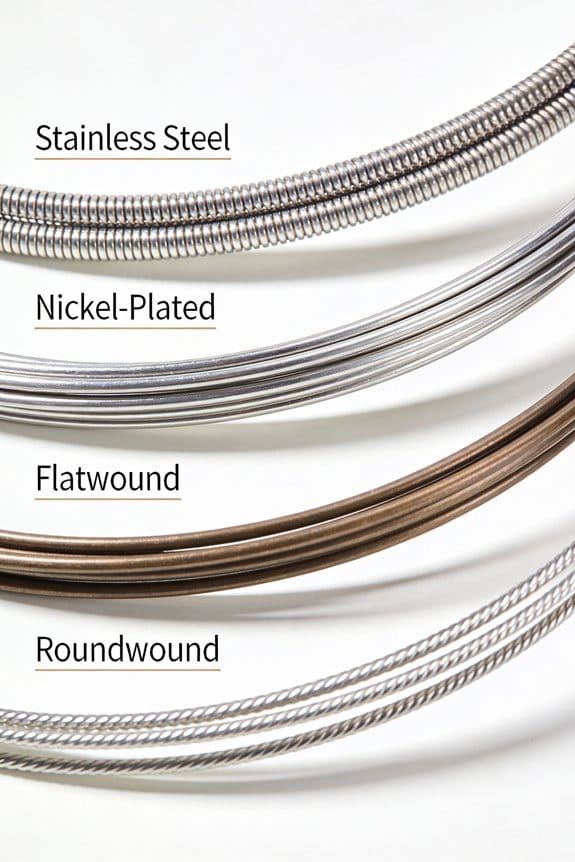
How Bass Guitar String Materials Affect Your Sound

Bass guitar string materials play an essential role in shaping our sound. Nickel and stainless steel offer distinct tonal qualities—nickel gives a warm feel, while stainless steel delivers a bright edge. Roundwound strings provide dynamic tones and great sustain, perfect for rock, while flatwound strings bring a smooth, jazzy warmth. Even the gauge we choose affects our sound, with thicker strings enhancing richness and thinner ones allowing for faster play. Let’s explore these elements further!
Key Takeaways
- Nickel strings produce warm tones suitable for classic styles, enhancing the overall depth of sound.
- Stainless steel strings deliver bright and cutting tones, ideal for modern and high-energy mixes.
- Roundwound strings create dynamic and bright sounds with excellent sustain, perfect for rock music.
- Flatwound strings yield smooth, warm tones preferred in jazz, offering longevity and a polished sound.
- The material type significantly influences the overall tone quality and feel when playing the bass guitar.
Key Materials Used in Bass Guitar Strings

You may be interested



Hey, let’s chat about bass guitar strings! The materials used in bass guitar strings are super important because they really affect how your bass sounds and feels when you play. You’ll typically find strings made from nickel, stainless steel, or bronze. For example, nickel strings give off a warm sound, which is great for that classic vibe, while stainless steel strings are known for their bright, cutting tone that really pops in a mix.
Now, when it comes to string types, you’ve got roundwound and flatwound strings. Roundwound strings are all about that bright sound and excellent sustain; they’re perfect if you want a more modern rock sound. On the flip side, flatwound strings offer a smoother, warmer tone—think classic jazz. Plus, flatwound strings tend to last longer and hold their tone pretty well over time. If you’re looking for something that blends both qualities, halfwound strings could be your best bet; they reduce finger noise and give you the flexibility to explore different styles.
Ultimately, the choice of string wrap material can really shape your playing experience, so consider what kind of vibe you’re going for. Strings like the Ernie Ball Group III provide reduced finger noise, which can greatly enhance your playing comfort and tone. Now, let’s explore how different gauges can impact your sound and feel!
How Different Materials Impact Your Tone

Hey there! You know, the materials used in bass guitar strings really do influence the sound you get, and it’s pretty fascinating when you think about it. Take roundwound strings, for example. They create a bright, dynamic tone that has a lot of sustain, which is why many players who want clarity in their sound love using them.
On the other hand, if you’re into jazz or Motown, you might want to check out flatwound strings. They give you a warmer, smoother sound, but keep in mind they won’t have that same brightness. Halfwound strings can be a great compromise, offering a nice blend of both worlds and feeling comfortable under your fingers. Additionally, the choice of string materials like nickel-plated steel greatly affects durability and tone quality.
Understanding String Gauge and Its Effects on Sound

Hey there! So, let’s chat about string gauge—it’s super important for shaping the sound of your bass guitar. Simply put, string gauge is all about how thick your strings are. Thicker strings, like the 50-110 gauge, give you that rich, deep sound, perfect for laying down a solid bass line. However, they can be a bit of a workout when you’re trying to play fast.
On the flip side, lighter gauge strings, like 40-100, are incredibly friendly for fast playing. They make it easier to bend notes and offer a smoother feel, so your fingers won’t tire out as quickly. For instance, if you’re playing funk and want to pop those high notes, lighter strings can help you do just that without straining.
Also, keep in mind that thicker strings help with sustain, meaning your notes linger longer, while thinner strings can give a bright, clear tone—great for melodies. So, if you’re experimenting with different gauges, consider what style you’re playing and how you want your bass to feel. It can really influence your overall sound and make your playing experience that much more enjoyable! Speaking of sound, let’s look at how string material can further shape your tone.
Additionally, understanding how material choice affects tone can help you select strings that complement your playing style perfectly.
How to Choose Bass Strings That Suit Your Style
Choosing the right bass strings can seem a bit daunting at first, but it’s actually pretty straightforward once you break it down! First off, let’s talk about the winding type. You’ve got roundwound strings, which will give you that bright, vibrant tone perfect for slap playing or punchy riffs. On the other hand, flatwound strings provide a warmer, vintage sound that’s fantastic for jazz or blues.
Next up is the gauge of the strings. Think of it this way: lighter gauges are great for those moments when you want to make intricate bends or just feel more nimble on the fretboard. Heavier gauges, on the flip side, can give you a stronger punch and deeper sustain, which can really amplify your sound.
Don’t forget about the materials, either! If you’re looking for something versatile, nickel-wound strings might be your best bet. They offer that well-balanced tone, making them suitable for a variety of styles. But if you’re into rock and want that cutting brightness, go for stainless steel. It really sings in a band mix!
Lastly, ensure your strings match your bass’s scale length. A little experimentation with different brands and types can lead you to your perfect match. So, don’t hesitate to try some out—your ideal sound is waiting to be discovered! Now, let’s get into how string maintenance can also play a big role in your tone and feel. Proper care involves maintaining stable humidity to preserve the strings’ sound clarity and longevity.
Tips for Keeping Your Bass Strings Fresh
Hey there! If you want to keep your bass strings fresh, there are some easy tips to follow. First off, after you play, make it a habit to wipe down your strings with a clean cloth. This simple action helps get rid of sweat and oils from your fingers, which can really wear down the strings over time. Trust me, it makes a big difference!
Also, think about where you store your bass. Keeping it in a case or on a stand can help protect it from humidity and temperature changes that might negatively affect the strings. And if you’re up for it, consider trying out coated strings, like nylon-coated options, as they tend to stay fresh longer.
For us busy musicians, changing your bass strings every few weeks or after a particularly intense jam session can really ensure your sound is crisp and clear. And hey, don’t forget to wash your hands before you play! This little effort will help keep any grime from messing with your tone. So, keep these tips in mind, and let’s make your bass sing!
Using coated strings can extend the lifespan of your bass strings by preventing corrosion and wear, making your playing experience even better.
Frequently Asked Questions
What Is the Best Material for Bass Strings?
We believe nickel plated roundwounds offer brightness, while stainless steel cores enhance durability. For warmth, pure nickel shines, whereas flatwound sound characteristics suit jazz. Cobalt strings provide punch, and coated string durability is an added bonus.
Why Do Some Bass Strings Have Fabric?
Like a well-crafted suit, some bass strings have fabric for added comfort and durability. The fabric provides dampening properties, enhancing sound quality and playability factors, giving us hybrid strings that blend longevity with a vibrant tone.
What Affects Bass Tone the Most?
When it comes to bass tone, we find that playability factors like string tension, pickup type, amplification settings, playing style, and even string age all play vital roles in shaping our sound.
Do Thicker Bass Strings Sound Better?
Thicker bass strings can enhance tonal clarity and frequency response, making them appealing, yet they might sacrifice playability for some. Ultimately, it’s about personal preference—we should experiment to find our perfect balance in resonance impact.


