As an Amazon Associate, we earn from qualifying purchases. Some links on this site are affiliate links at no extra cost to you. Our recommendations are based on thorough research and editorial judgment.

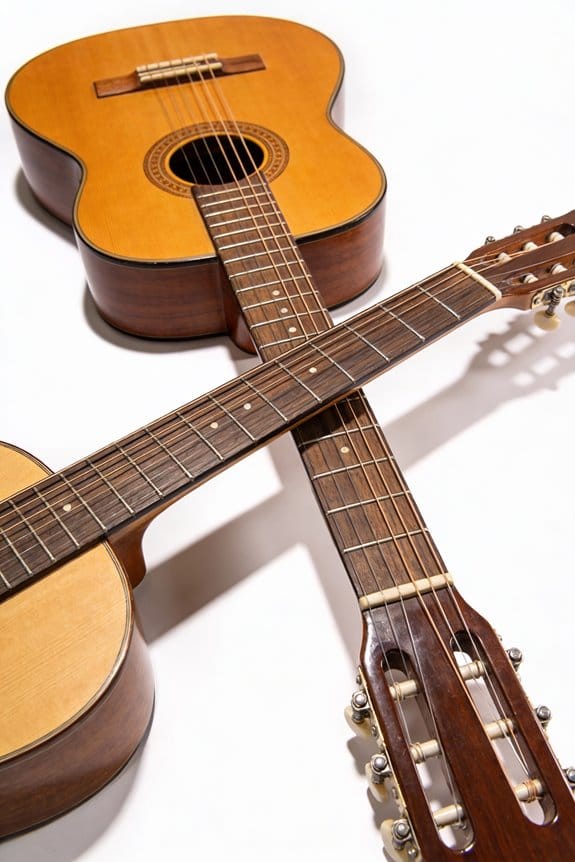
How Classical Guitar Technique Differs From Steel-String Playing

Classical guitar technique and steel-string playing differ considerably. We typically use curved fingers with our nails for plucking on classical guitars, while steel-string players often use flat picks and adopt more relaxed hand positions. The strings’ tension and material impact finger positioning and sound production. Additionally, the tones vary: classical guitars offer warmth, and steel-string guitars deliver brightness. Understanding these distinctions enhances our approach to each style, setting the stage for deeper exploration of techniques and sound.
Key Takeaways
- Classical guitarists use curved fingers and the fleshy tips or nails for plucking, while steel-string players often employ flat picks or different finger positions.
- The use of longer nails on classical guitars enhances sound production, whereas steel-string players prefer shorter nails to prevent damage from metal strings.
- Classical guitars create a warmer, softer tone with nylon strings, while steel-string guitars produce a brighter, crisper resonance suited for strumming.
- Planting fingers on the classical guitar facilitates control and precision, contrasting with the more relaxed hand positions common in steel-string playing.
- Solo performances focus on intricate fingerpicking techniques in classical guitar, whereas steel-string playing often emphasizes rhythmic contributions and support in group settings.
What Problems Do Players Face When Switching Between Classical and Steel-String Guitars?

You may be interested



Switching between classical and steel-string guitars can be quite the challenge for players! If you’ve ever made that transition, you probably know what I mean. For classical guitarists, one of the big hurdles is dealing with finger fatigue. Steel strings are way tougher than the nylon strings they’re used to, which means you’ll need to exert more effort to press them down. This extra tension can lead to some pretty uncomfortable moments, especially if you’re used to the softness of nylon.
And here’s another thing: techniques that work great on a classical guitar might not translate well to a steel-string model. For instance, many classical players use their nails to get a clean, bright sound, but that can actually damage your nails when playing on steel strings. Plus, you might find yourself needing to rethink how you position your fingers and the pressure you apply while playing. That classic rasgueado technique from classical guitar might feel different and require adjustments to prevent discomfort. Choosing the right materials and tools, such as glass slides known for their ergonomic slide designs, can also influence comfort and technique adaptation.
Understanding Sound and Tone Quality in Guitar Types

Hey! Let’s chat about the sound and tone quality differences between classical and steel-string guitars. If you play one or the other, you probably know that classical guitars feature nylon strings that create a softer and warmer tone. This gives them a beautiful, mellow sound that’s great for fingerpicking or playing intricate melodies. On the flip side, the steel-string guitars have those shiny steel strings that create a bright, crisp resonance—perfect for strumming chords or playing folk music.
You might also notice how the materials really impact the sound. Classical guitars often use softer woods like cedar or spruce, which can make the sound feel a bit more subdued. In contrast, steel-string guitars typically incorporate harder woods that contribute to their brighter and more powerful sound. It’s like the difference between a warm cup of tea and a refreshing glass of lemonade—each one has its own charm. The choice of body material types plays a crucial role in shaping the tonal characteristics and durability of guitars.
How Fingerstyle Techniques Differ for Classical and Steel-String Guitars

Hey there! So, if you’re curious about the differences in fingerstyle techniques between classical and steel-string guitars, you’re in for an interesting ride. Both instruments can create stunning music, but the way we play them really sets them apart. For example, in classical guitar, we like to curve our fingers and use the fleshy tips and nails to pluck the strings. On the other hand, if you’re playing steel-string, you might notice players often grab a flat pick or try different finger positions because those steel strings feel a bit stiffer.
With classical fingerstyle, we focus on planting our fingers on the strings for better control and precision. It’s almost like setting up a solid foundation before building your music! In contrast, steel-string players often have a more relaxed hand position, allowing for a fluid motion that suits various styles. Plus, using nails can give classical players a nice boost in volume, while steel-string guitars may not benefit as much from that.
Another difference is in the patterns we typically follow: classical music often has specific fingerstyle patterns, while steel-string players mix things up with strumming and picking, influenced by popular genres like rock or folk. This variety really shapes how each guitar player experiences and expresses their music. So, whether you’re on a classical guitar or a steel-string, each technique opens up a whole world of possibilities! Next, let’s explore some of those unique patterns and styles in more detail. It’s also worth noting that the string gauge used can influence the ease of fingerstyle playing and the tonal qualities achievable on steel-string guitars.
What’s the Role of Nail Care in Classical vs. Steel-String Playing?
Have you ever thought about how nail care plays a role in classical versus steel-string guitar playing? It’s fascinating! For classical guitarists, having longer nails is really important. Those longer nails can help produce a bright, percussive sound because they make better contact with the strings. Plus, regular shaping and filing of the nails means you can maintain a consistent tone and control your dynamics more effectively.
On the other hand, steel-string players usually keep their nails shorter. Why? The metal strings can be pretty hard on your nails, and keeping them short helps prevent any damage. Each type of guitar has its own fingering techniques and tension, which is why the approach to nail care differs so much. Understanding the different playing styles, from classical to jazz, can also influence your technique and tone, especially when practicing with backing tracks designed for improvisation.
Key Challenges for Classical and Steel-String Players
You know, when we chat about the challenges classical and steel-string guitarists face, it’s fascinating to see how their different playing styles shape their experiences. For instance, classical guitarists often stick to fingerstyle techniques, which need a lot of precision and careful control. On the flip side, steel-string players usually rely on flatpicking to get that extra volume. This difference can lead to some real hand fatigue, especially since the stiffer steel strings can be tough on your fingers.
Another thing to consider is the sound. Steel strings bring out a specific tonal quality that’s quite different from the warm, mellow tones of nylon strings. This means that steel-string players have to really focus on their dynamics and articulation. Just think about it—maintaining clear notes without straining your hand is key. Right-hand positioning and finger anchoring become super important here, something not always emphasized in classical guitar training. Using visual aids like guitar scale posters can help players of both styles master these technical challenges by providing clear references and guidance.
Solo Performance vs. Group Settings: What’s the Difference?
Isn’t it fascinating how the environment we perform in can really change the way we play the guitar? When you’re doing a solo performance with a classical guitar, it’s all about the details—think intricate fingerpicking and precise dynamics. You’re pouring your heart into expressive phrases, which can really captivate an audience that’s listening closely. For example, the way you might linger on a particular note can draw people in and create a magical moment.
Now, switch gears to a group setting, like a folk music jam. Here, you’re not just the star of the show; you’re part of a team. You might find yourself supporting singers or mixing in rhythms with other instruments. It’s a more communal vibe, where everyone contributes to the overall sound. Picture this: you’re strumming away, keeping the beat while harmonizing with a fiddle and a banjo—such a joyful exchange! Choosing the right guitar with comfortable playability can make all the difference in adapting your technique to these diverse settings.
How to Transition Smoothly Between Classical and Steel-String Playing
Shifting between classical and steel-string guitar playing is such a fun and rewarding journey! It’s like mastering two languages in music. To make that switch smoother, start by honing your classical finger techniques—this means avoiding any anchoring of your hand against the guitar. Why? Because that keeps your motions fluid, which is super important when you pick up a steel-string guitar.
Have you ever noticed how nylon strings sound different from steel ones? Getting familiar with those unique tonal qualities is key! For example, when you play classical pieces, you might notice a warmer, more mellow sound, while steel strings offer a brighter, more cutting tone. Strengthening your finger independence and flexibility will also help when you feel the stiffness of steel strings. A cool trick is to use silk and steel strings on your guitar; they’re a fantastic middle ground between the two types.
Don’t forget that consistent practice on both guitars is crucial. Try setting aside specific times during the week to work on classical pieces one day and steel-string songs another day. This way, you’ll maintain your skills and easily flow between the two styles. And speaking of transitioning, once you feel comfortable with the basics, there are some fantastic exercises that combine techniques from both styles! Using a glass guitar slide can also enhance your steel-string playing by providing smooth sliding tones that differ from classical articulation.
Tips for Mastering Specific Techniques in Each Guitar Style
Hey there! If you’re looking to master specific techniques for classical and steel-string guitar, I’d love to share some insights. For classical guitar, one of the key things to remember is to keep your hands relaxed. Curving your fingers down while you play can really help with accurate plucking and improves sound quality. Also, don’t shy away from using your nails; they can actually enhance the tone of your playing!
When it comes to steel-string guitars, the approach shifts a bit. You’ll want to think about your finger techniques—try to avoid anchoring your hand too heavily on the guitar, as this can limit your movement. Instead, focus on the position of your thumb; it can offer you much better control over your playing. Plus, since steel strings are stiffer, you might need to apply a bit more finger strength to get that nice clean sound—so don’t hesitate to build up those finger muscles!
Regular practice is essential in both styles, and don’t be afraid to experiment with where your fingers land on the fretboard. The more you play around, the more comfortable you’ll become, which will ultimately lead to creating some beautiful music. Ready to explore other styles or techniques that might suit your taste? Let’s keep the momentum going! Accurate string height adjustments with a string action gauge can also greatly improve playability and tone in both classical and steel-string guitars.
Frequently Asked Questions
What’s the Difference Between Steel String and Classical Guitar?
The difference between steel string and classical guitar lies in their tone quality and playing style; we appreciate classical guitars for their warm tones and nuanced expressions, while steel strings are known for brightness and versatility in accompaniment.
Does Taylor Swift Play Acoustic or Classical Guitar?
When we think of Taylor Swift’s style, it’s all about acoustic guitar! Her enchanting chords and charming melodies shine through steel-string acoustics, bringing warmth and authenticity to her folk and pop music performances.
What Is the Holy Grail of Guitar?
The “Holy Grail” of guitar for us is achieving that perfect sound quality through finger style techniques. It’s all about finding the ideal blend of tone, expressiveness, and playability that resonates with our unique musical journey.
Are Steel-String Guitars Harder to Play?
Yes, steel-string guitars can be harder to play. We experience increased string tension and the need for precise fingerstyle techniques, which can lead to quicker fatigue and require more strength compared to our nylon-string experiences.


