As an Amazon Associate, we earn from qualifying purchases. Some links on this site are affiliate links at no extra cost to you. Our recommendations are based on thorough research and editorial judgment.


How Guitar Amplifiers Work: From Signal to Sound

Guitar amplifiers transform our guitar’s weak electrical signals into powerful sound waves. First, the preamp boosts these signals, allowing us to shape our tone with equalizers. Next, the power amp takes that boosted signal to drive the speakers with clarity. The design of the speaker cabinet impacts how the sound is projected and bass is delivered. This intricate process connects every component to shape the music we love. Stick around, and we’ll explore more about these amazing devices!
Key Takeaways
- Guitar pickups convert string vibrations into weak electrical signals, initiating the amplification process.
- The preamp boosts these signals, shaping tone through EQ controls and adding effects like overdrive.
- The power amp further amplifies the processed signal to drive the speakers effectively.
- Speakers convert the amplified electrical energy into sound waves, producing audible music.
- Cabinet design influences the overall sound quality, bass response, and tone projection.
The Anatomy of Guitar Amplifiers

You may be interested


You know, when we start talking about the anatomy of guitar amplifiers, it’s like peeling back the layers of an onion to uncover some really cool sound engineering. At the very core, we have the preamp. This little powerhouse takes the low-voltage signal from your guitar—whether it’s an electric or acoustic—and cranks it up to a higher impedance. Think of it as giving your sound the initial boost it needs and letting you play around with tone controls to shape your sound just the way you like it. For example, turning up the treble can give you that crisp, bright tone perfect for rock solos.
Then we hit the power amp, which takes it a step further by amplifying the signal even more. This step is crucial because it drives the speaker while maintaining the sound quality. Imagine you’ve set up for a gig, and you want your sound to cut through the mix; that power amp is what helps you do just that. And speaking of speakers, those cabinets do more than just hold the speaker; their design directly affects how sound disperses in a room. A well-designed cabinet can enhance tonal characteristics, making your music resonate beautifully. The choice of pickup configurations in guitars, like dual pickups or active pickups, also shapes the initial signal that the amplifier processes and amplifies.
Preamp Functionality and Tone Shaping

Hey there! You know, every guitarist gets that the real magic of tone starts with the preamp in our gear. Simply put, the preamp takes the low-level electrical signals generated by our guitar pickups and boosts them into a higher impedance signal, which is crucial for amplifying the sound effectively. It typically has several stages of gain that use either vacuum tubes or transistors to really amplify our signal while also filtering out any noise we don’t want.
One of the great things about the preamp is the EQ controls. They let us tweak our tone by adjusting treble, midrange, and bass frequencies so we can create our signature sound. For instance, if you’re aiming for a bright, cutting sound for rock, you might crank up the treble. On the other hand, for something warmer, like jazz, you could boost the mids instead. Plus, many modern preamps can even produce overdrive and distortion without needing to crank the volume up too much, which means we can explore different styles easily. Many guitar amplifier combos also include built-in effects that enhance tone shaping without requiring additional pedals.
The Role of the Power Amp
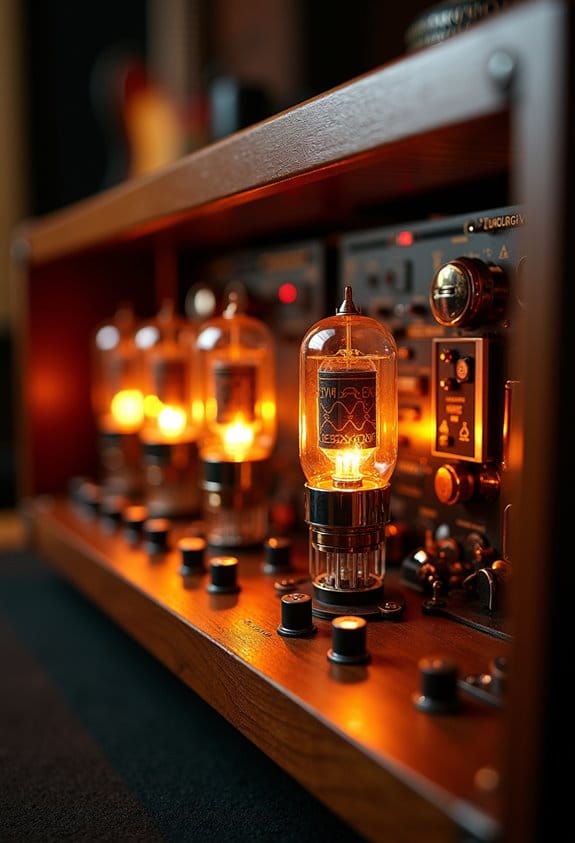
Hey there! You know, while most folks get caught up in the preamp when they’re tweaking their sound, we can’t forget about the power amp. This little powerhouse takes the already boosted audio signal from the preamp and cranks it up to drive our speakers. Think of it as the final kick that transforms our carefully crafted tone into something we can really feel.
Power amps come in two main flavors: vacuum tubes or transistors. Tube amplifiers, for instance, give off a warm, rich sound that’s hard to beat—especially when you’re playing rock or blues. But regardless of the type, the power amp is also in charge of managing overall volume. So, even when we crank up the dial, we want to keep that clarity and quality intact.
Now, here’s something to keep in mind: matching the power amp’s wattage and impedance with your speakers is crucial. If they don’t jive, you could risk damaging your gear. For example, if you’ve got a 100-watt power amp, it’s best suited for speakers that can handle around 100 watts too. This helps ensure you’re getting the best sound experience without any hiccups.
Additionally, many acoustic electric guitars feature onboard EQ systems to help musicians tailor their amplified sound before it even reaches the power amp stage. So, next time you’re fiddling with your setup, don’t overlook that power amp—it’s just as important as the preamp in achieving the sound you love!
Speaker Design and Its Impact
Hey there! Let’s chat about speaker design and how it impacts the sound we get from our amplifiers. It’s really fascinating because while everyone often focuses on the power amp, the speaker design is just as crucial. For instance, if you compare speaker sizes, a 12-inch speaker tends to deliver better bass and more overall volume than the smaller ones you might find in practice amps.
Now, have you ever thought about how the type of cabinet impacts sound quality? Open-back cabinets can create a nice, wide sound that fills a room, but they often lack punchy bass. On the other hand, closed-back cabinets give you that tight, focused bass sound that can really make music feel more powerful. Matching the impedance of your speaker with the amplifier is also super important to get the best performance without any hiccups; you don’t want to damage your gear.
And here’s a tip: always ensure your speaker’s output power ratings exceed that of the amplifier. This helps avoid any potential damage. At the end of the day, the sound waves produced by the speaker’s voice coil, which relies on alternating current, are what bring your favorite music to life. Understanding all of this can really enhance your listening experience, and once you grasp it, you might find yourself curious about how to pick the right setup for your space!
Additionally, considering the cabinet materials durability can greatly influence the overall reliability and tonal quality of your amp system over time.
The Amplification Process: From Signal to Sound
Hey there! Have you ever thought about what happens when you plug in your guitar? It’s pretty amazing how those simple string vibrations can turn into the rich sounds we love. First off, the guitar’s pickups pick up those vibrations and turn them into a weak electrical signal. Think of it like this: it’s just a whisper of sound at this point!
Then, this little whisper travels to the preamp section of the amplifier. Here’s where the magic starts. The preamp boosts that signal, giving it some volume and shaping its tone. You can actually tweak the treble, midrange, and bass to create your unique sound—like turning up the high notes for a brighter tone or lowering the bass for something smoother.
Next, the signal steps into the power amp. This part cranks up the intensity even more, making it strong enough to send to the speakers. When you hit those chords, the speakers spring into action, translating the electrical energy back into sound waves. And don’t underestimate the cabinet design; it plays a crucial role in how those sound waves project. It can totally change your tone and the bass response.
Isn’t it cool to think about how many steps and components work together to create that lovely sound we hear? Now, let’s take a closer look at how each of these parts contributes to your overall tone. Keep in mind that power output and speaker size significantly influence the amplifier’s sound quality and suitability for different playing environments.
Frequently Asked Questions
How Do Signal Amplifiers Work?
Signal amplifiers work like skilled artists, enhancing our sound canvas. They boost weak signals through a precise signal chain, balancing gain control and impedance matching to achieve clear frequency response and rich audio fidelity, shaping our desired distortion effects.
How Do Guitar Amplifiers Work?
Guitar amplifiers work by processing the guitar signal through various components, using tube or solid state technology. We shape tone, control volume, and enhance sound dynamics with distortion effects and effects pedals tailored to specific guitar types.
How Is Sound Amplified Without Electricity?
We’ve all marveled at how acoustic resonance amplifies sound vibrations. Through hollow bodies and resonance chambers, string energy moves air, creating natural amplification. The tonewood properties enhance sound projection, delivering rich musical acoustics without electricity.
What Are the Benefits of Signal Amplifiers?
Signal amplifiers enhance our music’s overall performance by improving signal quality and sound clarity, offering dynamic range and distortion control. They enable tone shaping, noise reduction, and better frequency and transient responses for a volume increase that’s impactful.


