As an Amazon Associate, we earn from qualifying purchases. Some links on this site are affiliate links at no extra cost to you. Our recommendations are based on thorough research and editorial judgment.


How Guitar Effect Pedals Process Your Signal

Guitar effect pedals are amazing tools that transform our clean signals into incredible sounds! They work by altering our tone through various effects like distortion, modulation, and delay. Each pedal has a unique role, shaping volume, adding grit, or creating echoes. The order of these pedals in our signal chain matters, as it can enhance or muddy our sound. By understanding how these effects interact, we can reveal endless creative possibilities. There’s so much more to explore!
Key Takeaways
- Guitar effect pedals alter clean signals through various processes, transforming sound into unique textures and character.
- The signal chain defines the order of effects, influencing tone, clarity, and the overall musical output.
- Dynamics effects, like compressors, manage volume levels to ensure a smooth and consistent sound before distortion occurs.
- Gain-based effects, such as distortion, add grit and intensity to the signal, enhancing the guitar’s tonal character.
- Time-based effects, like delay and reverb, enrich sound by creating echoes and spatial depth, positioned last in the signal chain.
How Guitar Effect Pedals Change Your Sound

You may be interested
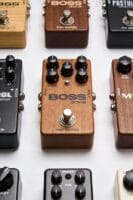

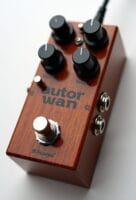
You know, guitar effect pedals can really change the game when it comes to your sound. They take your clean guitar signal and shape it into something totally unique and expressive. For instance, if you use a distortion pedal, you can crank up that gritty edge that many rock guitarists love. It adds a whole new level of intensity to your playing!
Now, think about dynamics effects like compressors—you’ll find they help manage those volume spikes, which means you can sustain notes longer without that annoying jump in loudness. Then there are modulation effects, like chorus, which create this beautiful, shimmering depth in your sound. And don’t forget about delay pedals; they can add those cool echoes that make your music feel fuller and more intriguing.
Oh, and the order in which you set up your pedals matters a lot. For example, if you place your distortion pedal before your modulation effects, you’ll maintain a clear and punchy sound. It really opens up a world of sonic possibilities. Want to explore different sounds? Try experimenting with different pedal placements next time you play!
Additionally, many modern pedals often feature 48kHz/24-bit sampling which ensures high audio quality and preserves the nuances of your guitar tone.
Signal Chain Basics for Optimal Performance
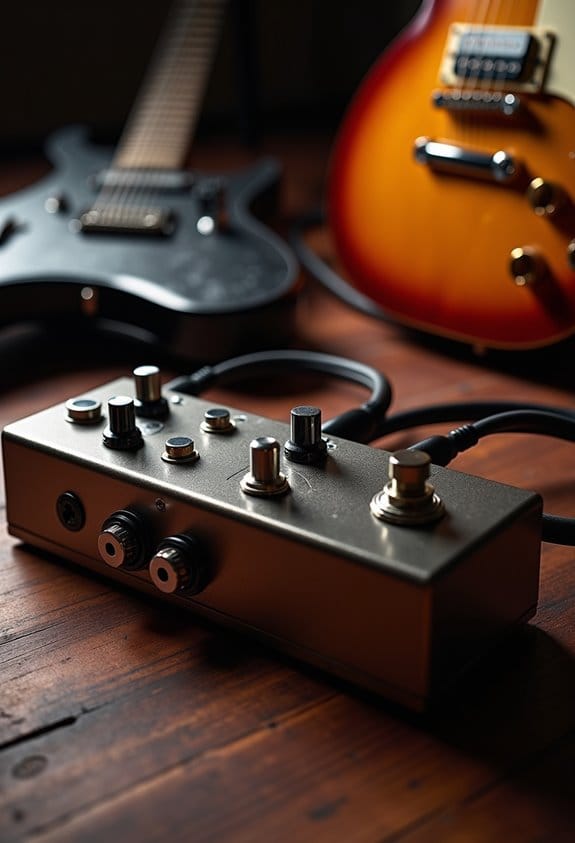
Hey, have you ever thought about how crucial the signal chain is for getting that perfect sound out of your guitar? Basically, the signal chain is the route your guitar’s audio signal takes as it travels through various effects pedals and reaches the amplifier.
Let’s break it down a bit. We usually kick things off with a tuner to make sure we’re hitting the right notes—no one likes playing out of tune! Then, we slide into dynamics effects like compressors, which help smooth out your playing. After that, we bring in gain pedals, like a distortion pedal, to add some grit and character to your tone.
When we get to modulation effects, things like chorus or flanger can really add that lush depth, creating an interesting texture in your sound. Finally, we wrap it up with time-based effects, like delay or reverb, to add that spacious feel. It’s important to remember that the order of these pedals impacts how they interact; for example, putting a reverb pedal before a distortion pedal can muddy the sound instead of enhancing it. By paying attention to your signal chain, you not only boost your tone but also avoid unwanted volume loss, leading to a much clearer output. Including an equalizer pedal can further refine your tone by allowing precise control over specific frequency bands.
Main Types of Guitar Effects and Their Unique Functions

Hey! Let’s talk about effect pedals and how they work their magic on our guitar sound. There are a few main types of effects, and each one does something special to shape your tone in unique ways. For instance, dynamics effects like compressors and limiters help you control your guitar’s volume and sustain. This means your sound stays consistent, whether you’re playing quietly or going full blast during a solo.
Then we have gain-based effects, such as distortion and overdrive pedals. These are fantastic for adding that gritty edge to your sound, especially if you’re into rock or blues. Just think about how a classic old-school tube amp sounds when it’s cranked up—those pedals can mimic that beautifully!
Next up are modulation effects like chorus and phaser. These effects create a sense of movement in your music by altering pitch and phase, giving your notes a lush depth that can be really captivating. Time-based effects, such as delay and reverb, add a spatial quality to your playing. For example, with a delay pedal, you can make your notes echo back, while reverb can give the feeling of being in a large hall.
Lastly, we can’t forget about filter effects like wah. These modify your frequency response and can emphasize specific notes or tones, allowing for some expressive playing, especially during solos. Imagine sweeping through those tones and really bringing your song to life! Each type of effect pedal opens up a world of creative possibilities to explore. It’s really fun to experiment and see how they transform your sound. What kind of music do you want to play with these effects? Overdrive pedals, for instance, often feature controls like Gain, Tone, and Volume that let you fine-tune your sound precisely.
Guitar Pedal Types: Analog vs. Digital Explained
Hey there! So, let’s chat about the difference between analog and digital guitar pedals—it’s pretty fascinating stuff! Analog pedals rely on good old-fashioned components like transistors and capacitors to generate those rich, warm tones that many of us guitarists love. For example, think about how an overdrive pedal can really bring out your guitar’s natural sound when it’s cranked up—it’s almost like adding a little bit of personality to your playing.
On the flip side, digital pedals take your sound and convert it into a digital format. This opens up a world of possibilities! Imagine being able to access a variety of effects like chorus, reverb, and delay from just one compact unit. Modern digital modeling has come a long way too; some pedals can replicate those classic analog sounds so well that you might not even notice the difference.
Whether you lean towards the warmth of analog or the versatility of digital, knowing how they work can really help you enhance your sound. And that’s the beauty of exploring different pedals—they can make your music truly your own! Now, let’s look at how to incorporate these effects into your playing style for even more exciting results.
In addition, many guitarists prefer analog compressors for their warm, classic sustain that preserves the natural character of their instrument’s tone.
Why Pedal Order Matters for Your Setup
Hey there! You know, the order of our guitar pedals can really shape how our sound comes across. It’s all about the pedal order. When we set up our pedals correctly, we can control everything from volume to the character of our tone.
So, let’s break it down a bit. We want to start with dynamics pedals, like compressors, which help shape our volume and sustain. These are essential for getting a clean foundation. After that, we can introduce gain-based effects like distortion—starting with something mild before moving to heavier fuzz can make a real difference in our tone.
Then come the modulation effects, such as chorus or flanger. Placing these after distortion helps keep everything crisp and clear, so your sound doesn’t get muddy. Lastly, we shouldn’t forget about time-based effects like delay and reverb—they belong at the end of the chain. This way, they process the whole signal, giving us that lush, expansive sound we love.
Also, many distortion pedals feature true bypass functionality, which helps preserve your tone when the pedal is off, so placing them correctly in your chain can maximize signal clarity.
Understanding Parallel and Serial Processing Techniques in Practice
Hey! Let’s chat about parallel and serial processing when it comes to guitar effects. Serial processing is pretty straightforward—you connect your pedals one after the other, like a train line. This setup is familiar to a lot of players and can produce some solid tones. For example, if you plug your overdrive pedal into a delay pedal, the overdrive’s sound gets modified by the delay in a clear, linear way.
Now, parallel processing is where things get really interesting. Instead of just one path, you set up multiple signals that can flow independently. This means you can mix a clean tone with effects like reverb or distortion to create a truly unique sound. Just think about blending your clean guitar with an affected signal—maybe a lush chorus—floating over it. It’s crucial to manage the levels properly, though, so neither signal overpowers the other, which keeps your overall tone rich and dynamic. A handy tool for this setup is the Electro-Harmonix Tri Parallel Mixer, which lets you mix different effects smoothly.
Understanding these techniques can really expand your sonic palette. Modern multi-effects processors often incorporate both parallel and serial routing options, allowing for versatile signal chains and creative freedom in shaping your tone. The next step is figuring out how to apply these mad skills in your own rig and which pedals to choose for that perfect blend!
Tips for Maintaining Your Guitar Effects Pedals
Hey! Let’s chat about how to care for your guitar effects pedals to keep them sounding fantastic and working well. You know, giving them a little attention goes a long way. For starters, it’s really helpful to dust them off regularly and ensure all the connections are snug. This can help prevent any annoying signal interruptions that might mess with your sound during a jam session.
Storing your pedals properly is also crucial. A dry environment is your best bet to fend off moisture damage that can corrode the circuits inside. Trust me, you don’t want to be dealing with rusted connections. And if you’re planning to put them away for a while, remember to pop out the batteries. It can save you from potential battery leaks that could mess up the internals – it’s a small step that can make a huge difference!
Lastly, take a moment to check on the physical parts like knobs and jacks. If you notice anything feeling loose or not working as they should, it’s better to sort it out sooner rather than later. And don’t forget about your power supply! Using a proper one can help keep everything running smoothly without any unwanted noise in the mix. So, with a little love and care, your pedals can continue delivering those sweet sounds for a long time! Also, keeping your gear in a case with moisture-resistant construction can significantly help preserve your equipment’s longevity.
Frequently Asked Questions
Can I Use Pedals With Acoustic Guitars?
Absolutely, we can use pedals with acoustic guitars! They allow for tone shaping through acoustic effects, EQ adjustments, and reverb usage. Just watch for feedback issues and enjoy experimenting with different setups during live performance.
How Do I Power My Guitar Pedals Effectively?
To power our guitar pedals effectively, we should consider power adapters that meet wattage requirements, guarantee voltage compatibility, use daisy chaining for organization, explore battery options, and implement noise reduction techniques for pedal longevity and switching methods.
Are There Pedals Specifically Designed for Bass Guitars?
Absolutely, there are bass-specific pedals enhancing our tone shaping. With 40% of bassists using distortion, we love options that maintain low end and dynamic response. Check brands like Darkglass and MXR for great pedal compatibility and effects variety!
How Can I Integrate Pedals Into a Live Setup?
To integrate pedals into our live setup, we’ll layout our pedal board for ideal signal chain flow, utilize an effects loop, coordinate with our sound engineer, and maintain gear for seamless preset switching during live performances.
What Are the Best Beginner Pedals to Start With?
For fantastic foundations, we recommend overdrive, distortion, and fuzz pedals, plus charming chorus effects. Don’t forget delay, reverb, wah, compression, octave effects, and a tone shaper to truly transform our sound on stage!


