As an Amazon Associate, we earn from qualifying purchases. Some links on this site are affiliate links at no extra cost to you. Our recommendations are based on thorough research and editorial judgment.


How Guitar String Material Affects Tone: Bronze, Phosphor, Nickel

When we talk about guitar string materials, we find that they greatly shape our sound. Bronze strings have a bright, vibrant tone, perfect for bluegrass. Phosphor bronze offers warmth and is great for singer-songwriters. Nickel-plated strings deliver a strong, bright sound, excelling in rock and jazz. Each material affects our overall experience, from brightness to durability. By exploring these options, we can find the perfect match for our style. There’s even more to discover about how strings impact our music!
Key Takeaways
- Bronze strings produce a bright, vibrant tone ideal for bluegrass and folk but wear out quickly with regular play.
- Phosphor bronze strings offer a warm, mellow sound with rich midrange and resist corrosion for longer-lasting tone.
- Nickel-plated strings deliver a bright sound with strong output and versatility across various genres like rock, blues, and jazz.
- String gauge affects tension, tonal characteristics, and playability, allowing players to customize sound to their style.
- Regular maintenance, like wiping strings after use, is crucial to preserving tone quality regardless of material type.
Comparing Sound Characteristics: Bronze, Phosphor Bronze, and Nickel-Plated Strings

You may be interested


When you’re picking out guitar strings, the material you choose can really transform your sound. Let’s chat about the differences between bronze, phosphor bronze, and nickel-plated strings and how they can influence your music.
Bronze strings, made of a mix of 80% copper and 20% zinc, are known for their bright, vibrant tone. They work wonders for bluegrass and folk music, making your notes ring out beautifully. Just keep in mind, they tend to wear out quicker than you’d like, so if you’re playing regularly, you might find yourself changing them often.
On the other hand, phosphor bronze strings offer a warm, mellow sound that really shines in the midrange. They’re perfect for singer-songwriters who want a balanced tone and a bit more longevity—great for those late-night jam sessions or gigs where reliability is key.
Then we have nickel-plated strings, typically made with 92% steel and 8% nickel. These are your go-to if you’re playing an electric guitar. They deliver a bright sound with stronger output, making them versatile enough for anything from rock to jazz. Experimenting with these different materials can help you discover which one resonates with your style and enhances your playing, so don’t hesitate to try them all out!
Additionally, factors like string gauge selection can significantly influence the tension and tonal characteristics, helping you tailor your sound and playability to match your style.
How Bronze Strings Shape Your Guitar’s Sound
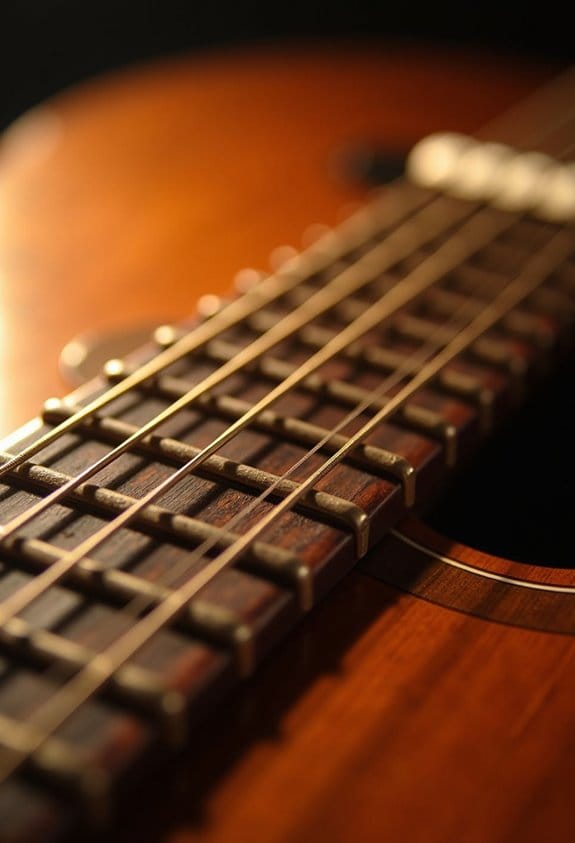
Hey there! When it comes to shaping your guitar’s sound, the choice of string material can make a significant difference, and bronze strings are a favorite among many guitarists. Let’s break it down a bit. If you’ve ever heard of 80/20 bronze strings, they’re made of 80% copper and 20% zinc. This combination gives them a bright and crisp tone that really cuts through the mix. However, keep in mind that this brilliance can fade quicker than you might expect, especially if you’re playing a lot or your hands tend to sweat.
Now, if you’re looking for something with a richer sound, you might want to try Phosphor bronze strings. They’re made up of 92% copper and 8% tin phosphide, which creates a warmer midrange that really complements the nuances of your acoustic guitar. They’re also great because they hold onto that fresh tone longer—about 80% of it sticks around even after some serious playing. For example, if you’re strumming a mellow folk tune or picking out a blues riff, these strings just work beautifully. Additionally, choosing the right string gauge can enhance both tone and playability to suit your style.
Exploring the Warmth of Phosphor Bronze Guitar Strings

Hey there! Have you ever tried phosphor bronze guitar strings? They really bring a warm, rich sound that so many musicians absolutely love. These strings are made of 92% copper and 8% tin, which helps create a tone that really emphasizes those smooth midrange frequencies. This makes them a fantastic choice for acoustic guitar playing, especially if you’re looking to soften brighter sounds while still keeping everything nice and clear.
What’s also cool is their durability. Phosphor bronze strings resist corrosion pretty well, meaning you can enjoy that lovely tone for a long time without needing to swap them out too often. Imagine playing a heartfelt folk song or laying down some blues riffs—these strings give off that perfect mellow vibe that fits right in.
Switching to phosphor bronze strings can really elevate how your guitar sounds, enhancing your playing experience without a lot of extra fuss. If you’re looking to explore more tonal options for your guitar, you might want to check out different types of strings to see how they compare! Their corrosion resistance helps extend string life, making them a reliable choice for both beginners and seasoned players alike.
What Makes Nickel-Plated Strings So Popular?
So, have you ever wondered why so many guitarists swear by nickel-plated strings? Well, it boils down to a special mix of 8% nickel and 92% steel that gives these strings a bright, vibrant sound. This combination really shines across different music styles, whether it’s rock, blues, or jazz. For instance, if you’re jamming with a band, you’ll notice how well nickel strings cut through the mix, allowing your playing to stand out without getting lost.
Another cool thing about nickel-plated strings is their durability. They resist corrosion much better than other types, which means they stick around longer before needing a change. This is a big plus for frequent players—you can focus more on playing rather than constantly swapping strings. Guitarists often talk about how these strings enhance the attack and sustain of their electric guitars, giving every note a little extra punch. When choosing strings, considering the string gauge can also impact the playability and tone you get from your instrument.
How to Maintain Your Guitar Strings for Optimal Sound
Hey there! If you want to keep your guitar strings in tip-top shape for the best sound, regular maintenance is key. Seriously, swapping out your strings at least once a month can make a huge difference—especially if you find yourself playing every day. Fresh strings—like steel or those with wrap wire—can really boost your tone and make playing a lot smoother.
Now, think about it: if you tend to play outdoors or sweat a lot while jamming, those factors can wear out your strings faster, so you might need to change them more often. And here’s a quick tip—after you finish playing, just take a soft cloth and gently wipe down your strings to help prevent that pesky oxidation and wear.
Also, if you’re looking for a different vibe, trying out heavier strings or experimenting with various brands can alter your sound and feel significantly. It’s all about finding what works best for you. Now, let’s chat about tuning—keeping your guitar in tune is just as vital for optimal sound! Additionally, understanding how string gauge affects tension can help you choose strings that match your playing style and maintain your guitar’s setup properly.
Frequently Asked Questions
How Does String Material Affect Tone?
String material considerably shapes our sound—affecting tone clarity, warm tones, and brightness levels. Variables like string gauge and longevity influence resonance factors, while player preference impacts volume projection and fret corrosion. Together, we create our ideal tone!
What Do Nickel Bronze Strings Sound Like?
Nickel bronze strings deliver a warm tone with impressive sound clarity, making them suitable for various playing styles and genres. Their sustain differences and responsiveness analysis cater to user preferences, enhancing volume levels for any performance.
Which Is Better, Bronze or Phosphor Bronze Guitar Strings?
We think phosphor bronze strings often outperform bronze due to their brightness retention and longevity. However, our choice depends on playing style and string gauge. Exploring brands while considering maintenance tips can enhance sound projection and experience.
Do Pure Nickel Strings Sound Better?
We think pure nickel strings can sound better for certain styles, offering warmth over brightness. However, the sound preference debate varies; playability, tone clarity, and longevity impact our choices, influenced by player style and cost versus quality.