As an Amazon Associate, we earn from qualifying purchases. Some links on this site are affiliate links at no extra cost to you. Our recommendations are based on thorough research and editorial judgment.

How to Read Acoustic Guitar Specifications and What They Mean

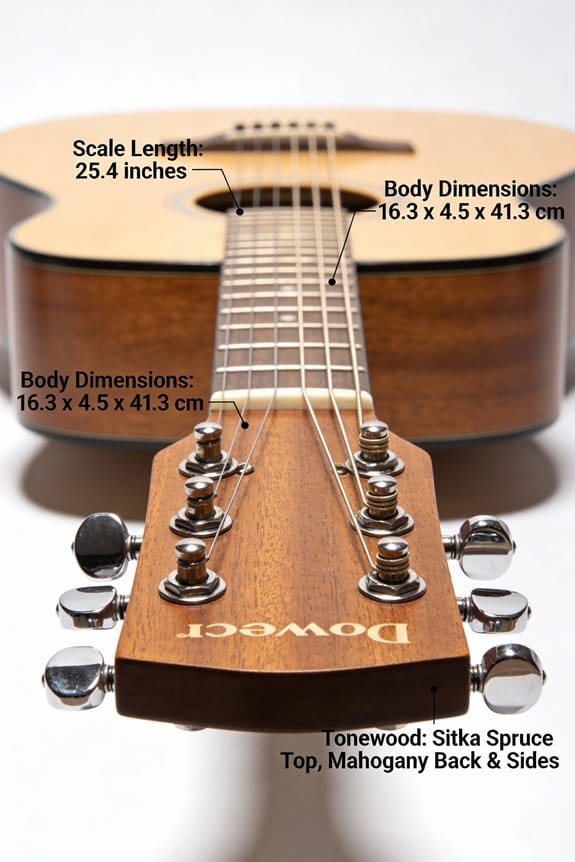
Understanding acoustic guitar specifications can seem tricky, but once we break it down, it’s straightforward! The body size affects tone; larger bodies like dreadnoughts give a rich sound, while smaller ones are great for fingerpicking. Wood type matters too—spruce provides bright tones, and mahogany offers warmth. Scale length influences how the strings feel, and neck width impacts comfort. Plus, bracing patterns enhance sound projection. Let’s now explore these aspects in more detail so we can choose the perfect guitar!
Key Takeaways
- Understand model numbers: They typically include digits showing wood series, guitar type, and body shape, helping identify the guitar’s features and materials.
- Wood types affect sound: Different woods like spruce, mahogany, and cedar produce distinct tonal qualities, influencing your choice based on music style.
- Scale length matters: Shorter scale lengths are easier for fingerstyle playing, while longer scales may enhance brightness but increase finger fatigue.
- Neck width influences playability: Wider necks suit fingerstyle players, while narrower necks cater to those with smaller hands or strumming preferences.
- Bracing patterns impact tone: Scalloped bracing enhances projection and dynamics, affecting how the guitar responds to playing styles and techniques.
Understanding Acoustic Guitar Body Size and Its Impact

You may be interested


Hey there! Let’s chat about acoustic guitar body size and why it really matters when you’re picking out an instrument. You might not realize it, but the shape and size of the body have a huge impact on the overall sound. For instance, if you go for a larger body like a dreadnought, you’re in for some powerful sounds with a rich low-end response—think of strumming a big, bold song. On the flip side, smaller guitars, like parlor models, deliver a clearer, more focused tone, which is perfect for fingerpicking or soft melodies.
Now, let’s talk about body depth. A deeper guitar can really bring out those bass notes and give them a warm presence, ideal for certain styles of music. On the other hand, shallower bodies, like those found in some concert guitars, tend to create a more compressed sound, which can be great for intricate playing. If you’re looking for a nice middle ground, medium bodies like Auditorium models are versatile enough for various styles, making them quite popular. Additionally, choosing the right body size can also affect your comfort and playability, especially for beginners or players with smaller hands, where options like 3/4 scale guitars come into play.
How Wood Type Influences Acoustic Sound Quality

Choosing the right wood type is super important when it comes to the sound of an acoustic guitar. Think about it like this: the difference between a drum and a violin in an orchestra. The wood we use for the guitar’s top really shapes the tone. For example, if you go with spruce, you’ll get bright and resonant sounds that really project well; it’s a fantastic choice for all kinds of music. On the other hand, if you pick mahogany, expect a warm, fuller tone that highlights those lovely mid-range frequencies, perfect for strumming and rhythm.
Now, let’s not forget cedar, which is another softwood. It’s particularly loved by fingerstyle players because it brings out rich, complex sounds. And here’s a fun tip: when you mix different woods for the back and sides of the guitar, you create a unique tonal balance. Each wood contributes its own flavor and resonance to the overall sound. Understanding how these wood types influence the guitar’s tone really enhances our appreciation for the instrument and can help you make a more informed choice when picking out your next guitar. Additionally, many popular beginner guitars feature a spruce top to balance bright tone and durability, making them ideal for new players.
Decoding Acoustic Guitar Model Numbers

Hey there! So, you’re curious about acoustic guitar model numbers, right? I totally get it—they can seem pretty complicated at first glance, but once you get the hang of it, it’s actually quite straightforward.
Most of the time, the model number starts with a digit that tells you which series the guitar belongs to. This series is a hint at the type of woods used for the back and sides. For example, if you see a ‘3’ at the beginning, it might indicate a model that uses mahogany, while a ‘9’ could hint at a higher-end series with premium woods.
Moving on, the second digit usually signifies what kind of guitar it is—like whether it’s a 6-string or a 12-string—and it also points to the type of wood used for the top. A middle number, like ‘1’ or ‘2,’ indicates whether the guitar uses softwood or hardwood. The third digit shows the body shape; for instance, ‘0’ might represent a Dreadnought, known for its robust sound, whereas ‘1’ is often associated with a Grand Auditorium, which is great for fingerstyle playing.
Lastly, look out for any additional letters. They often denote special features, such as cutaways that make it easier to reach the higher frets. So, if you come across a model like “3012”, you can decipher it step by step: a series three model, a six-string with softwood and a Dreadnought body shape.
Understanding these details can help you make a more informed choice when you’re shopping for your next guitar. Speaking of shopping, let’s talk about how to choose the right guitar based on your playing style! Keep in mind that factors like body material can greatly influence the tone and projection of the guitar.
Why Scale Length Matters for Easy Playing?
When you’re picking out an acoustic guitar, one thing you definitely want to think about is scale length—it can make a huge difference in how easy the guitar is to play. Generally speaking, shorter scale lengths, like around 24.9 inches, make the strings feel a lot softer and slinkier. This means you won’t have to press down as hard, which is fantastic for beginners or anyone with smaller hands.
Imagine trying to play a complicated fingerstyle piece on a guitar with a longer scale length—those extra inches can really stretch your fingers and make things feel tougher. On the flip side, while longer scales might give a brighter sound, they also come with a bit of a workout! So, if you love to play intricate chords or melodies but want to avoid finger fatigue, a shorter scale length could be your best friend.
Ultimately, it’s all about finding a guitar that feels good in your hands. Next time you’re shopping, give those scale lengths some thought—they could really elevate your playing experience! Additionally, choosing a guitar with comfortable neck profile and width can further enhance ease of playing and reduce hand strain.
Choosing a Comfortable Neck Width
Hey there! You know how frustrating it can feel when your fingers just can’t quite reach the right strings while playing guitar? That’s why neck width is so crucial for your comfort and playability. Typically, you’ll find neck widths ranging from 1.6 inches to 2.125 inches.
If you love fingerstyle, a wider neck can really help you out. It gives you more space between the strings, making those intricate melodies way easier to navigate. For example, if you’re playing a piece that requires a lot of finger independence, that extra room can make a big difference. On the flip side, if you’ve got smaller hands, a narrower neck might be your best bet. It can make gripping the neck feel more manageable and comfortable.
Don’t forget to consider your hand size! If you have larger hands, going with a wider option can really improve your playability. And let’s not overlook neck shapes! Features like a C-shape profile can add even more comfort while you play. So, it’s definitely worth taking some time to think about neck width. Choosing the right string tension also significantly affects ease of play and sound quality, so pair your neck width with string tension levels that suit your style and comfort. Happy playing!
How Bracing Patterns Affect Sound Projection
Have you ever thought about how bracing patterns on an acoustic guitar can really affect the sound projection? It’s fascinating! The way a guitar is built, especially the bracing inside, plays a huge part in how it sounds when you play it.
Take X-bracing, for example. It’s the most popular kind and it’s designed to add strength. That means when you strum, it helps your guitar get louder and boosts the bass notes while keeping the sound clear. If you want something more balanced for fingerstyle, lattice bracing is worth considering. Its crisscross pattern gives you a beautiful tone, allowing each note to resonate longer, which is fantastic if you like playing intricate melodies.
Then there’s scalloped bracing. This one actually removes some wood from the braces, which makes the top of the guitar lighter and lets it project sound even better. You’ll notice more dynamics and a broader range of sounds when you play. It’s amazing how these different bracing patterns can influence your music, making them perfect for various styles from folk to classical. Understanding these nuances can really enhance your guitar experience, don’t you think? Choosing the right bracing pattern is essential because it directly impacts the tonal quality and the guitar’s overall acoustic response.
What Should You Look for in Acoustic Guitar Specifications?
When it comes to picking the right acoustic guitar, understanding its specifications can really enhance your playing experience. First off, think about the body shape and size. These features shape the guitar’s tone and how easy it is to play. For example, a Dreadnought tends to produce a powerful, booming sound, while an OM shape offers a more balanced tone that’s great for fingerpicking.
Next up is the wood type used for the guitar’s top. Different woods give different sounds—spruce is known for its bright, clear tone, whereas mahogany brings a warm, mellow vibe. And don’t forget about the body depth! A deeper body usually delivers a fuller bass response, making your music sound richer overall. If you’re performing or recording, features like cutaways can help you reach those higher frets more easily, and having onboard electronics makes amplifying your sound a breeze. Many guitars also include built-in EQ systems which let you tailor your tone directly on the instrument for greater sound control.
Frequently Asked Questions
What Is the 80 20 Rule for Guitar?
The 80/20 rule for guitar shows that mastering a few techniques yields most results. By focusing on guitar maintenance tips, understanding string gauge explanations, and conducting acoustic tones comparisons, we’ll greatly improve our playing experience.
What’s the Difference Between Dreadnought & Parlor?
The difference between dreadnought and parlor guitars lies in their acoustic body types. Dreadnoughts offer booming volume and bass advantages, while parlors feature focused mid-range characteristics, making them ideal for fingerstyle playing and softer sounds.
How to Read Guitar Model Numbers?
To read guitar model numbers, we look for digits indicating series, body shapes, and wood types. This helps us understand the instrument’s quality, features, and design, ensuring we choose the right sound and style.
How Do I Tell What Kind of Acoustic Guitar I Have?
We can tell what kind of acoustic guitar we have by examining the guitar body shape, identifying tone woods used in construction, and checking the neck materials. Each element greatly impacts the instrument’s overall sound and playability.


