As an Amazon Associate, we earn from qualifying purchases. Some links on this site are affiliate links at no extra cost to you. Our recommendations are based on thorough research and editorial judgment.


How Violin Family Instruments Produce Sound Without Frets

Violin family instruments create enthralling sounds by using their fretless design. This allows us to slide between notes and explore microtones, which adds unique emotions to our music. Without frets, we enjoy smooth glissando and vibrant vibrato, enriching our storytelling. The rich wood and arched shape of the violin amplify these techniques, delivering warmth and depth. If you’re curious about specific playing techniques or innovations in fretless design, there’s so much more to learn!
Key Takeaways
- Violin family instruments produce sound through the vibration of their strings, independent of finger placement due to the absence of frets.
- The wooden body of the instrument amplifies sound, enhancing tonal quality and richness through its arched shape.
- Players utilize techniques like vibrato, glissando, and sliding to achieve expressive pitch variations and emotional depth in their performance.
- Microtonality is accessible in fretless instruments, allowing musicians to explore in-between pitches and unconventional melodies.
- Bowing techniques contribute to sound production, with variations in pressure, speed, and grip influencing overall dynamics and tonal color.
How Fretless Designs Shape Violin Sound

You may be interested


Let’s chat about the fascinating world of violins, specifically how fretless designs shape their sound. Fretless instruments, like violins, really open up a whole new realm for musical expression. Without frets, you can use techniques like vibrato and sliding between notes, which adds a beautiful emotional layer to your playing. For instance, when you perform a glissando—a smooth slide from one note to another—you create subtle pitch variations that can deeply engage your audience.
One of the cool things about fretless violins is that since there are no frets to limit you, you have the freedom to explore microtones. This means that you can hit those in-between notes that other instruments might miss. Just think about how certain folk music styles or scales from different cultures use these microtones to evoke particular feelings. It’s almost like painting with sound!
The design of these instruments isn’t just about how you play, either. The way the body interacts with the string vibrations plays a huge role in how the sound resonates. For example, if you press your fingers down on the fingerboard smoothly, it helps maintain the purity of the tone and allows those vibrations to transfer beautifully through the instrument. All of this results in a rich and captivating tonal quality that really stands out.
Interestingly, fretless designs like those in violins and some electric bass guitars provide additional expressiveness often utilized in genres like jazz and progressive rock.
Next time you hear a violin solo, pay attention to those subtle slides and tones—it’s that fretless magic at work! It’s incredible how much a simple design choice can amplify expression in music.
Enhancing Melodic Expression With Violins

Let’s chat about how violins really boost melodic expression. Isn’t it amazing how just four strings can give us such a vast range of notes? The violin is tuned in fifths, which means we can hit everything from a deep, resonant G to a bright, soaring E without any frets getting in the way. This lack of frets actually makes it easier to hit those subtle pitch variations that can really tug at someone’s heartstrings.
For instance, when you play a note with vibrato—essentially shaking the finger on the string just a bit—you can bring a whole new level of emotion to the music. Or think about how sliding from one note to another can create a seamless connection between melodies, almost like storytelling through sound.
The violin also sounds incredibly warm thanks to its construction—crafted from rich woods and featuring that lovely arched shape. This unique design amplifies the tone, making every note feel alive and engaging. So whether you’re playing a soulful solo or accompanying a group, the violin helps turn your musical ideas into expressive tales that resonate with everyone listening. It’s just one of the many reasons why the violin holds such a special place in the world of music. To keep your instrument perfectly pitched, many violinists rely on clip-on tuners designed specifically for fretless instruments.
Microtonality and Fretless Performance Techniques
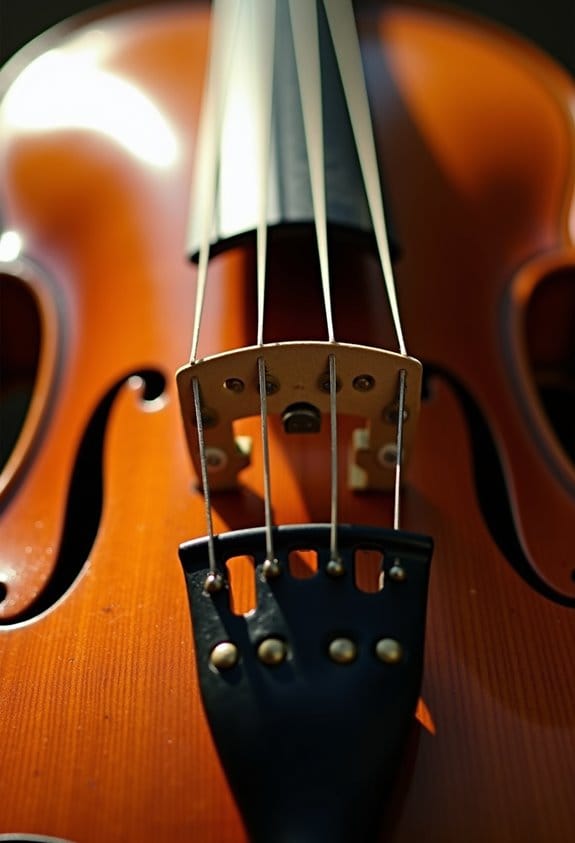
You know, fretless instruments like the violin really give musicians a unique edge when it comes to exploring microtonality. Instead of being stuck to the standard notes, we can find all those in-between pitches that add richness to our music. Think about sliding your fingers up and down the strings with techniques like glissando—it’s like giving your melodies a beautiful, flowing quality.
When it comes to intonation, having that freedom means you can land on pitches just perfectly, which draws you in even more. Plus, with vibrato, you have the chance to shape the emotional feel of a note right as you play it. For instance, you can make a single note swell and then shrink, creating a feeling that resonates with listeners.
This kind of playing really sharpens our skills and keeps us tuned in to the sounds we’re creating, making every performance an enchanting experience. It’s all about finding those subtle details that transform how we express ourselves musically. Once you start experimenting with these techniques, it can really change the way you connect with your music. Additionally, the choice of string gauge and material plays a crucial role in achieving the desired tonal quality and playability on fretless instruments.
Best Bowing Techniques for Fretless Instruments
When you think about playing fretless instruments like the violin, bowing techniques really make a difference in how expressive your music can be. Getting a comfortable grip on the bow is crucial; keeping your fingers relaxed helps it glide smoothly across the strings, which leads to a better sound. Plus, aiming for a straight bow stroke parallel to the bridge means you’re hitting the strings evenly, which is key for a consistent tone.
Think about how you apply pressure while bowing. If you push down a bit harder, you’ll produce a louder sound, and a lighter touch gives you those soft, sweet notes. For example, if you want a bright, sharp sound for a lively section, try speeding up your bow strokes. In contrast, for a warm, gentle passage, slow it down. Also, don’t forget to experiment with different parts of the bow: the tip can create delicate sounds, while the frog is perfect for those powerful moments.
Mastering bowing techniques opens up a whole world of tonal colors that can enhance your playing. It’s all about finding the right balance and exploring what feels good and sounds great. It’s similar to choosing the right frequency response range to match your desired sound qualities. So, let’s talk about how to incorporate these techniques into your practice routine for even better results!
Community Perspectives on Fretless Design Innovations
Hey, have you ever thought about how the design of fretless instruments, like the violin, can really influence how we make music? It’s interesting to see how musicians in our community share their thoughts on fretless violin designs. A lot of them rave about how the lack of frets gives them more control over pitch, allowing for those beautiful, nuanced vibrato effects that can really bring a piece to life.
For instance, some innovative electric violins come with low-profile frets, which help beginners get comfortable while still enabling a smooth transition to more advanced techniques. And you know what? Some creative players have even started using stick-on frets! This allows them to tailor their instrument to fit their personal style and preferences.
What I love is how online forums provide a space for musicians to chat about mixing modern materials with traditional craftsmanship in fretless designs. It’s a cool way to respect the classics while pushing the boundaries. This interplay truly adds depth to our musical landscape! So, let’s explore more about the incredible versatility of string materials instruments use to enhance their tone and playability.
Frequently Asked Questions
How Does a Violin Work Without Frets?
Imagine jamming on a spaceship; a violin works without frets by utilizing bow techniques and finger placement to achieve pitch accuracy. This allows for improvisational freedom, smooth note shifts, and rich musical expression through refined intonation skills.
Why Don’t Orchestra Instruments Have Frets?
Orchestral instruments don’t have frets because they prioritize sound projection and instrument versatility. Without frets, we master finger positioning for expressive playing techniques, enhancing performance dynamics while embracing music theory’s historical context and string vibration nuances.
How Does a Violin Generate Sound?
When we draw our bow across the strings, the vibrations dance through the wooden body, creating a resonance chamber that produces harmonic overtones. With precise finger placement and bow pressure, we reveal pitch variation like magic.
Do Fretted Violins Exist?
Yes, fretted violins exist! Their innovative designs enhance playability and address tuning challenges, though they do present performance technique limitations. Historically, they’ve provided educational resources for beginners, offering improved sound quality through string alterations.


