As an Amazon Associate, we earn from qualifying purchases. Some links on this site are affiliate links at no extra cost to you. Our recommendations are based on thorough research and editorial judgment.


The History and Evolution of the Banjo in American Music

The banjo’s journey in American music is fascinating! Its roots trace back to West African instruments, brought to the Americas by enslaved people. As it evolved, especially through minstrel shows, the banjo gained popularity among diverse audiences. Innovations, like the addition of metal strings and wooden bodies, enhanced its sound, making it a staple in genres from bluegrass to jazz. Today, we enjoy a vibrant blend of styles, highlighting the banjo’s rich heritage. Stick with us to explore its exciting future!
Key Takeaways
- The banjo originated from West African instruments, brought to the Americas by enslaved Africans, highlighting a deep cultural heritage.
- In the 19th century, the banjo gained popularity through minstrel shows, leading to racial appropriation and widespread American musical integration.
- Innovations like wooden soundboxes and metal strings enhanced the banjo’s sound, paving the way for evolution into orchestras and various genres.
- The late 19th and early 20th centuries saw the banjo enter jazz and bluegrass music, especially with Earl Scruggs’ fingerpicking style.
- Today, the banjo enjoys a resurgence in modern genres, blending traditional techniques with contemporary influences while emphasizing its cultural significance.
The Banjo’s African Origins

You may be interested


Have you ever wondered about the origins of the banjo? It actually has its beginnings in West Africa, where enslaved Africans traditionally played gourd instruments like the akonting and banjar. These weren’t just musical tools; they played a crucial role in storytelling and cultural expression among African communities.
When the transatlantic slave trade began in the 18th century, these talented musicians brought their unique instruments to places like the Caribbean and North America. In the new world, they made some interesting modifications to their designs. For example, they added more strings and changed the shape to create what we recognize as the banjo today.
Historical records tell us that in North America, early banjo performances were often by Black musicians who celebrated their rich heritage. The banjo evolved into a powerful symbol of resilience, connecting enslaved Africans to their musical roots. It’s fascinating to think how an instrument can carry so much history and emotion, isn’t it? Let’s take a closer look at how the banjo evolved in America and the role it played in shaping musical traditions. Incorporating classic chord progressions into banjo music helped connect it to broader American musical styles and traditions.
How the Banjo Became Popular in America
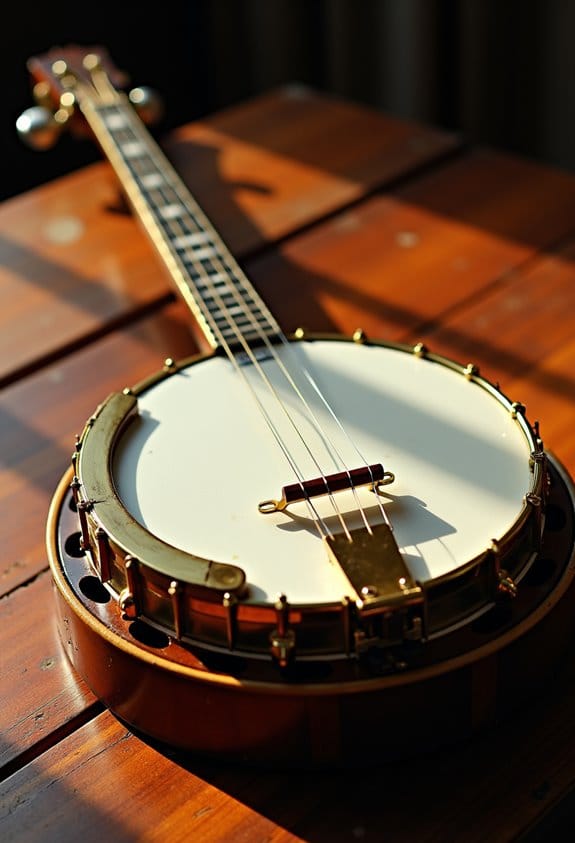
Hey there! You know, the banjo really took off in America during the 19th century. It became a favorite among music lovers, mainly thanks to those lively minstrel shows that highlighted African American music styles. One of the key players in this banjo boom was Joel Walker Sweeney. He made some cool upgrades to the instrument, like adding a wooden soundbox and a fifth string, which made it sound even better and much more appealing.
By the 1860s, a “banjo craze” hit cities like New York, with around 10,000 banjos out there for folks to play! People were so excited that they created all kinds of instructional books, like the “Briggs Banjo Instructor,” to help others learn how to strum those catchy tunes. It was amazing to see the banjo evolve from just a quirky act in minstrel shows to a beloved symbol of American music that found its way into popular songs.
Isn’t it fascinating how an instrument can shape a whole culture? As we explore further, we can look at how the banjo’s influence spread into different musical genres. Similar to how bass players benefit from method books such as Alfred’s Basic Bass Method, early instructional guides helped spread banjo playing skills widely.
The Impact of Minstrelsy on the Banjo
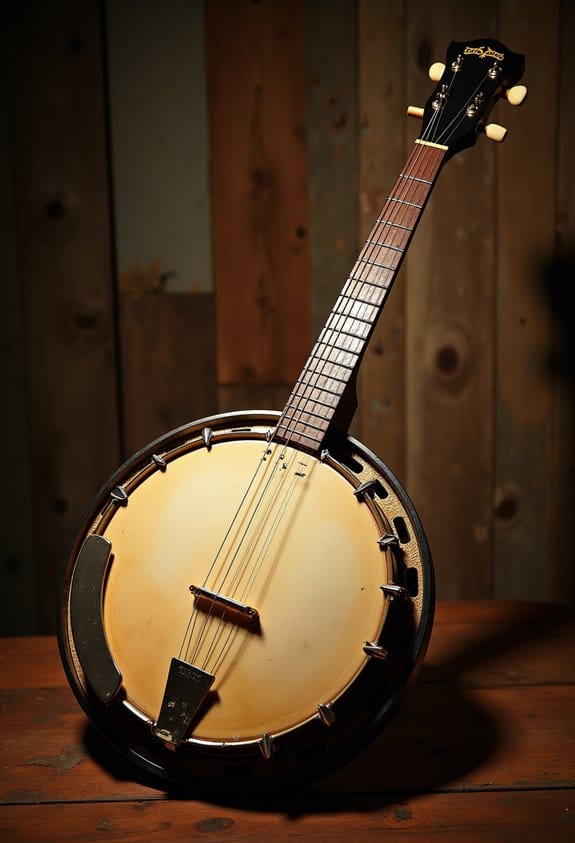
You know, the banjo has an interesting story, especially when you look at its connection to minstrel shows. Between the 1830s and 1870s, these performances really helped the banjo gain popularity. Sadly, many of them involved white performers pretending to imitate African American culture, which often crossed the line into racial appropriation. A key figure during this time was Joel Walker Sweeney, who made an important change to the banjo by adding a fifth string. This tweak not only made it sound better but also solidified its place in the entertainment scene. Similar to acoustic guitars, the materials and construction of the banjo have a significant impact on its tone and playability, highlighting the importance of wood and body shape in stringed instruments.
Classic Banjo Innovations and Their Effects
Have you ever thought about how classic banjo innovations changed the instrument and the music we love? Well, one major shift happened around 1830 when Joel Walker Sweeney made the switch from a gourd body to a wooden drum pot. This change really amped up the sound, making it louder and more vibrant, which opened the door for banjo orchestras to flourish. It’s fascinating how these orchestras mimicked the sounds of traditional string instruments, isn’t it?
And then there was the introduction of metal strings, which gave the banjo that bright, twinkly sound we often associate with folk or bluegrass music. You can really hear that distinction when listening to artists like Earl Scruggs, who took the banjo to new heights with his fingerpicking style. This style became popular by the late 19th century and completely transformed the way the banjo was played, moving away from just simple strumming.
These changes didn’t just affect the banjo itself; they played a big role in shaping American musical genres. As the instrument evolved, so did its impact on popular music, creating a legacy that continues to inspire musicians today. Isn’t it amazing how something as simple as changing the materials can bring about such a significant shift in music? The choice of body materials contributes significantly to an instrument’s tone and sustain, showing how material innovations continue to influence stringed instruments.
Ragtime and Jazz Adaptations of the Banjo
Hey, did you know that ragtime and jazz really changed the course of American music? The banjo played a huge role in that shift! Back in the late 1800s and early 1900s, the banjo started to take center stage in ragtime music. Its syncopated rhythms, rooted in African American folk dance, brought a lively energy to the scene.
As ragtime transformed into jazz, musicians like Johnny St. Cyr put their spin on the banjo, crafting exciting bass lines for bands like King Oliver’s Creole Jazz Band. This was a game-changer because the newly developed 4-string plectrum banjo was perfect for jazz—think rhythmic chord strumming that really got people moving! Talented players blended improvisation with various techniques to show off the banjo’s flexibility, making it a staple in many different music styles.
It’s fascinating to see how these talented musicians showcased the banjo’s potential. This blend of cultures and sounds really solidified the banjo’s important place in American musical history. Speaking of blending cultures, let’s explore how these musical styles influenced each other in even more detail!
The Banjo’s Role in Bluegrass and Folk Music
You know, the banjo really took off in the late 1940s, especially with its prominent role in bluegrass music. Earl Scruggs came along and introduced what we now call the Scruggs style. This innovative technique made the banjo a key player in bluegrass, thanks to its bright, crisp sound that pairs perfectly with the genre’s improvisation and fast-paced rhythms. Imagine a jam session where the banjo dances alongside the fiddle and mandolin—it’s such a lively and vibrant experience!
The banjo also has strong roots in folk music, stemming from African American traditions that often highlighted storytelling and celebration. During the 1960s folk revival, artists like Pete Seeger helped bring the banjo into the mainstream, showcasing its importance in traditional American music. Today, players are experimenting with different techniques, like clawhammer, which adds another cool layer to how the banjo is played.
It’s fascinating how the banjo has evolved yet remains a staple in various musical styles. Talking about its evolution leads us to examine how different musicians incorporate new techniques and styles into their performances today. Just as players choose from a variety of instruments, the selection of string quality and gauge similarly influences the sound and playability across many stringed instruments.
What’s Happening With Banjo Music Today?
Have you noticed how the banjo is really making a comeback lately? It’s fascinating to see this instrument, which has such a rich history, being embraced in fresh and exciting ways. Artists like the Carolina Chocolate Drops and Mumford & Sons are bringing the banjo’s African roots back into the spotlight with their contemporary folk and bluegrass sounds, and it’s resonating with a new audience.
What’s really cool is how modern banjos are blending different genres. You might hear them in jazz, rock, and even pop music! Plus, there are innovative spin-offs like the electric banjo and the banjolele, which are finding homes in all sorts of music scenes. If you’re interested in picking it up, there are plenty of workshops and online tutorials available. It’s a great way to learn about the banjo’s cultural significance in a fun and engaging way.
Festivals like the American Banjo Camp celebrate this versatility, drawing in both experienced players and those who are just curious. It’s a vibrant community, and if you have the chance, it can be a fantastic experience to witness the creativity and fusion that the banjo inspires today. As it evolves, who knows what new sounds and styles will emerge next? Many beginners find that using a banjo with geared 5th tuners helps them achieve precise tuning and a better playing experience right from the start.
Future Directions for the Banjo
You know, the future of the banjo really looks exciting! It’s not just stuck in old-timey music; you’ll find the banjo popping up in all sorts of genres these days, from folk to rock, jazz, and country. What’s cool is that musicians are mixing traditional banjo playing with modern techniques, creating fresh sounds that still respect the instrument’s roots. For instance, you might hear a banjo featured in a contemporary bluegrass tune or even in a pop song, which shows how versatile it can be.
On top of that, the design of the banjo is evolving too! There are now hybrid instruments like the banjolele, which combines the banjo and ukulele, and electric banjos that allow for a different kind of play. This gives players new ways to express themselves and get creative with their music.
Plus, there’s a growing emphasis on understanding the banjo’s rich cultural history. Many educational programs are highlighting its African heritage, which helps broaden awareness and appreciation for the instrument. As musical tastes shift, the banjo continues to hold an important place in folk culture, fostering creativity and blending diverse musical influences. It’ll be fascinating to see how this beloved instrument keeps developing and inspiring musicians everywhere!
For musicians seeking to protect their instruments, investing in a molded banjo case is becoming increasingly popular, combining durability and portability to safeguard these evolving banjos during travel.
Frequently Asked Questions
What Are the Different Types of Banjos Available Today?
When we explore banjos, we find a world of diversity: five string, four string, plectrum, tenor, open back, resonator, electric, travel, hybrid, and specialized banjos await to inspire our musical journeys.
How Can I Learn to Play the Banjo?
To learn the banjo, we can explore online courses, practice routines, and beginner songs. We’ll also join banjo communities, understand music theory, and discover tuning methods and bluegrass styles for effective banjo learning techniques.
What Famous Songs Feature the Banjo Prominently?
The banjo’s a bridge to a musical tapestry, weaving through Bluegrass classics, Folk anthems, Country hits, Jazz standards, and Rock ballads. We cherish its presence in Children’s tunes, Movie soundtracks, Acoustic duets, and Indie favorites alike.
Are There Notable Banjo Players I Should Know?
We should definitely know notable banjoists like Earl Scruggs and Bela Fleck. Their innovative techniques and collaborations showcase the banjo’s cultural impact, highlighting gender dynamics and regional styles throughout music history. They’re true banjo legends!
What Maintenance Does a Banjo Require?
When we think of a banjo’s care like tuning an orchestra, regular maintenance keeps it singing. We should remember string tuning, neck adjustments, head replacements, and proper case care to guarantee its joy doesn’t fade.


