As an Amazon Associate, we earn from qualifying purchases. Some links on this site are affiliate links at no extra cost to you. Our recommendations are based on thorough research and editorial judgment.

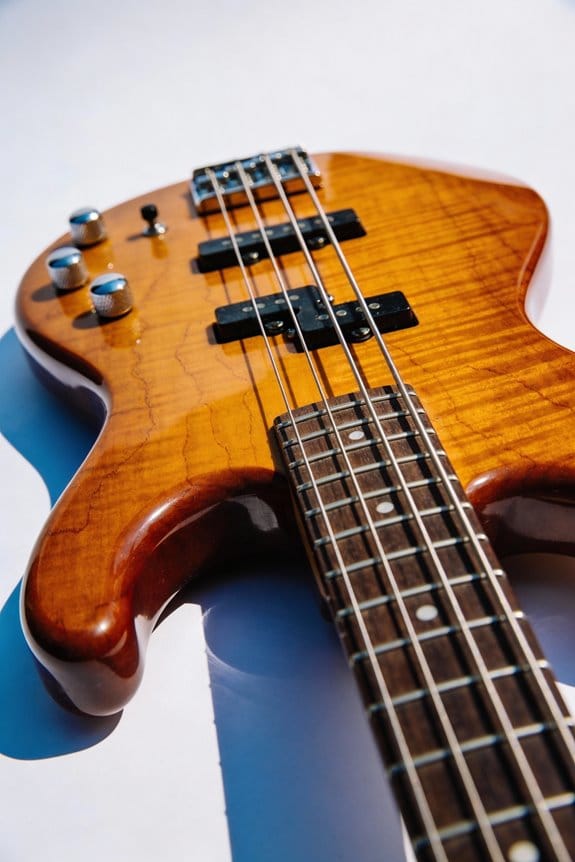
The Physics of Low-Frequency Sound and Bass Guitar Resonance

When we explore the physics of low-frequency sound and bass guitar resonance, we discover how string tension, thickness, and guitar body shape create rich sounds we love in genres like funk and jazz. The deep bass notes resonate around 41 Hz, delivering a powerful thump. By understanding how body materials and design influence sound, we can enhance the musical experience. If you’re curious about how to optimize bass resonance for superior sound quality, stick around for more insights!
Key Takeaways
- Bass guitars produce low-frequency sounds primarily between 20 Hz and 200 Hz, with pitch influenced by string thickness and tension.
- The body shape and material significantly impact resonance, enhancing the tonal quality and depth of the sound.
- Helmholtz resonance enhances low frequencies by resonating air within the instrument, improving overall sound richness.
- Environmental factors like temperature, humidity, and room acoustics can alter tonal qualities and resonance effectiveness.
- Common effective frequencies for bass guitars range from 60 Hz to 250 Hz, providing a strong low-end foundation for music tracks.
Understanding Low-Frequency Sound in Bass Instruments

You may be interested


Have you ever noticed how bass instruments produce those powerful, deep sounds that can literally vibrate the walls? Those low-frequency sounds typically fall in the range of 20 Hz to 200 Hz, forming the backbone of many musical genres. It’s pretty cool how things like the thickness of the strings and how tightly they’re pulled can change the way they resonate. For instance, thicker strings with lower tension will give you those deep, rich notes that make your heart skip a beat.
And there’s more to it! The length of the strings plays a role too; shorter strings will create higher pitches, while longer strings are responsible for those beloved low frequencies we can’t help but groove to. Plus, the shape and size of the instrument’s body really amplify these sounds. Think of an upright bass — its large body helps project those warm tones that fill a space.
Understanding this not only enhances our appreciation of music but also gives us insight into how different instruments contribute to the overall sound. Next time you hear a bass line that’ll make you want to dance, just remember all the fascinating physics behind it! The choice of body material in bass guitars also significantly influences the resonance and tone quality of these low-frequency sounds.
How Resonance Enhances Bass Guitar Sound
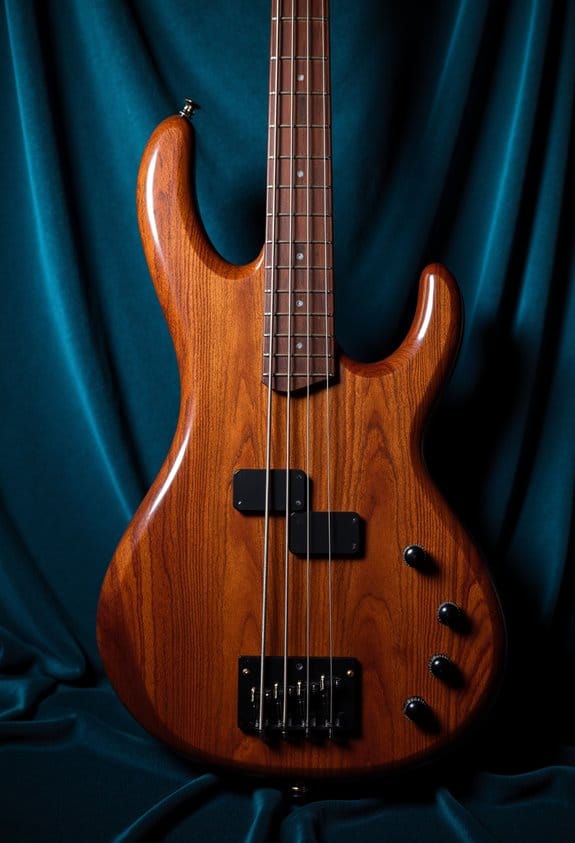
Hey there! You know, resonance really does wonders for the sound of a bass guitar. It’s what transforms the notes into that rich, deep sound that makes you just want to groove along. Think of the guitar’s body as a giant sound box; when you play, those low-frequency sound waves bounce around inside, creating fuller, more vibrant tones that make everything pop during a jam session.
Now, have you ever noticed how some strings sound different depending on how tight or thick they are? That’s because adjusting the tension of the strings changes their resonant frequencies, letting you shape your sound to fit your style. For instance, if you use heavier gauge strings, they’ll deliver a thicker tone with more sustain.
And here’s a cool tidbit: when you hit certain notes, something called Helmholtz resonance kicks in. This is where the air inside the guitar’s body starts to resonate, boosting those lower frequencies even more. So, the size and material of your guitar body really matter too! A well-crafted wooden body can enhance those resonance characteristics, making a world of difference in sound quality.
In fact, the choice of body wood types like mahogany or ash significantly influences the warmth and brightness of your bass tone.
It’s fascinating to think about, right? The next time you’re playing, pay attention to how these elements interact. You might just find a new aspect of your playing to explore!
Essential Factors in Bass Guitar Resonance

Hey! So, you want to know how a bass guitar produces sound? Understanding the resonance of a bass guitar can really level up your playing experience. It all starts with a few key factors.
First off, string tension, length, and mass are essential. These elements directly impact the fundamental frequencies that we hear. For example, the lowest E string resonates around 41 Hz, which delivers those rich and deep low tones that make bass guitars so enjoyable. It’s like the heartbeat of the music!
Next, let’s talk about the body shape and material. Different designs can highlight specific frequency ranges, which is crucial when it comes to how acoustic instruments sound. Think about how a Fender Precision Bass has a different tonal character compared to a Rickenbacker.
And don’t forget about Helmholtz resonance! This concept comes into play around the soundhole, where some low frequencies get amplified. It’s fascinating how the interaction between the vibrating strings and the air trapped inside the body creates these standing waves. This boost in bass response is what helps us achieve that fuller sound we all crave.
Additionally, using a bass amplifier with larger speaker sizes can further enhance those low-frequency resonances by delivering richer and more powerful bass tones.
Guitar Body Design and Low-Frequency Response
Did you know that the design of a bass guitar’s body plays a huge role in shaping those deep, rich tones we all love? A larger body can really boost the bass response, which means you’ll get more resonant low frequencies. For example, if you pick a bass with a wider body, like a Fender Jazz Bass, you’re likely to notice that profound sound right away.
The materials used also matter a lot. Lightweight woods like spruce are common for the top plates because they really help to support those low-frequency vibrations, giving you that warm, inviting sound. Think about how some acoustic guitars use mahogany for a deeper tone, while spruce brightens it up—it’s a bit like how different ingredients can change a recipe.
Then, there’s the internal bracing. This refers to the pattern of wooden supports inside the guitar. Not only do they keep the body strong, but they also help project low frequencies effectively. For instance, if you’ve ever noticed how some bass guitars resonate more when you hit the low E string, that’s often due to clever bracing and the body design working together.
The shape and dimensions of the guitar body help determine the fundamental frequencies of the bass notes it produces, which can really enhance your listening experience. So, when you’re looking for a bass, take a moment to think about these design elements—it makes a big difference! Now, let’s talk about how string choice interacts with these designs to further shape your sound. Using the right acoustic guitar pickup can also influence how these low frequencies are captured and amplified, ensuring your bass tones come through rich and clear.
Common Bass Guitar Frequencies and Their Significance
When we start talking about bass guitar frequencies, we’re really getting into the essence of music. The common frequencies for bass guitars sit between about 40 Hz and 400 Hz, but the real magic happens in that sweet spot from 60 Hz to 250 Hz. For instance, when you play the open E string, which resonates around 41 Hz, you’re laying down that powerful low-end foundation that gives the music its pulse.
Now, think about those lower frequencies from 80 Hz to 100 Hz. They create that unmistakable “thump” you hear in a lot of your favorite tracks—you know, the kind that makes you want to move! On the other hand, frequencies near 200 Hz add warmth and body, enriching your tone and making it feel fuller. But be careful with the frequencies above 250 Hz; they can muddy up your mix and make everything sound less clear.
Understanding these common bass guitar frequencies can seriously help you craft a more vibrant sound in your music. So, as you explore your riffs and melodies, keep these frequency ranges in mind to make your bass stand out in the mix! Maintaining optimal humidity levels in your instruments can also preserve their resonance and tonal clarity over time.
Techniques for Applying Helmholtz Resonance in Guitar Acoustics
When we talk about guitar acoustics, Helmholtz resonance really stands out as a fascinating concept. It’s not just some technical jargon; understanding it can truly help us tap into richer sounds from our instruments. If you’re looking to bring out the best in a bass guitar, one straightforward place to start is with the soundhole size. By making the soundhole a bit larger, you can actually lower the resonant frequency, which means those deep, rich bass notes can really come to life.
Now, let’s consider the role of internal bracing and the overall body dimensions of the guitar. Adjusting these elements can really optimize Helmholtz resonance. For example, using lighter bracing can allow for better vibration transfer, and tweaking the body size might enhance projection and tonal clarity. If you take a moment to dig into the formula for Helmholtz resonance, you can figure out the ideal dimensions and parameters for your specific guitar. This knowledge not only empowers you but elevates your playing experience, allowing that bass guitar to truly shine. With this understanding, we can start exploring other aspects of guitar design that can enhance sound further, like materials used in construction or pickup placements. Additionally, considering different body and neck materials like maple or sapele can significantly affect the tonal qualities and resonance of the instrument.
How Strings and Body Collaborate in Resonance
Hey! So, let’s chat about how the strings and body of a bass guitar come together to create those amazing sounds we love. The strings, especially the thicker and longer ones, are responsible for those deep, booming bass notes we want to hear. But here’s the cool part: it’s really the body of the instrument that amplifies all that sound.
Think about it—when you pluck a string, it vibrates and sends those vibrations into the body of the bass. The shape and materials of the body matter a lot! For example, many bass guitars use lighter woods like spruce for the top, which helps the sound resonate, while the back might be made of denser wood to hold more sound. This setup helps turn those string vibrations into real air movement, which makes the sound louder and richer.
Ever heard about Helmholtz resonance? This phenomenon happens when air vibrations inside the body resonate at certain frequencies, and it really enriches what you hear. It’s like when you blow across the top of a bottle and get that perfect note! Understanding this interaction not only deepens your appreciation for the instrument, but it also gives you a better sense of how to play it for that full, deep bass experience. So, next time you’re listening to music, think about how those strings and body are working together to create those iconic sounds! Additionally, the choice of strings, such as medium gauge strings, influences the tonal richness and playability essential to bass resonance.
Optimizing Bass Resonance for Superior Sound Quality
Hey there! You know, optimizing the resonance of a bass guitar is super important if you want to get that rich, deep sound that really stands out in a mix. Typically, we’re focusing on a frequency range from about 20 Hz to 200 Hz. Think of it as the heartbeat of the music! You can really enhance those low-end vibes by tweaking the string tension and length; when you do this, it changes the fundamental frequency and adds some awesome harmonic overtones.
Another thing to consider is room treatment. This involves making adjustments to the space where you play or record. For instance, adding some acoustic panels can help improve how those low frequencies project. Also, a quick tip: if you notch around 60 Hz on your EQ, it can really help clear out any muddy sounds that might step on the kick drum’s toes, keeping everything crisp and clean.
And don’t forget about side chaining! Linking your bass to the kick drum helps maintain that powerful punch you want while avoiding distortion. It creates a solid low-end foundation that makes your mix feel cohesive. With these tips, you’ll be well on your way to achieving superior bass resonance, which really sets the tone for the entire track!
Choosing the right amplifier with suitable power output and speaker size also plays a critical role in effectively projecting and shaping those low frequencies in both practice and performance settings.
Practical Strategies for Adjusting Resonant Frequencies
Hey there! If we want to amp up the sound of our bass guitar, adjusting resonant frequencies is super important for getting that clean and powerful low-end. Think about it this way: the length of the string actually impacts how it resonates, and that can change the overall vibe of our bass. For example, a shorter string will give a brighter, punchier sound, which might be perfect for what you’re going for.
Now, to really dig into our sound, using an audio analyzer can be a game-changer. It helps us visualize where certain frequencies—especially in the 60-80 Hz range—clash with the kick drum. If we notice there’s some interference, we can use EQ to boost those kick frequencies between 80-100 Hz. This way, the kick stands out strong while the bass still remains clear. Another helpful trick is side chaining the kick with the bass; this creates a nice rhythmic push and pull, letting both instruments shine without stepping on each other’s toes.
Additionally, incorporating a piezo guitar pickup can capture the natural tone of your bass guitar, enhancing resonance without feedback or loss of clarity.
Environmental Factors Influencing Bass Guitar Resonance
Hey there! Have you ever thought about how environmental factors can influence bass guitar resonance? It’s pretty amazing how things like temperature and humidity can really shape the sound we get from our instruments. For example, if it’s a bit humid, the strings tend to vibrate more freely, giving us a richer tone.
The space we play in plays a huge role too. If you’re in a large room with hard walls, those surfaces bounce the sound back to you, making the low frequencies punchier. On the other hand, jamming in a smaller, carpeted room might dull the sound a bit because those soft surfaces soak up some of the vibrations. So, if you’re looking to amp up your sound, consider your surroundings!
Don’t forget about other objects in the room, too. If you’ve got a lot of furniture, it can alter how sound waves travel around you. Hard surfaces like wooden floors or brick walls can enhance the quality of your sound. Just be mindful of external noise as well; sounds from outside can interfere with your bass frequencies, so it’s something to consider when you’re setting up your practice space.
Understanding how environmental factors affect bass guitar resonance can really deepen your playing experience. Next time you’re about to jam, think about where you are and how it might change your sound! Regular guitar maintenance helps preserve the instrument’s optimal resonance and sound quality over time.
Frequently Asked Questions
Is Lower Hz Better for Bass?
Like the foundation of a house, lower Hz frequencies provide the essential bass note characteristics we love. They create depth and fullness, greatly impacting our listening experience—so yes, lower Hz is definitely better for bass!
Is Bass Considered Low Frequency?
Yes, bass is considered low frequency. It typically falls within the 20-250 Hz range, giving that deep bass sound we all love in music. We appreciate how these frequencies enrich our listening experience together.
Which Hz Frequency Is Best for Bass?
While some might think higher frequencies suffice for bass tone, we believe 60 to 100 Hz is where the magic happens. Those sound waves create deep, powerful resonance that truly brings our music to life.
What Is the Lowest Frequency a Bass Guitar Can Play?
The lowest frequency we can get from a bass guitar is around 41 Hz, depending on string tension and pickup type. By adjusting these factors, we can enhance our bass sound and explore lower frequencies effectively.


