As an Amazon Associate, we earn from qualifying purchases. Some links on this site are affiliate links at no extra cost to you. Our recommendations are based on thorough research and editorial judgment.


Tube Amps vs Solid State Amps: Technical Differences Explained

When exploring tube amps vs. solid-state amps, we find key technical differences. Tube amps use vacuum tubes for amplification, producing warm tones and natural overdrive, but require maintenance and warm-up time. In contrast, solid-state amps utilize transistors for clean, precise sound, ideal for various genres and offering durability. While tube amps shine in warmth, solid-state amps excel in versatility. Each type has its charm, and as we dig deeper, we can uncover what makes one better for your setup!
Key Takeaways
- Tube amps use vacuum tubes, creating warm tones and pleasing harmonic distortion, while solid-state amps utilize transistors for clean, precise sound.
- Tube amps experience smooth clipping during play, producing an organic feel, in contrast to solid-state amps that maintain consistent sound across volumes.
- Solid-state amps typically require less maintenance and can be used immediately, whereas tube amps need regular tube replacements and warm-up time.
- Tube amps are preferred for genres like blues and jazz, while solid-state amps are ideal for pop and metal due to their reliability.
- Hybrid amps combine the characteristics of both tube and solid-state systems, offering versatility in tone exploration and performance.
Understanding the Basics of Tube and Solid State Amps
You may be interested



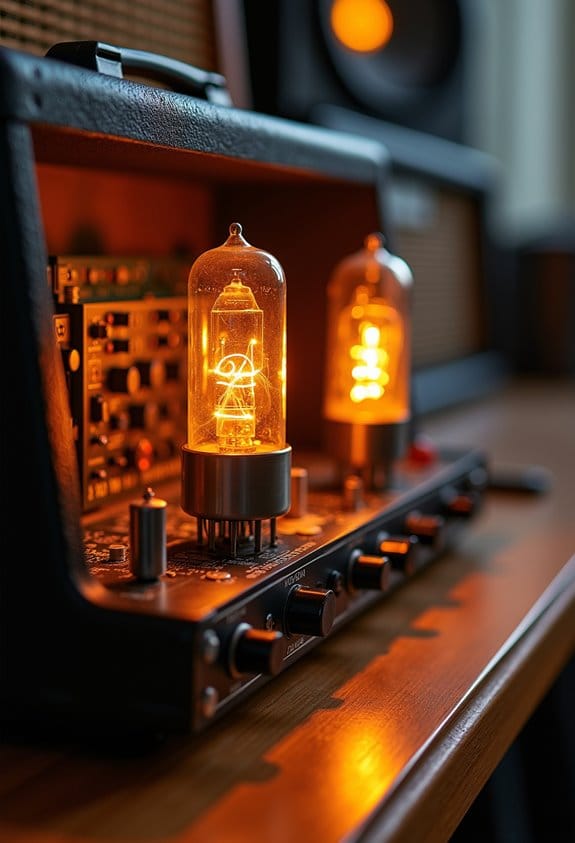
Hey there! Let’s talk about guitar amplifiers because there’s so much to explore with tube amps and solid-state amps. You know, tube amps use vacuum tubes for amplification, which is part of what gives them that rich, warm sound that so many musicians adore. It’s like a cozy hug for your ears! They can really create beautiful overdrive and complex tones, but don’t forget they need a little warm-up time and can get pretty hot to the touch after you’ve been jamming for a while.
Now, if you turn your attention to solid-state amps, they operate differently. These amps rely on transistors instead of tubes and give you a very clean and precise sound. They respond quickly, which might be perfect for styles like metal where you need that sharp attack. Plus, they require way less maintenance—just plug them in and you’re good to go! Another cool thing is that solid-state amps can work with a broader range of speakers. So, if you’re ever in a pinch and need to borrow a speaker, you’ll find it easy to pair with a solid-state setup.
Understanding the differences between these amps can help you choose the right one for your sound. Whether you’re into that vintage vibe of tube amps or the reliability of solid-state, each has its own charm and benefits to offer. It’s also important to consider power tubes and preamp tubes since they significantly shape the tonal character and dynamics of tube amps. So, what’s next on your mind?
How Amplifiers Work: Tube Operation vs. Solid State Electronics
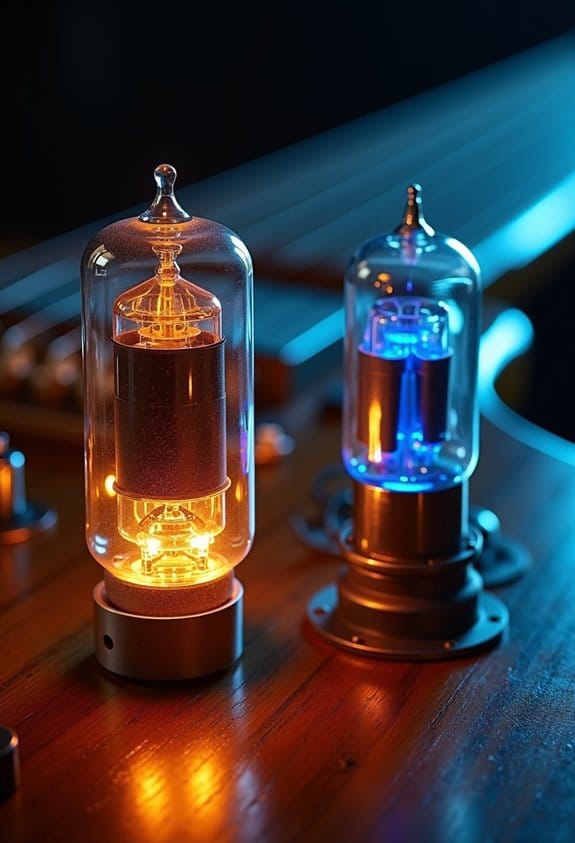
Hey! Let’s talk about amplifiers and how they work, focusing on the differences between tube and solid-state technologies. So, when we think about tube amplifiers, they use vacuum tubes, right? Basically, electrical current moves between a cathode and an anode, and this movement is what helps amplify the sound. It’s a bit like how a light bulb glows when electricity flows through it, but instead, we’re boosting sound signals.
On the flip side, we have solid-state amplifiers. These guys use transistors, which are semiconductor devices. They’re super compact and tend to last longer since there are no fragile tubes that can break. Think of solid-state amps as the reliable friends of the audio world—simple to use and they sound clean and precise.
Now, when it comes to sound, tube amps have that warm, rich tone that many musicians love, especially in genres like blues or rock. This warmth often comes from the type of distortion they create, which can be really pleasing to the ear. Meanwhile, if you need something that’s easy to set up and runs cool without much fuss, solid-state amps are your best bet. Both types have their strengths, so it really depends on your musical taste and what you’re looking for.
It’s fascinating how those choices can influence your sound, isn’t it? Next, let’s explore some popular models in both categories and what makes them stand out! Many modern amps also provide built-in effects to expand tonal possibilities without extra pedals.
Key Differences in Sound Quality: Tube vs. Solid State

You know, the whole tube vs. solid-state amplifier debate is something musicians and audiophiles have been chatting about forever. It’s really fascinating how each type influences sound quality in its own way. Tube amps are loved for their warm sound, often described as having rich harmonic distortions. This quality is especially cherished by guitar players who jam in vintage genres like blues or rock. When you push the volume, tube amps tend to produce a smooth clipping that feels organic and breathes along with your playing style.
On the flip side, solid-state amps shine when it comes to delivering a clean, accurate sound. They don’t color your music, which is ideal if you’re after a precise audio experience. For example, solid-state amps can clearly define where each instrument sits in a mix. You’ll notice this in live settings or when playing complex pieces; everything is distinct and structured. So, tube amps give you that spacious, dynamic vibe, while solid-state amps offer consistency across different volumes and styles.
Ultimately, it comes down to what you personally enjoy in your guitar sound. Some folks might prefer the vintage warmth of tubes, while others might be drawn to the clarity of solid-state amps. Whatever your choice, it’s all about finding the right fit for your musical voice! It’s a lot like choosing between different guitar slides—each produces distinct tonal qualities, where thicker designs provide long sustain and a fuller sound.
Comparing Amplifier Options: Which Is More Versatile?
So, you’re wondering which amplifier option is more versatile for your musical needs, tube or solid state? Well, let’s break it down. Solid state amps really stand out when it comes to versatility. They often come packed with built-in effects and modeling options, which means you can easily switch up your sound to fit whatever genre you’re playing—be it rock, jazz, or blues. For example, some solid state amps let you dial in different tones with just a few knobs or even have preset settings for quick changes on stage.
On the other hand, tube amps are loved for their rich, warm tones but can sometimes feel limited. To achieve similar effects, you might find yourself investing in extra pedals, which can complicate things. Plus, while tube amps have their charm, many musicians appreciate the convenience of modern solid state amps, which can even have programmable features for those who like to experiment during performances.
Then there are hybrid amps that blend the warmth of tubes with the reliability of solid state technology. This combination gives you a taste of both worlds. Ultimately, if versatility is what you’re after, solid state amps usually take the lead. Now, let’s explore how different genres might influence your choice of amp even more.
It’s also important to consider the durability and build quality of your amp setup to ensure it withstands the rigors of travel and frequent use.
Are Tube Amps a Worthwhile Investment?
So, you’re wondering if tube amps are a worthwhile investment? Let’s break it down a bit. Tube amps are known for their incredibly rich and warm sound, making them a favorite among musicians, especially in genres like blues and jazz. Think about that creamy tone you hear in classic rock songs; a lot of that comes from tube amps!
Now, they can be quite an investment, ranging anywhere from $500 to several thousand dollars. But here’s the thing: they tend to last a long time and often hold their value really well. For serious musicians, that makes them a smart choice. Plus, many professional recording artists swear by tube amps because of their organic sound and the natural way they distort, which can give a really authentic vibe to recordings.
Just keep in mind that they require a bit of upkeep, like replacing tubes every 6 to 18 months. But if you’re okay with that, tube amps can enhance your music experience significantly. Plus, they can become a part of your musical journey that you genuinely love taking care of. So, as we think about our gear, let’s also consider the sound quality and maintenance of the tools we use to create our music. What do you think?
It’s also useful to understand how power output and speaker size affect the tonal qualities and performance of amplifiers.
Maintenance Needs of Tube and Solid State Amps
Hey! Let’s chat about the maintenance needs of tube and solid-state amps. If you’re considering which one to go for, it’s really good to understand how much care these amps actually need. Tube amplifiers, for instance, need a bit more love. You have to replace the vacuum tubes every few months—especially if you play a lot. Over time, those tubes can wear out, and trust me, you’ll notice a dip in sound quality if you don’t stay on top of it. Plus, they require a warm-up period to sound their best, which can take several minutes.
Now, solid-state amps are almost like the set-it-and-forget-it option. They’re built sturdy and typically can go for years without much fuss. You don’t have to worry about bias checks or adjustments like you do with tubes, which means you can plug in and start playing right away—no waiting around! For example, if you’re a gigging musician who values convenience, a solid-state amp might be your best bet.
Many acoustic electric guitars come with onboard EQ systems that let players customize their sound when amplified, showing how versatile gear can enhance performance.
Do Hybrid Amplifiers Offer the Best of Both Worlds?
Hey, have you ever wondered if hybrid amplifiers really offer the best of both worlds? They definitely do! Think about it: when you’re playing your electric guitar, a hybrid amp combines the warm, rich tones of tube technology in the preamp stage with the reliable power of solid-state components. It’s like having the best of both setups without the hassle!
For instance, if you’re jamming at home and don’t want to deal with overheating issues, a hybrid amp is a solid choice. And let’s not forget, they tend to be lighter than traditional tube amps, making it super easy to lug around to gigs. Plus, they usually require less maintenance, which is a real bonus for busy musicians like us.
What’s really cool is the flexibility that hybrid designs provide. Whether you’re leaning towards that classic tube warmth or seeking out that crisp clarity from solid-state, these amps let you explore a range of tones. It’s all about finding the right sound that fits your style. So if you’re on the lookout for a great balance between vintage vibes and modern efficiency, a hybrid amp might just be the way to go! Many guitarists also enhance their tone further using compressor pedals, which help smooth dynamics and sustain notes. Now, speaking of sound, let’s chat about how different types of guitar pickups can affect your tone.
What Future Trends Shape Amplifier Technology?
Hey, have you noticed how amplifier technology is really changing these days? It’s pretty fascinating! We’re starting to see a mix of both tube and solid-state systems in what we call hybrid amplifiers. These cool devices combine the smooth, warm sound of tubes with the powerful efficiency of solid-state circuits, giving you a whole new way to experience music.
But it doesn’t stop there! Class D amplifiers are getting lots of love right now too, thanks to their great power output and efficiency—think about how they can deliver fantastic sound without using up too much energy. Plus, there are innovations like GaN transistors that make solid-state amps smaller and more efficient than ever. And speaking of tubes, have you heard about the Nutube? It’s a new kind of tube technology that offers better adaptability and lets users tweak their sound more easily.
Lastly, let’s talk about smart amplifiers. They’re coming onto the scene with digital features that make listening to music super versatile and user-friendly. I mean, who doesn’t love the idea of controlling their sound with just a few taps on a screen? With all these advancements, it’s clear that we’re heading towards some seriously exciting audio experiences in the near future! Many of these innovations parallel trends in multi-effects processors, which also emphasize portability, connectivity, and customizable sound options.
Final Thoughts: Which Amp Is Right for You?
Hey there! So, when it comes to choosing the right amplifier, it’s not just about what knobs and dials it has. It’s really about finding an amp that resonates with your musical style and personal vibe. For example, if you’re into rock or jazz, you might fall in love with tube amps—they’re known for their warm tones and rich harmonics. On the flip side, if pop or metal is more your jam, solid state amps can be a great choice since they provide a clean and reliable sound.
Now, let’s talk practicalities. Tube amps usually come with a heftier price tag and need a bit more care, while solid state amps are generally more budget-friendly and sturdy. If you’re often on the move, you’ll probably appreciate how lightweight solid state amps are, making them easy to transport. If you’re feeling torn between the two, hybrid amps might be worth exploring—they combine the warmth of tubes with the reliability of solid state.
Additionally, many electric acoustic guitars come with built-in tuners and EQ systems which help you shape your sound right at the source.
Ultimately, picking the right amp is about what feels best for you. Keep these points in mind as you continue your search!
Frequently Asked Questions
What’s the Difference Between Solid-State and Tube Amps?
When we compare solid-state and tube amps, we see design variations in sound quality, durability, and maintenance. Tube amps offer warmth and character, while solid-state amps provide precision and reliability. Each has its unique appeal.
Can Solid-State Sound as Good as Tubes?
Yes, solid-state amps can sound as good as tubes! We’ve found that modern solid-state designs deliver impressive tone quality, often mimicking the warmth and richness of tube sound while offering additional clarity and dynamic response.
What Are the Disadvantages of Tube Amplifiers?
Like a vintage car, tube amplifiers can be beautiful but come with maintenance challenges. They require regular upkeep, can be costly, and their bulkiness makes them less convenient for transport. It’s a trade-off we often consider.
Why Do Tube Amps Sound Better?
We believe tube amps sound better because their harmonic distortion creates a warm, musical tone. This rich character, combined with a dynamic response, enhances our playing, making every note feel expressive and alive in performance.


