As an Amazon Associate, we earn from qualifying purchases. Some links on this site are affiliate links at no extra cost to you. Our recommendations are based on thorough research and editorial judgment.


Understanding Guitar Case Types: Hard Shell Vs Soft Gig Bags

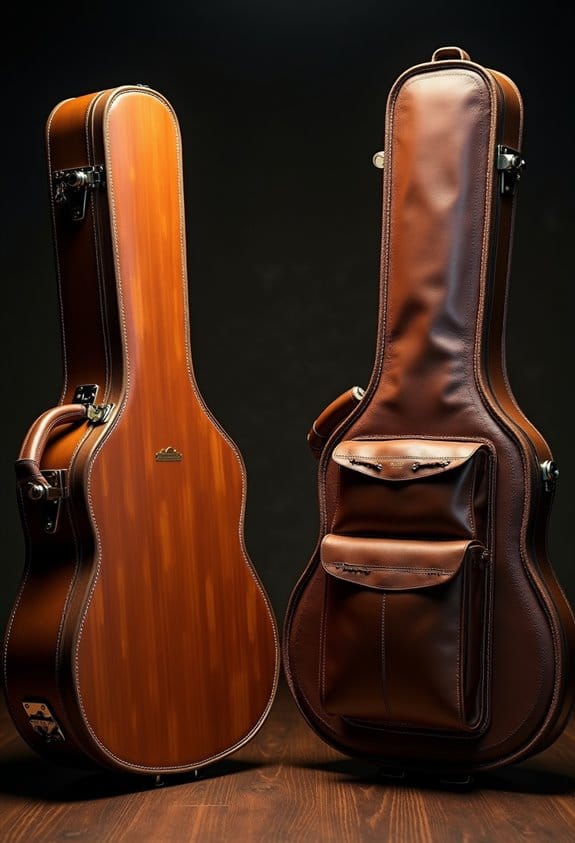
Understanding the difference between hard shell cases and soft gig bags is essential for protecting our guitars. Hard shell cases offer maximum safety, especially during long trips, thanks to their sturdy construction. They may cost more upfront but last much longer. On the other hand, soft gig bags are lightweight and ideal for local gigs, making transport easy. They’re budget-friendly but may need replacing more often. Let’s explore more details to help us make the best choice for our instruments!
Key Takeaways
- Hard cases provide maximum protection against bumps, perfect for long-distance travel and serious musicians handling frequent gigs.
- Soft gig bags offer lightweight portability and are ideal for casual performances and local venues, but less protective than hard cases.
- Hardshell cases are typically more expensive (£200 to £800) but last longer, providing a better long-term investment for serious players.
- Gig bags are budget-friendly (£30 to £150) but may require more frequent replacements, necessitating regular maintenance for optimal usability.
- Additional features like padding thickness and water resistance in gig bags enhance protection, while secure latches in hard cases add safety during transport.
Key Takeaways
You may be interested



Hey there! So, let’s chat about something important if you’re a guitarist or just love music: choosing the right guitar case. You’ve got two main options—hardshell cases and soft gig bags. Hardshell cases are great if you’re serious about protecting your instrument. They’re tough and keep your guitar safe from bumps and even temperature changes. Think about it: if you’re traveling by plane, a hardshell case can really save your guitar from rough handling.
On the flip side, if you’re more of an urban musician who’s just heading to a gig or jam session, a soft gig bag might be your best friend. They’re super lightweight and easy to carry around, making short trips a breeze. Plus, they typically come at a better price point, which is awesome for casual players just getting into the scene.
Basically, your choice between a hardshell case and a gig bag boils down to how you plan to travel with your guitar and how much you care about protecting it. So, think about where you take your instrument and how often, and then make your choice!
Don’t forget to consider water-resistant materials, which can protect your guitar from moisture in various environments.
Let’s keep this conversation going—next up, we can discuss how to properly care for your guitar while it’s in its case!
Defining Guitar Cases and Gig Bags

When it comes to choosing between a guitar case and a gig bag, it’s super important to understand the differences so you can pick what’s best for your gear. A hard case, or hardshell case, is like a fortress for your guitar. These sturdy shells are made from materials like wood or fiberglass, providing maximum protection. I mean, if you’re taking your guitar on a plane or a long road trip, having that internal padding means your instrument is snug and secure the whole way.
Now, let’s talk about gig bags. These soft cases are lightweight and typically crafted from durable nylon or polyester. They’re perfect for everyday use or quick trips to your local jam session. Picture a music class or a short drive to a friend’s house—gig bags offer enough protection with their padded interiors while being easy to carry. Ultimately, your choice hinges on how much you plan to travel with your guitar and the level of protection it needs.
Additionally, many cases come with ergonomic carrying options like adjustable shoulder straps and handles to ensure comfort during transport.
Understanding these options can help you make the right decision for your journey as a guitarist—whether you’re heading to a rehearsal or the studio. What you choose can really impact how you transport your gear safely.
Major Types and Typical Construction Materials
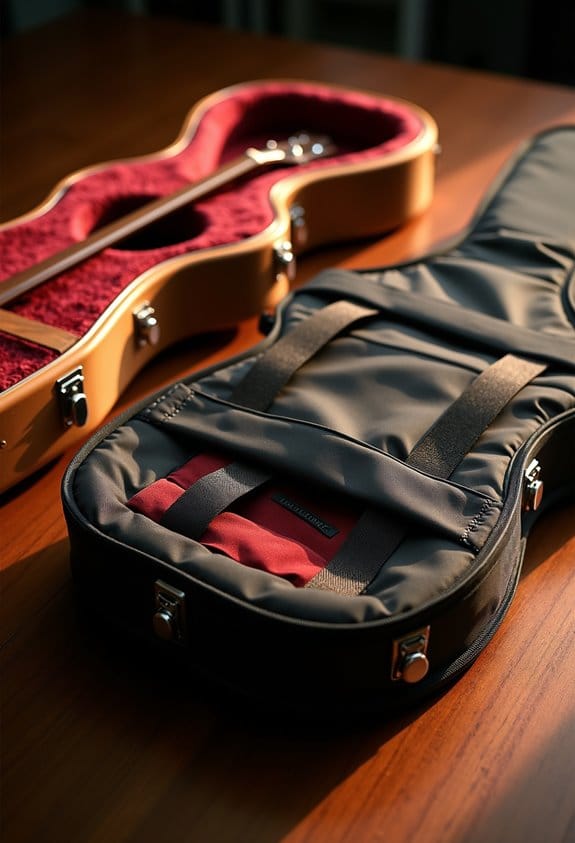
When it comes to choosing a guitar case or gig bag, it’s all about protecting your instrument while also keeping it easy to transport. Think about it: you want your guitar safe from bumps and scrapes, but you also want something manageable when you’re heading to a gig or rehearsal.
Let’s start with hardshell cases. These are the heavyweights of protection, usually made from multilayer plywood and covered in tough materials like tweed or tolex. Picture this: a vintage-style tweed case that not only looks great but also keeps your guitar snug and secure. Some high-end models even use materials like fiberglass or carbon fiber, giving you durable yet lightweight options that don’t skimp on safety.
On the flip side, we have soft gig bags, which are all about flexibility. They’re made from lightweight fabrics like ballistic nylon and polyester, making them super easy to carry. Inside, you’ll typically find high-density foam padding, which acts like a cushion, absorbing shock during transport. For those willing to invest a bit more, some gig bags come with memory foam, adding an extra layer of comfort for your guitar. It’s also important to look for gig bags with adjustable shoulder straps to enhance comfort during transport without compromising protection.
Protection, Portability, and Everyday Use
When it comes to protecting your guitar and making it easy to carry around, hardshell cases and gig bags are the main options to consider. Hardshell cases are like the fortress of guitar protection. They’re built to take a beating from hard hits, temperature changes, and even the dreaded luggage mishaps when traveling long distances for gigs. If you’re a touring musician, you’ll definitely want to rely on a hardshell case to keep your instrument safe.
On the flip side, gig bags are all about portability. They’re super lightweight and come with comfy shoulder straps, which makes them a breeze to carry for local gigs or rehearsals. Think about those days when you’re just popping over to a friend’s place to jam; a gig bag suits that perfectly. While gig bags do have some padding, it’s just not the same as the solid protection hardshells provide. So, if you’re always on the move, you might lean toward hardshell cases, but if you’re mostly playing close to home, a gig bag could be just the ticket.
In the end, it really comes down to your lifestyle and how often you play out. Knowing the difference between these two types of cases can help you make the right choice for your guitar’s needs, whether you’re a frequent traveler or just enjoying casual jam sessions. When choosing a gig bag, be sure to check for features like weather-resistant materials to ensure your guitar stays protected in various conditions.
Costs, Longevity, and Maintenance Factors
When you’re looking into the costs, longevity, and maintenance factors of guitar cases, there’s quite a bit to unpack. Hard guitar cases usually cost between £200 and £800, so yes, they do require a bigger initial investment. But think of it this way: you’re paying for durability. They can last for years, protecting your guitar like a knight in shining armor, which often makes them a better deal in the long run.
On the flip side, you have soft cases, or gig bags, which are way easier on the wallet—typically costing between £30 and £150. The catch? They don’t hold up as well over time and you might find yourself having to replace them more frequently. This can add up, so it’s worth considering how often you might need to buy a new one. A quick tip to keep your gig bag in top shape is to regularly check for wear and tear—like frayed zippers or weak padding. A bit of maintenance goes a long way!
Ultimately, you want to balance the initial price, how often you’d replace the case, and ongoing care. This balance ensures your acoustic guitar is always well protected and reflects its true value. And speaking of protection, let’s chat about choosing the right materials for your case next! Hard-shell cases often use high-quality plywood or waterproof PVC exteriors, which provide top-tier protection and durability to withstand bumps and moisture.
Which Case to Use for Different Scenarios
Hey there! Choosing the right guitar case for different scenarios really matters when it comes to keeping your instrument in great shape. For local gigs or casual performances, I always lean towards soft gig bags. They’re super lightweight, so you won’t break your back hauling your gear around. Imagine just tossing it over your shoulder and heading to the venue!
Now, if you’re traveling with a band in a van, it’s a whole different story. That’s when hard cases come into play. They offer solid protection against all those bumps and knocks that can happen on the road. Picture this: you’re at a rest stop, and someone accidentally bumps into your gear—no worries if it’s safely tucked in a hard case!
For long-term storage at home, I’m all about hardshell cases again. They do a great job of keeping dust and environmental factors at bay, so your guitar stays in top condition. Oh, and if you’re in an urban area, a gig bag makes it easy to hop on public transport without any fuss.
However, when it comes to air travel, you really need to go with approved flight cases. Soft gig bags just won’t meet airline requirements. So, make sure your guitar is safely packed before you head to the airport! It’s all about balancing convenience and protection based on where you’re taking your instrument.
Also, considering factors like body wood types can influence how you protect and store your guitar given the wood’s sensitivity to environmental changes.
Personal Experiences and Observations
Hey there! You know, when it comes to guitar cases, we’ve all got our own stories, right? Choosing the right one really plays a huge role in keeping our instruments safe. Many of us lean towards hard cases because we’ve heard those epic tales of acoustic guitars making it through the roughest travels unscathed. For example, I know a guy who flew all over the country with his guitar in a hard case and never had a scratch on it!
But let’s not forget about gig bags. I’ve seen some friends have their guitars bounce back from a few accidental drops while tucked away in a quality gig bag. It’s really interesting how both options have their perks. What works perfectly for one person might not be the best fit for someone else. It really comes down to our individual experiences and needs. So, it makes sense to think about your own lifestyle and how you plan to use your guitar when choosing a case. Speaking of which, let’s talk about how to find the right fit for your specific instrument! Keep in mind that padding thickness plays a key role in protecting your guitar during transit.
Finding the Perfect Guitar Protection for Your Musical Journey
So, how do we find the perfect guitar protection for our musical journey? It really starts with thinking about where and how often you plan to take your guitar. If you’re gearing up for a road trip or heading to gigs across town, a hardshell case is a fantastic choice. These cases are built tough, so they can handle bumps, drops, and varying temperatures. Plus, they typically have solid latches that keep your instrument secured.
On the other hand, if you’re just going to local gigs or rehearsals, a soft gig bag might suit you better. They’re lightweight and often come with extra padding, making it easy to carry your guitar around. You’ll also find compartments for your picks, strings, and even sheet music, which is super handy.
If you’re looking for a bit of both, consider a hybrid case. It offers the solid protection of a hardshell with the portability of a gig bag. This way, whether you’re jamming at a friend’s house or loading up for a long tour, you have the peace of mind that your guitar is well-protected. It’s all about finding the right balance that fits your lifestyle! In addition, paying attention to features like water resistance can greatly improve protection against the elements. Now, let’s talk about what other accessories you might need to keep your guitar in shape for every gig.
Frequently Asked Questions
Are Gig Bags Better Than Hard Cases?
While gig bags offer great travel convenience and affordability, we find hard cases provide superior protection levels, especially for serious musicians. It ultimately depends on user preferences regarding gig bag durability versus hard case weight and price comparison.
Is a Hard Shell or Soft Shell Guitar Case Better?
When considering guitar protection, we prefer hard shell cases for their durability. However, soft shells win with portability features and affordability. Ultimately, our choice reflects artist preferences, climate considerations, and price comparison based on build materials.
What Are the Different Types of Guitar Cases?
When choosing a guitar case, we encounter hard cases, soft gig bags, and specialized flight cases. Each varies in materials, protective features, portability, pricing, and climate considerations, influencing our decision based on durability and storage needs.
Is Hardcase or Softcase Better?
We believe hard cases offer better protection levels and durability comparison for long travels, while soft cases’ lightweight design suits quick trips. Pricing often reflects this choice, so our preferences depend on travel needs and material quality.