As an Amazon Associate, we earn from qualifying purchases. Some links on this site are affiliate links at no extra cost to you. Our recommendations are based on thorough research and editorial judgment.

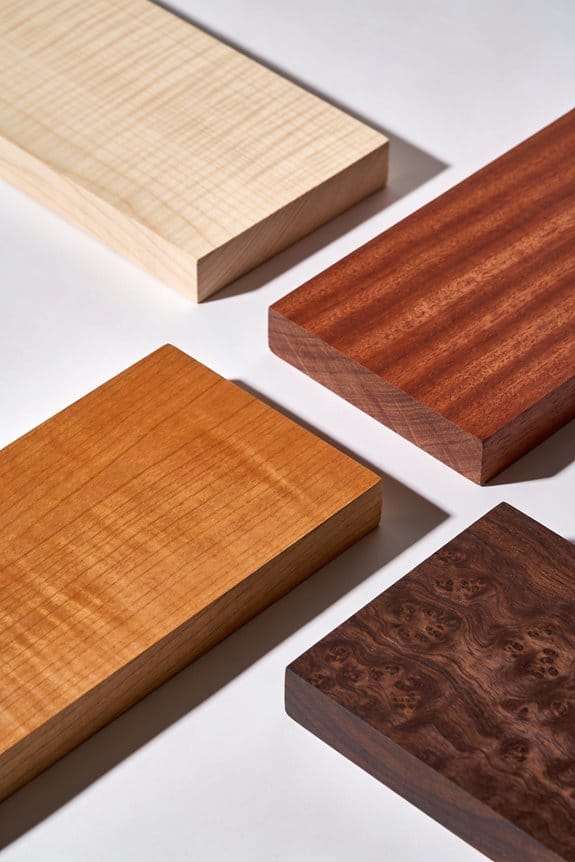
Understanding Guitar Wood Types: Spruce, Mahogany, Cedar, and Rosewood

When we explore guitar wood types—spruce, mahogany, cedar, and rosewood—we reveal the secrets to enhancing our music. Spruce offers a bright tone perfect for strumming, while mahogany brings warmth and a balanced midrange. Cedar responds quickly, making it ideal for fingerstyle players, and rosewood envelops us in rich overtones and deep bass. Each wood has its unique voice, so understanding these differences can greatly impact our playing experience. Let’s discover how to choose the best one for our style!
Key Takeaways
- Spruce is lightweight and strong, providing bright and vibrant tones suitable for various playing styles, with notable variants like Sitka and Adirondack.
- Mahogany produces warm, rich sounds focused on midrange frequencies, offering clarity and a punchy attack that evolves over time.
- Cedar offers quick sound response with warm overtones, ideal for fingerstyle players and suitable for quieter settings.
- Rosewood is known for its rich overtones and deep bass, balancing low notes with sparkling highs for a layered sound experience.
- Routine maintenance, including proper cleaning and humidity management, is essential for preserving the integrity and quality of these tonewoods.
The Importance of Tonewood Selection for Acoustic Guitars

You may be interested


Hey, you know when we grab an acoustic guitar and instantly admire its beautiful design? It’s easy to overlook what’s really behind its sound—the tonewood selection! The type of wood used for the body and the top of the guitar deeply influences how it will sound. For instance, spruce is popular because it has this bright and vibrant tone that works well for many styles. It’s great for everything from strumming chords to intricate fingerpicking.
On the other hand, if you pick up a guitar made of mahogany, you’ll notice it has a warm, rich sound that really brings out those midrange frequencies. This makes it a favorite for blues and folk music. Then there’s cedar, which is fantastic for fingerstyle players due to its quick response. If you’re into something that delivers deep lows and shimmering highs, rosewood might be your go-to. Each type of wood adds its own flavor to the instrument, and that can really shape your playing experience.
Understanding these differences can help you choose a guitar that matches your style and playing technique. It’s also important to consider the strings you use, as factors like string gauge and composition can significantly affect your guitar’s tone and playability. So, next time you’re shopping for an acoustic guitar, keep the tonewoods in mind, and you might find the perfect match for your sound! Speaking of which, let’s chat about how the guitar’s body shape can also influence its tone.
Understanding Spruce: The Standard for Guitar Tops

Hey there! Let’s chat about why spruce is often called the king of guitar tops. It’s this perfect combination of lightweight and strength that makes spruce such a popular choice among guitar makers. For example, take Sitka spruce; it’s super versatile and can handle a wide range of playing styles, from strumming chords to fingerpicking melodies.
Now, if you’re someone who likes to play gently, Engelmann spruce could be right up your alley. It offers a lovely rich sound with vibrant overtones that really adds character to your music. On the other hand, if you’re looking for something more premium, Adirondack spruce brings a quick response and a more complex tone, ideal for those nuanced playing moments. Spruce tops are especially favored because they deliver bright tones that enhance the guitar’s overall sound projection and clarity.
Mahogany Tonewoods: Warmth and Midrange Emphasis

You know, mahogany guitars really stand out when it comes to sound. They have this beautiful warmth that just makes playing them a delight. I’ve noticed that their rich, warm tone emphasizes midrange frequencies, which is why they’re so popular for genres like blues and folk. Whether you’re really digging in with some aggressive strumming or picking gently, the density of mahogany gives every note a punchy attack and impressive clarity.
What I love about mahogany guitars is how well they balance sound. You get a smooth transition between the bass, midrange, and treble notes. It’s pretty neat to hear how they sustain notes without overwhelming overtones. This clarity makes them a go-to choice in recording sessions. Plus, as you play them over time, they actually mature, developing a deeper, richer tone. There’s just something special about how mahogany enhances the entire playing experience. The neck design of a guitar, such as the C-shaped profile commonly paired with mahogany, also significantly contributes to playability and comfort for many players.
Cedar’s Warm Resonance and Quick Response
Hey there! Have you ever picked up a cedar guitar? They really have this unique charm that many string players absolutely love. Known for their warm tone and rich overtones, especially when it comes to Western Red Cedar, these guitars are a dream for fingerstyle players and those who enjoy quieter settings.
What sets cedar apart is its lower density, which leads to a quick response. This means when you strum or pluck a string, the sound comes out almost instantly, allowing you to express all those unique subtleties in your music. For example, if you’re just starting out, you’ll notice that cedar tops open up faster than those made of harder woods, giving you that immediate tonal richness.
Another neat thing about cedar is how it produces a focused sound with a bit less sustain. This makes it versatile across various musical styles. Pair it with softer back and side woods, like mahogany, and you really start to appreciate that warm resonance. It enhances your playing experience, creating this deep, inviting character that just feels right. Upgrading to a high-quality bone saddle can further enhance the tonal richness and clarity of your cedar guitar.
Rosewood’s Rich Overtones and Deep Bass
When we chat about the rich sound of a guitar, rosewood is definitely a wood that comes into play, right? It’s loved by many for its rich overtones and deep bass, which create a beautifully layered sound that really captivates listeners. The density of rosewood really enhances how long notes resonate, giving us that full, warm tone that’s especially great for fingerstyle playing.
Now, while East Indian rosewood is a go-to for a lot of musicians, Brazilian rosewood takes it a step further with even richer tonality. It’s a bit on the pricey side, though, mainly because it’s harder to find. What’s fantastic about rosewood is that its pronounced low notes balance out beautifully with sparkling highs. This combination makes it suitable for everything from folk to jazz. Plus, the natural oils in rosewood make the guitar feel incredibly smooth to play, which is a nice bonus! Additionally, choosing the right guitar case type ensures your rosewood guitar maintains its tonal quality and structural integrity during transport.
Comparing Sound Profiles: Spruce, Mahogany, Cedar, and Rosewood
When it comes to guitar woods, exploring the different sound profiles can feel like a musical adventure. Each wood type—spruce, mahogany, cedar, or rosewood—has its own personality that shapes how the instrument sounds. For example, spruce is known for its bright and clear tone, which makes it super versatile for any playing style. If you’re into strumming or fingerpicking, you’ll find spruce responds beautifully to both.
Mahogany gives you a warm, woody sound, which can really shine in more intimate settings—think soulful ballads or quiet jam sessions. If you’re someone who loves playing soft melodies or singer-songwriter tunes, mahogany might just become your best friend. On the other hand, cedar offers a rich warmth that really brings out the nuances in fingerstyle playing. It’s great for those who enjoy layering delicate harmonies.
Rosewood is a whole different ball game. It brings some serious depth, with powerful lows and bright highs that can really enhance your sound. Musicians often appreciate its complex harmonics, especially when playing more intricate pieces. So, whether you lean towards brightness or warmth, the type of wood you choose can significantly influence your guitar’s tonal balance.
This understanding of guitar woods not only helps you make informed choices but also adds a new layer of appreciation when you hear your favorite musicians play. So, what’s your vibe? Do you lean toward bright clarity, warm intimacy, or something richer?
Additionally, for a complete performance setup, pairing your guitar’s tonal characteristics with a wireless guitar system that offers low latency and high audio quality can make a significant difference in live sound delivery.
How to Choose the Best Wood for Your Style?
Choosing the best wood for your guitar is one of those decisions that can really make a difference in how you play and sound. If you’re going for a bright, punchy tone, you can’t go wrong with a spruce top guitar. Spruce has this amazing dynamic range, which means it responds quickly, making it perfect for all sorts of playing styles—from strumming chords to fingerpicking.
On the flip side, if you’re into warmer sounds, you might want to check out guitars made of mahogany. Mahogany brings out those rich mid-tones, which works wonders in cozy jam sessions or smaller venues. For folks who love fingerstyle techniques, cedar is a fantastic choice. It offers a softer, more complex sound that can really enhance your playing.
And let’s not forget about the back and sides! Rosewood is a popular choice because it gives you deep lows and sparkling highs, creating a beautiful sound that’s rich in tonal qualities. Pairing different woods can lead to some interesting combinations. For example, a spruce top with rosewood back and sides can give you a well-rounded, vibrant sound that’s sure to impress.
Choosing woods that offer the right resonance and tone can significantly enhance your overall guitar playing experience.
Maintenance and Care for Different Tonewoods
Hey there! Let’s chat about taking care of our guitars, especially when it comes to different tonewoods. Each type has its own quirks and maintenance needs that can really affect how they sound over time. For example, if you have a rosewood guitar, don’t forget to give it a good oiling every now and then to keep it hydrated – just like our skin needs moisturizer! This helps prevent the wood from drying out and cracking.
Now, if you’re into mahogany, you’ll want to keep it away from excessive humidity. Too much moisture can cause warping, which is definitely not what you want! Aim for a humidity level between 45% and 55%, and invest in a hygrometer to track it. Speaking of protecting your instrument, if you’ve got a spruce top, consider using UV protectant sprays – they can really help maintain that bright, clear sound by shielding it from sun damage.
And let’s not forget cedar! This one’s softer, so you’ll want to be gentle when cleaning it. A soft cloth works wonders to keep its warm tones intact. Plus, remember to change your strings regularly; this not only makes your guitar more enjoyable to play but also prevents corrosion that can harm the wood. By keeping on top of these care tips, you can ensure your guitar will sing beautifully for many years to come! Now, let’s move on to some cleaning techniques you can implement between those maintenance sessions. Also, consider how upgrading components like a bridge material can complement your guitar’s tonewoods and overall sound quality.
Frequently Asked Questions
What Are the Most Common Guitar Brands Using These Wood Types?
We’ve noticed brands like Martin, Taylor, and Gibson excel in using various tonewoods. Their models reflect artist preferences, sound quality, and construction techniques, offering custom options across both acoustic and electric types within various price ranges.
How Does Humidity Affect Different Guitar Woods?
Humidity affects guitar woods by causing wood expansion and moisture absorption. We’ve found that maintaining humidity balance enhances tone quality and structural integrity, especially during seasonal changes, benefiting sound resonance through appropriate finishing techniques and maintenance tips.
Are There Significant Differences in Cost Among These Tonewoods?
Absolutely, there’re significant differences in tonewood pricing. Premium woods often come with higher manufacturing costs due to rarity and market demand, while budget models use more common woods, impacting resale value and acoustic comparison.
Can I Mix Wood Types in One Guitar?
Absolutely, we can mix woods in a guitar! Combining tonal characteristics enhances sound projection and acoustic qualities. Custom builds often feature hybrid guitars, balancing player preferences with wood stability and striking guitar aesthetics.
How Do Environmental Factors Influence Wood Selection for Guitars?
Environmental factors shape our wood selection for guitars by influencing growth conditions and regional availability. We prioritize sustainable practices, considering wood density, climate impact, and aging effects to guarantee ideal acoustic properties and sound resonance in our instruments.


