As an Amazon Associate, we earn from qualifying purchases. Some links on this site are affiliate links at no extra cost to you. Our recommendations are based on thorough research and editorial judgment.

Understanding String Tension: Light, Medium, and Heavy Gauge

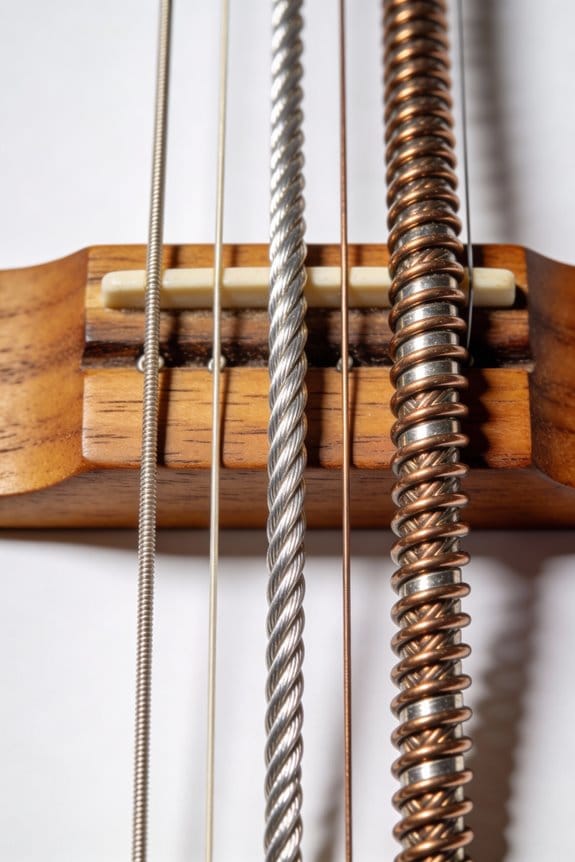
String tension greatly affects our playing experience and sound quality. Light tension strings are easy to handle, making them perfect for beginners or those with less finger strength. Medium tension strikes a balance, offering versatility for various styles. Heavy tension strings, while powerful and rich, demand more effort and can strain our guitars if we’re not careful. Each type has its unique advantages, and exploring these will help us find the perfect fit for our musical journey.
Key Takeaways
- String tension affects sound production and playability, impacting finger fatigue and effort needed for playing.
- Light tension strings are beginner-friendly, producing a softer tone with lower playability effort, but may cause fret buzz if not properly set up.
- Medium tension strings provide a balanced feel, offering clear and warm tones suitable for a variety of playing styles while requiring setup maintenance.
- Heavy tension strings require more effort to play, producing a powerful tone and are ideal for advanced musicians, but may risk damaging vintage instruments.
- Choosing the right tension depends on guitar size and personal preferences, with testing recommended to find the most comfortable and effective option.
What Is String Tension?

You may be interested



String tension is such an interesting topic for anyone who plays a stringed instrument! It’s all about the force that a string puts out when you tune it to a certain pitch, and it really impacts how your music sounds and feels. Imagine if you’re playing guitar: the tension in the strings influences not just the sound you produce, but also how easy or hard it is to play.
So, you’ve got your three main tension levels: light, medium, and heavy. Light strings are great for beginners; they require less pressure to fret, which means your fingers won’t get tired as quickly. Medium tension is like the Goldilocks zone—it’s balanced and works well for a variety of styles. Heavy tension strings, however, bring a rich, powerful tone, but they can sometimes be a bit of a workout for newer players.
Think about this next time you’re at the store: if you pick up a guitar with medium strings versus one with light strings, you’ll immediately notice a difference in how they feel and sound. Figuring out your personal string tension preference can really enhance your playing experience and help you express yourself musically! Next, let’s chat about how to find the right strings for your instrument.
Choosing the right string also involves considering gauge size impact, as medium gauge strings like .011-.052 offer a versatile balance between playability and tone.
Light Tension Strings

Hey! So, when you’re picking out strings for your instrument, light tension strings are definitely a popular choice for a good reason. They have lower tension, which makes them super easy to play—especially if you’re a beginner or if you don’t have a lot of finger strength yet. You’ll find that with these strings, moving around the fretboard feels almost effortless, which is perfect when you’re trying to nail those bowing techniques.
Now, one thing to keep in mind is that light tension strings tend to give off a softer tone. So if you’re jamming with louder instruments, they balance quite nicely without getting drowned out. Just a heads up, though—since they have less tension, you might experience some fret buzz if your guitar setup isn’t right. Making the right adjustments can go a long way in avoiding that.
In the end, light tension strings really do offer a delightful playing experience. If you’re loving the feel, you might also want to explore different materials for your strings—some like nylon, others prefer steel. That could really amplify your sound even more! What do you think? Low tension strings also help reduce finger fatigue, making them ideal for long practice sessions and players with sensitive fingers.
Medium Tension Strings

Hey there! So, let’s chat about medium tension strings. If you’re looking for that sweet spot in string tension, these are the ones that really nail it. They strike a great balance, catering to all kinds of playing styles, which is why they’re a favorite among musicians.
With medium tension strings, you get a lovely tone that’s both clear and warm. It’s like having your cake and eating it too! Whether you’re strumming away at chords or getting into some fancy fingerpicking, these strings have your back. For example, when you pick up your guitar, you’ll find that you don’t have to press too hard, making them comfy for everyone—from those just starting out to seasoned players.
Just a quick tip: if you decide to switch to medium tension strings, take a moment to check your guitar’s setup. Sometimes, different tensions can cause issues like fret buzz. But overall, these strings are a fantastic choice if you’re looking to elevate your playing experience. In fact, strings like the Ernie Ball Medium Aluminum Bronze offer a rich tonal quality that many players love for this very reason. Speaking of playing, let’s move on to how string gauge can also influence your sound!
Heavy Tension Strings
Hey there! Have you ever considered switching to heavy tension strings for your guitar? They can really change the way your music sounds. Unlike regular strings, heavy tension ones feel stiffer, which means you’ll have to dig in a bit more when playing. This added resistance can actually help you achieve a powerful, rich tone that many advanced musicians love. It’s especially good for styles like rock or bluegrass, where a strong sound makes all the difference.
But before you make the switch, keep in mind that heavy tension strings can require some setup tweaks on your guitar. You might need to adjust the neck relief and action height since those strings put more pressure on the instrument. Plus, it’s a good idea to ensure that your guitar is built to handle that added tension, or you could risk damaging it over time. For instance, if you play a vintage guitar, it might be best to consult a professional to avoid any issues. Selecting the right tension level is crucial because high tension strings produce a louder volume and brighter tone, which might suit your playing style better.
Choosing the Right Tension for Your Instrument
Hey there! Let’s chat about string tension and how it really affects your instrument. When picking out strings, it’s super important to consider both the design of your guitar and your own playing style. For example, if you’ve got a smaller guitar, lighter strings will usually work best. But for something bigger, like a Dreadnought, you’d probably want to go for medium to heavy strings to really bring out the sound.
Now, if you’re just starting out or find it tough to press down those strings, lighter tensions are definitely the way to go. They’re easier on your fingers, making it a lot less frustrating while you learn. On the flip side, if you can handle it, heavier strings can give you that extra volume and a richer tone, which can be really satisfying.
A good idea is to try out different tensions and gauges to see what feels right for you. Just make sure to check the manufacturer’s recommendations first to avoid any damage to your guitar. It’s all about finding that sweet spot where playability meets tone! Speaking of sound, let’s also touch on how different picking techniques can influence your overall style. For players focusing on fingerpicking and flatpicking, lighter gauges often enhance expressiveness and comfort without sacrificing tonal quality.
Frequently Asked Questions
How Does String Tension Affect Guitar Intonation?
String tension affects intonation by requiring adjustments in neck angle and hardware stability. Higher tension can cause fret buzz and affect tuning stability, while player preference shapes the ideal balance for best performance and tone.
Can String Tension Impact Guitar Neck Relief?
Yes, string tension definitely impacts neck relief. Adjusting string gauge influences tuning stability implications and can cause fret buzz. We should consider setup recommendations and player preference to guarantee maximum performance and comfort while playing.
What Are the Signs of Incorrect String Tension?
If string tension’s off, we might notice poor tuning stability, diminished projection volume, and compromised tone quality. Finger fatigue can increase, and the string feel or vibration response may feel unnatural, affecting our dynamic range.
Do Different Tunings Affect String Tension Levels?
Yes, different tunings do impact string tension dynamics. We often notice gauge adjustments needed, especially with scale length changes. It affects note accuracy, potentially causing fret buzz and altering string vibration behavior during play.
How Often Should I Change My Guitar Strings?
We should change our guitar strings every one to four weeks, depending on string quality and frequency of use. Environmental factors and user preferences can impact string longevity, affecting performance and maintenance, so let’s find our ideal routine.