As an Amazon Associate, we earn from qualifying purchases. Some links on this site are affiliate links at no extra cost to you. Our recommendations are based on thorough research and editorial judgment.

How Distortion, Overdrive, and Fuzz Differ From Each Other

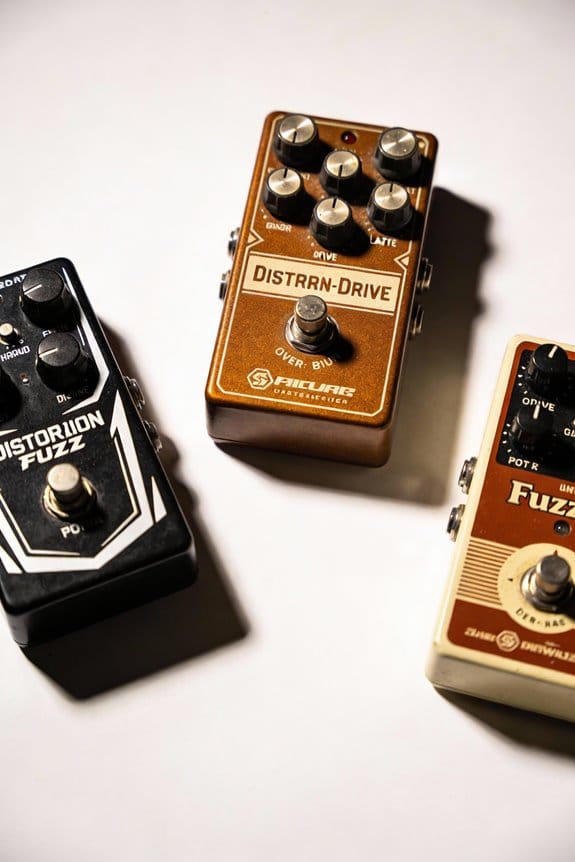
Distortion, overdrive, and fuzz each have unique ways of shaping our guitar sound. Overdrive gently clips the signal for warm, creamy tones, perfect for blues and rock. Distortion pushes gain for a thicker, punchier sound, ideal for heavy genres. In contrast, fuzz creates rich, saturated tones with extreme clipping, often used in psychedelic rock. Understanding these differences helps us choose the right effect for our style, and there’s so much more to explore about how they can enhance our music!
Key Takeaways
- Overdrive produces gentle clipping for a warm, creamy texture, ideal for blues and classic rock.
- Distortion offers increased gain and saturation for a thick, punchy sound suited to hard rock and metal.
- Fuzz employs extreme clipping to create rich, saturated sounds with vibrant harmonics, popular in psychedelic rock.
- Overdrive utilizes soft clipping, while distortion uses hard clipping, and fuzz achieves extreme clipping, affecting their tonal characteristics.
- Each effect has specific practical uses: overdrive enhances warmth, distortion emphasizes power, and fuzz adds thickness and saturation.
How to Choose Between Distortion, Overdrive, and Fuzz Effects?

You may be interested


Choosing between distortion, overdrive, and fuzz can feel a bit overwhelming, right? But figuring out which one’s perfect for your sound can be a lot of fun! Start by considering the type of music you enjoy playing. If you’re into blues or classic rock, an overdrive pedal will give your guitar that warm, smooth tone perfect for those soulful licks. On the other hand, if you rock out with hard rock or metal, you’ll probably want a distortion pedal to give you that crunchy, aggressive edge.
Next, think about how much saturation you’re aiming for. Overdrive tends to keep things smooth and dynamic, while distortion kicks it up a notch with some gritty bite. And if you’re after something really wild and vintage, fuzz pedals are all about that saturated, lo-fi vibe; they work wonders for creating those heavy, thick sounds in experimental or psychedelic music. For instance, consider how artists like Jimi Hendrix used fuzz to produce those distinct, swirling tones in his tracks.
Your gear setup plays a big role too. If you have a tube amp, using an overdrive pedal can enhance its natural break-up beautifully. In contrast, distortion and fuzz can really shape and influence your entire signal chain, bringing out sounds you might not have considered before. So, don’t hesitate to experiment with different pedals—bring a few different ones home from your local shop and see which ones speak to you. It’s all about finding that sweet spot that resonates with your musical style! Many top distortion pedals feature true bypass functionality to preserve your tone when the pedal is off.
Understanding Clipping and Its Impact on Guitar Sound
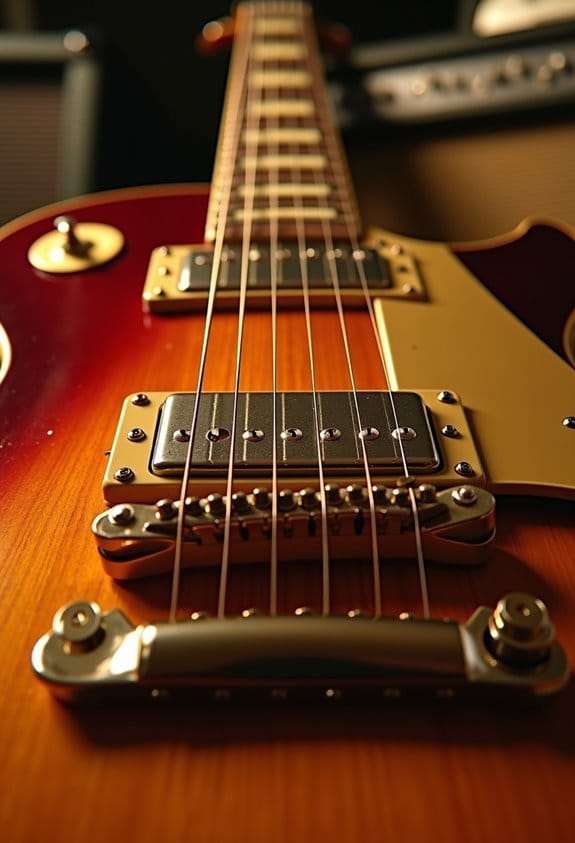
When it comes to shaping our guitar sound, we can’t ignore the importance of clipping. Essentially, clipping happens when the peaks and valleys of an audio signal get chopped off, which adds that captivating distortion to our music. Think of overdrive as soft clipping—it smooths things out and lets the original tone shine through, making it great for adding a little warmth to a clean sound. On the other hand, distortion uses hard clipping. This method creates a more aggressive tone, boosting gain but sometimes sacrificing a bit of clarity.
Now, let’s talk about fuzz. It takes clipping to the extreme, transforming smooth sine waves into jagged square waves. This not only adds a ton of harmonic richness but can also completely change how your guitar sounds. For example, when you hit a power chord with fuzz, you’ll notice it creates a thick, buzzing texture that can completely energize your riffs. Understanding these different types of clipping helps you choose the right pedal for your music style, allowing you to refine your sound just the way you want it. Next, let’s explore how to effectively use these sounds in your playing! Additionally, choosing pedals with true bypass switching helps maintain the clarity of your tone when the effect is not engaged.
What You Need to Know About Overdrive Effects

Hey, let’s chat about overdrive effects! If you’re a guitarist looking to warm up your sound and add some character, overdrive is where it’s at. It’s all about that soft clipping that gives you a musical tone—think of the rich sound you get from cranked tube amps. Pedals like the Ibanez Tube Screamer are super popular because they provide this smooth breakup along with a mid-range boost, making them a must-have, especially in blues and rock genres.
What’s cool about overdrive pedals is that they let you shape your tone. Most have controls for input gain, tone, and output volume, which means you can really customize how your guitar sounds. For instance, if you crank up the gain a bit while fine-tuning the tone knob, you can achieve that sweet, creamy sound that makes solos sing. Other well-known pedals, like the BOSS OD-1 or the JHS Bonsai, give you a variety of Tube Screamer styles to choose from, catering to different tastes and styles. While overdrive pulses with smooth clipping, fuzz pedals offer a gritty, saturated tone that can dramatically alter your guitar’s character.
How Distortion Shapes Your Tone: An Overview
Hey, have you ever thought about how distortion can really transform your guitar tone? Distortion pedals, like those funky Proco Rat or classic BOSS DS-1, take your clean signal and give it a punchy, aggressive sound by clipping it sharply. This means they twist the waveform in a way that adds rich saturation, turning your notes into something that stands out, especially in rock and heavier music.
What’s cool about distortion is it often has higher gain levels than overdrive, which helps create those roaring riffs that many rock guitarists love. Even when you crank up the gain, pedals like the Rat can maintain a surprising clarity, so your notes don’t just turn to mush. It’s kind of like imitating a tube amp, where you get that warmth, but distortion keeps everything tighter and more focused, making it a versatile choice across different styles.
These pedals work their magic with circuits containing op-amps and diodes, which shape the character of your sound. That means you can experiment a ton with your tone and discover what works best for your playing style. Plus, distortion can open up a whole new world for your riffs and solos, giving you the freedom to express yourself creatively on your guitar. Speaking of expression, let’s chat about how to use effects like reverb to enhance your overall sound! Using expression pedals can further elevate your tone by providing precise control over your effects.
The Origins and Unique Sound of Fuzz Effects
Hey there! Let’s talk about fuzz effects, shall we? They really have a unique sound in the world of guitar that you can’t ignore. Coming into popularity in the mid-1960s, fuzz effects are famous for their distinct sonic character, thanks in large part to legends like Jimi Hendrix who really pushed them into the spotlight.
So, what makes fuzz different? Well, they transform sound by heavily saturating waveforms, often morphing them into aggressive square waves. This gives fuzz its raw, biting quality that’s pretty different from other effects like delay or reverb. Originally, fuzz pedals used Germanium transistors, which produced that rich, warm, lo-fi vibe that many players love. Modern versions, on the other hand, often use silicon transistors, making them more reliable. A great example? The Electro-Harmonix Big Muff. It’s celebrated for its thick, saturated tones that really fill out a mix, making it a go-to for musicians.
What’s exciting about fuzz effects is their versatility. You can hear them in blues, rock, and even in some wild synthesizer sound designs. They’re a fantastic tool for adding texture and character to your music. So, if you’re looking to spice up your sound, experimenting with fuzz could really inspire new creative directions! For guitarists looking to preserve the quality of their sound and equipment, using proper maintenance kits can ensure their instruments perform at their best.
Key Differences Between Overdrive, Distortion, and Fuzz Effects
Hey there! Let’s chat about guitar effects today—specifically overdrive, distortion, and fuzz. Each of these effects brings something distinct to the table, shaping your sound in unique ways.
So, overdrive is like giving your guitar a gentle boost. It clips the signal just enough to add a warm, creamy texture without losing the guitar’s natural tone. Think of a classic blues song; that’s the sweet, smooth sound you get with overdrive pedals. A go-to example would be the Ibanez Tube Screamer, which many guitarists love for its ability to enhance their tone seamlessly.
Now, distortion is a bit more intense. It takes that natural overdrive sound and cranks up the gain and saturation to a whole new level. This means that while you get a thicker sound, you might lose some clarity. Imagine those hard-hitting rock anthems—that’s distortion at work! A classic pedal for this sound is the Boss DS-1, known for its punchy distortion that cuts through a mix.
Then we have fuzz, which goes even further with extreme clipping. This effect gives you a rich, saturated sound that’s almost like a musical explosion, packed with vibrant harmonics. If you think of psychedelic rock, those fuzzy guitar tones are exactly what you get with pedals like the Electro-Harmonix Big Muff.
Additionally, similar to how Univibe pedals offer unique modulation effects, each type of clipping and distortion achieves different textures, highlighting how important modulation and tone control are in shaping guitar sounds.
Practical Uses for Each Effect
You know, when it comes to guitar effects, exploring overdrive, distortion, and fuzz can really spice up our playing and creativity. Overdrive is fantastic for blues and rock; it gives that warm, dynamic saturation by really pushing our amp—imagine using a Blues Driver pedal for those soulful solos that just sing. It’s all about that smooth, rich tone that makes your notes pop.
Then there’s distortion, which is your go-to for heavy metal and hard rock. It’s all about cranking up the gain to get those powerful rhythms and screaming solos. Think about classic tracks with massive riffs—like Metallica’s “Enter Sandman”—where distortion really drives the energy.
And let’s not overlook fuzz. It brings a thick, saturated sound that’s a staple in psychedelic rock. It can add a unique texture to your guitar. But it doesn’t stop there; it’s great for giving depth to bass lines and rhythm guitars too. So, if you’re jamming with friends, try blending fuzz with some funky bass riffs—it opens up a whole new dimension in your sound!
For players looking to enhance their signal without altering tone, a clean boost pedal can be an invaluable addition to their setup.
Best Pedals for Distortion, Overdrive, and Fuzz Effects
Alright, let’s chat about how overdrive, distortion, and fuzz can really spice up your guitar playing! Each of these effects brings something unique to the table, and as you get a feel for them, you’ll want to find the right pedals to help you nail those sounds.
If you’re after some solid distortion, the ProCo Rat is a classic choice. It’s super versatile; you can go from a subtle, gritty breakup to heavy, crushing tones with just a few adjustments. Think of it as your go-to for rock anthems where you need that extra bite. Now, for overdrive, many players swear by the Ibanez Tube Screamer. It smooths out your sound with warm, creamy clipping, making it ideal for pushing a tube amp into a delightful, bluesy saturation. You’ll love how it enhances your solos!
And if you’re a fan of fuzz, you can’t go wrong with the Electro-Harmonix Big Muff Pi. This pedal gives you that thick, saturated sound that’s perfect for everything from classic rock to more avant-garde jams. It really brings a unique character to your tone, perfect for solos or intense riffs.
Don’t forget about the MXR Distortion+—it’s uncomplicated but effective, allowing you to dial in just the right amount of grit without overwhelming your sound. With these pedals, you’ll have a fantastic range to work with as you explore the nuances of distortion, fuzz, and overdrive. Additionally, pairing these effects with the right power supply requirements ensures consistent performance and longevity. Ready to experiment with your tone? Let’s move on to some tips for using these effects in your playing!
Tips for Blending Effects in Your Setup
Blending different effects in your guitar setup can be such a fun and creative process! Think of it like cooking; by layering flavors, you create something delicious. A great place to start is by putting overdrive before distortion. This combo can add depth and complexity to your sound because the overdrive boosts the gain on the distortion. So, when you kick in that distortion pedal, you’re getting a fuller texture right out of the gate.
Another cool trick is to use a clean boost pedal. This little gem can increase your volume without adding any distortion. It’s perfect for keeping your tone clear while pushing the amp’s gain with overdrive. If you love those fuzzy sounds, try combining it with classic pedals like the Big Muff and the Fuzz Face. For instance, using fuzz on your rhythmic sections can create a rich, textural foundation, while you lean on distortion for those soaring lead parts.
Don’t forget about tone controls! They’re essential in making sure your effects work harmoniously instead of clashing. Start with lower gain settings too, as they can help prevent muddiness in your sound. This exploration will help you find that sweet spot where everything clicks. As you play around with these tips, you’ll discover how each effect enhances your playing, setting you up for an exciting jam session! Using a multi-effects processor can make blending and switching between these effects seamless and more versatile.
Answers to Your Top Questions About Guitar Effects?
Hey there! Have you ever found yourself scratching your head over all the different guitar effects out there? Let’s chat about a few of the classics: overdrive, distortion, and fuzz. So, overdrive is like a gentle nudge for your guitar’s sound. It soft clips the audio, giving you a warm and smooth tone that’s perfect for blues vibes. Think of an Ibanez Tube Screamer; it’s a favorite among guitarists looking for that sweet, transparent boost.
Now, if you want your sound to pack a punch, that’s where distortion comes in. This effect uses hard clipping, which creates a more aggressive and edgy tone—ideal for rock! A great example is the ProCo Rat pedal, loved for its gritty, powerful distortion.
And then there’s fuzz, which takes things to another level! It really crunches the sound, emphasizing those rich harmonics while often sacrificing some of the fundamental tones. The Electro-Harmonix Big Muff is a legendary choice for that fuzzy, creative output.
Choosing the right effect really comes down to your style and the sound you’re aiming for. So what’s your vibe—smooth, edgy, or somewhere in between? For guitarists looking to explore beyond these, adding modulation effects like flanger pedals can bring unique texture and depth to their tone.
Frequently Asked Questions
What Is the Difference Between Distortion Overdrive and Fuzz?
Distortion, overdrive, and fuzz differ in sound profiles and creative applications. We can explore various pedal types, technical considerations, and tone settings, each catering to different music genres while reflecting their unique historical context.
How Does Overdrive Differ From Fuzz?
Overdrive pedals give us that beloved subtle warmth, while fuzz pedals transform our sound dynamics into fuzzily aggressive tones—perfect for classic rock. It’s all about tone shaping and gain levels, especially when we’re pedal stacking!
Did Eddie Van Halen Use Overdrive or Distortion?
Eddie Van Halen expertly used both overdrive and distortion in his gear. His tone shaping created a signature sound that influenced live performances and inspired many with guitar effects, showcasing his innovative technique throughout his musical journey.
Which Comes First, Fuzz or Overdrive?
We usually place the fuzz pedal first in our effects chain to preserve its unique characteristics. This setup enhances tonal qualities, allowing our overdrive settings to create the best combinations for a rich sound comparison.


