As an Amazon Associate, we earn from qualifying purchases. Some links on this site are affiliate links at no extra cost to you. Our recommendations are based on thorough research and editorial judgment.


How to Properly Store Guitars for Short and Long Term

To properly store our guitars for both short and long-term, we must focus on humidity and tension management. For short-term storage, we can loosen the strings slightly, keep our guitars in a hardshell case upright, and guarantee a controlled environment around 40-60% humidity. For long-term care, it’s essential to further reduce tension, use case humidifiers in dry climates, and regularly inspect our instruments. Stick with us to uncover important maintenance tips that guarantee our guitars stay in top shape!
Key Takeaways
- For short-term storage, loosen strings by a half-step to relieve neck tension and store the guitar upright in a hardshell case.
- Maintain humidity levels between 40-60% using room and case humidifiers to prevent wood damage during storage.
- For long-term storage, significantly detune the guitar and ensure it’s kept in a climate-controlled environment away from heat sources.
- Inspect and clean the guitar thoroughly before storage, replacing old strings and removing batteries to avoid corrosion.
- Regularly check the guitar and storage conditions to prevent environmental damage and ensure it remains ready for play.
Why Proper Guitar Storage Matters
You may be interested


Hey there! Let’s talk about proper guitar storage for a minute—it really matters more than you might think. You see, if you don’t store your guitar right, it can end up getting deformed from the tension of the strings or damaged by the environment. For example, keeping your guitar in a hardshell case is a smart move because it protects it from accidental drops or moisture buildup.
Now, here’s the scoop on humidity and temperature: try to keep the humidity level between 40-60% and the temperature around 70°F. If it gets too dry, your frets could start feeling sharp and the neck might bow, which isn’t great for playability. On the flip side, too much moisture can invite mold or cause the wood to warp. A simple way to monitor humidity is by using a hygrometer, which you can find online or at a local music shop. Using a hard-shell guitar case with plush, foam-padded interiors also helps safeguard your instrument against moisture and bumps during storage.
Essential Considerations for Managing Humidity
Hey there! So, managing humidity is super important when it comes to keeping our guitars in tip-top shape. Ideally, we want to keep the humidity levels between 40% and 60%. Why’s that? Well, if it gets too dry, the wood can warp, the frets might feel sharp, and the neck can bow—none of which is good news for our beloved instruments!
When winter rolls around and the air gets dry, grabbing a soundhole humidifier can really help. These little guys work by keeping moisture right inside your guitar. Alternatively, a good room humidifier can maintain a nice balance in your practice space. Just remember, though, too much humidity (over 60%) can cause mold, which is a whole other mess you don’t want to deal with.
That’s where humidity monitoring tools become your best friend! Keeping an eye on the levels—and I recommend something like D’Addario’s Humiditrak—makes sure your guitar stays comfortable. Plus, investing in cases with built-in humidifiers offers added protection against temperature swings. It’s all about keeping our instruments happy and sounding great! Speaking of which, let’s talk about tuning and how it affects your playing experience.
For the best results, pairing your humidifier with a reliable hygrometer ensures you maintain the ideal humidity range consistently.
Key Tips for Short-Term Guitar Storage

Hey there! So, if you’re thinking about short-term guitar storage, let me share some tips to keep your instrument in top shape. First off, you want to loosen those strings a bit—just a half-step or so. This simple trick helps take the pressure off the neck and prevents any potential bowing. Trust me, it makes a world of difference!
Next, it’s best to store your guitar upright in a hardshell case rather than lying it flat. When it’s upright, you avoid putting unnecessary pressure on the neck and body, which can lead to unwanted damage. Just think about how a book on a shelf stays solid compared to one lying flat—that’s the idea!
Now, let’s chat about the environment. Aim to keep your guitar in a climate-controlled space with humidity levels between 40-60%. If it’s particularly dry outside, using a case humidifier can be a lifesaver. Imagine it like adding a little moisture to the air, just like a plant needs water to thrive. Also, make it a habit to check on your guitar every once in a while for any signs of change—better safe than sorry, right?
Using a quality humidity control system specifically designed for guitars helps maintain the ideal moisture range of 45-55%, which is crucial to prevent wood cracking and warping.
With these simple steps, your guitar will be ready to play when you are! Now, let’s talk about how to maintain your guitar’s finish and overall appearance.
Key Tips for Long-Term Guitar Storage
Hey there! So, if you’re thinking about storing your guitar for the long haul, let’s make sure it’s in tip-top shape, right? A hardshell case is your best friend when it comes to long-term guitar storage. It not only protects your instrument from physical damage but also helps keep the humidity levels just right—ideally between 40-60%. Here’s a quick tip: when you put your guitar away, try loosening the strings a bit, like a half step or two. This helps ease the tension on the neck and prevents any unwanted warping, but don’t go overboard—just keep enough tension to maintain the neck’s shape.
Now, let’s chat about where you store your guitar. A climate-controlled environment is super important. You want to steer clear of those heat sources like radiators or fireplaces, and avoid placing it against outside walls since they can experience temperature swings. If you live in an area where winters dry things out, think about using a case humidifier to keep the moisture in check. Using a humidifier with real-time monitoring capabilities can help maintain ideal humidity levels effortlessly. And don’t forget to check in on your guitar every now and then. It’s a good practice to inspect its condition, so it’ll be ready to play whenever you are!
How to Manage String Tension During Storage
Hey there! So, when it comes to storing our guitars, managing string tension is super important. If you’re just putting your guitar away for a short while, loosening the strings by one or two half steps can be a great move. This way, you take some pressure off the neck but still keep enough tension to prevent bowing. It’s a simple trick that can really help in the long run.
Now, if you’re prepping for long-term storage, you might want to detune your guitar more significantly. This gives your neck a break from the tension and keeps its shape intact. Think of it like giving your guitar a nice little vacation! Just make sure to adjust the truss rod too—that’s the crucial part that keeps everything balanced.
And here’s a tip: make it a habit to check your string tension every so often, even when it’s stored. Sudden changes in tension can affect the neck relief and overall condition of your instrument. Remember, the goal is to keep everything in a comfortable range. It’s all about protecting your guitar so you can enjoy it even more when you take it back out!
For optimal guitar preservation, also consider the impact of material durability when selecting replacement parts if you plan upgrades during storage.
Guitar Storage: Regular Maintenance Tips to Follow
Taking care of our guitars goes beyond just worrying about string tension; it’s all about keeping them in tip-top shape overall. To store guitars properly, we need to pay attention to the humidity levels around them. Ideally, we should aim for a comfortable 40-60% humidity. If your space tends to dry out, you can use a room humidifier or even soundhole humidifiers to help things out. Using a two-way humidity control system can precisely maintain the ideal environment for your instrument.
Before you tuck your guitar away for a while, do yourself a favor and swap out those old strings. It’ll keep them from corroding and ensure that when you’re ready to play again, it sounds fantastic right away. Also, don’t forget to crack open the case occasionally to let some fresh air in. This quick move helps prevent that icky moisture buildup that can lead to mold.
Lastly, check in on your guitar’s setup every now and then. Just a little adjustment to the neck relief or string height can make a world of difference. Doing this means that when you finally pick up your guitar again, you’re all set to jam without any issues! Speaking of which, once your guitar is ready, let’s chat about the best practices for actually playing it safely.
Innovative Guitar Storage Solutions for Space Constraints
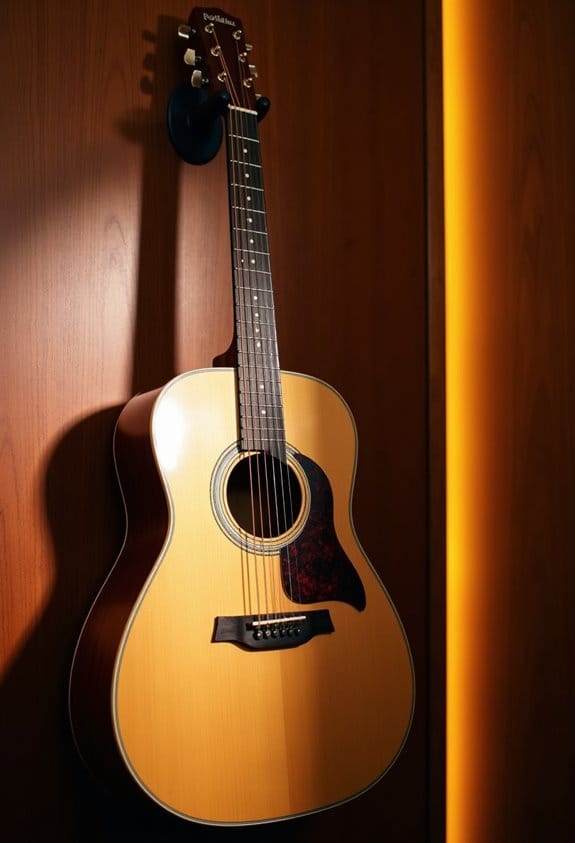
Hey friend! You know how tricky it can be to find the right space for our guitars, especially when we’re dealing with limited room. That’s why innovative guitar storage solutions are so important—they help keep our precious instruments safe and within reach. For instance, have you ever thought about using wall hangers like the String Swing Guitar Keeper? They allow you to display your guitars beautifully, even in their cases, all while freeing up floor space for other things.
Another fun idea is to repurpose old furniture, like an entertainment center, into a cool guitar storage area. It not only serves a practical purpose but also adds some character to your room! Vertical storage is also a smart approach; stacking your guitars upright can make a huge difference in tight spots. Plus, those compact guitar stands are a great way to keep your instruments ready to grab whenever inspiration strikes, without worrying about them tipping over.
And if you’re concerned about keeping your guitars safe, consider investing in a heavy-gauge-steel rifle safe. They’re perfect for protecting your guitars from theft and environmental damage. Proper storage also helps maintain the guitar’s wood materials and structural integrity for optimal sound quality. So, with all these options, there’s really no need to compromise on storing your instruments. What do you think might work best for your space?
What Should You Do Before Storing Your Guitar?
Hey there! So, before we put our guitars into storage, there are a few important steps to take to make sure they stay in tip-top shape. First off, it’s a good idea to give your guitar a once-over for any repairs or maintenance it might need. You want to make sure it’s in prime condition before it sits idle. For example, check for any loose hardware or issues with the neck.
Next, don’t forget to swap out those old strings. It’s not just about sound; rusty strings can corrode over time, especially during storage. If you’ve got an electric guitar or a bass, remove the batteries to prevent any leakage that could damage the electronics.
After that, give your guitar a thorough cleaning. A little polish goes a long way, and make sure the case is dry to protect it from humidity. If it’s spent too much time in a damp environment, it could warp or develop mold.
Finally, it’s a great practice to check on your guitars every so often, just to keep an eye on their tuning stability and humidity levels. It’s a simple way to ensure they’re ready to rock when you come back for them! Now, let’s talk about how to maintain your guitar’s sound quality while it’s in storage. Replacing strings regularly is recommended to maintain consistent performance and sound quality even after storage.
Frequently Asked Questions
How to Store a Guitar for a Long Time?
To store a guitar long-term, we should guarantee temperature stability and humidity control. Loosening the strings helps, and placing it in a hardshell case with a humidifier protects against environmental fluctuations. Let’s keep it safe!
What Is the 80 20 Rule for Guitar?
The 80/20 Rule for guitar encourages us to focus on essential techniques that yield the most progress. By prioritizing guitar maintenance and humidity control, we can sharpen our skills efficiently and protect our instruments.
Should Guitars Be Stored Flat or Upright?
We should always store guitars upright because it offers numerous benefits, protecting their necks and bodies. Storing them flat has disadvantages, like increased risk of deformation and damage. Let’s keep our instruments safe and secure!
How Long Can a Guitar Be Left Unstrung?
When it comes to our guitars, we shouldn’t leave them unstrung for more than a few months. Regular maintenance checks are essential to address string tension concerns and guarantee long-term health. Let’s keep them safe!