As an Amazon Associate, we earn from qualifying purchases. Some links on this site are affiliate links at no extra cost to you. Our recommendations are based on thorough research and editorial judgment.


Step-by-Step Guide to Cleaning Your Guitar Fretboard

Cleaning our guitar fretboard is vital for maintenance and playability. First, we need to identify our fretboard type—rosewood, ebony, or maple. Next, we gently clean it using the right techniques. For rosewood and ebony, we’ll use a damp microfiber cloth and fretboard cleaner, while maple only needs a soft, dry cloth. After cleaning, conditioning replenishes moisture and natural oils. Avoid common mistakes like using household cleaners. Stick with us, and we’ll explore more tips to keep our guitars in top shape!
Key Takeaways
- Remove the strings before cleaning to access the entire fretboard easily and thoroughly.
- Identify your fretboard material (rosewood, ebony, or maple) to use the appropriate cleaning products and techniques.
- Use a damp microfiber cloth for rosewood and ebony, and a soft, dry cloth for maple to wipe away dirt and grime.
- Condition the fretboard after cleaning with lemon oil or fretboard conditioner to replenish the wood’s natural oils and moisture.
- Establish a routine for cleaning every six months or with each string change to maintain playability and appearance.
Why You Should Regularly Clean Your Guitar Fretboard

You may be interested



Hey! You know, when it comes to keeping your guitar in great shape, cleaning the fretboard is one of those essential things that often gets overlooked. It’s super important because dirt and oils can really build up and make it tough to play smoothly. I can’t tell you how many times I’ve noticed my fingers slipping or not hitting the right notes just because the fretboard was grimy.
Regularly cleaning and conditioning your fretboard not only keeps it functional but also makes it look fantastic. If you’ve ever used a fretboard conditioner, you know it helps maintain the natural oils of the wood. This is crucial because without those oils, the wood can dry out and even crack! And let’s face it, nobody wants sharp fret ends scratching their fingers while they play.
I usually recommend cleaning your fretboard every six months, or even more often if you’re playing frequently or in different environments like humid or dry spaces. A good rule of thumb is to give it a wipe down whenever you change your strings. It just takes a few minutes, and it makes a world of difference. Plus, when your fretboard is clean, you’ll feel more confident playing, which is what it’s all about! Speaking of confidence, let’s chat about string maintenance next—it’s just as important as keeping that fretboard tidy! For best results, consider using lemon oil fretboard care products designed specifically to nourish and protect the wood without damaging it.
How to Identify Your Fretboard Type Before Cleaning

Hey there! So, before we jump into cleaning your guitar fretboard, it’s super important to figure out what type you have. Understanding whether your fretboard is made of rosewood, ebony, or maple will help you get the best results when you clean it.
Let’s start with rosewood—it’s typically darker and features beautiful grain patterns. When you clean it, it’s best to go easy and maybe use some oil to condition it now and then. For instance, a few drops of lemon oil can really bring out its natural beauty. Now, if you have ebony, you’ll notice it’s denser and has a glossy finish, so you’ll want to treat it gently. A soft cloth and a little bit of specialized fretboard cleaner work wonders, helping to keep that sharp look without risking any damage.
Now, finished maple is a different story. Because it’s lacquered, cleaning is a breeze! Just grab a damp cloth, wipe it down, and you’re done—no oils needed! Understanding these different fretboards really helps you pick the right approach, whether you’re using oils for rosewood and ebony or simply wiping down maple. Using natural oils ensures optimal care and protects the wood from drying out and cracking. So, let’s keep your fretboard shining the way it deserves! Looking forward to getting into the actual cleaning steps next!
Cleaning Techniques for Various Fretboard Materials

Hey there! Keeping your guitar fretboard clean is super important for its maintenance, and it really depends on what material you’re dealing with. If you have a rosewood or ebony fretboard, I recommend grabbing a damp microfiber cloth and a good fretboard cleaner like Jim Dunlop. Just gently wipe it down to get rid of the grime, and after that, don’t forget to put a little lemon oil on there—it helps condition the wood and keeps it looking nice and healthy.
For maple fretboards, which are often finished, you can keep things simple. Just use a soft, dry cloth, and if you have some stubborn dirt, a little guitar polish will do the trick. Remember, you want to steer clear of oils with these, as they can mess with the finish. And here’s a pro tip: always take off the strings before you start cleaning; it makes the whole process so much easier to manage.
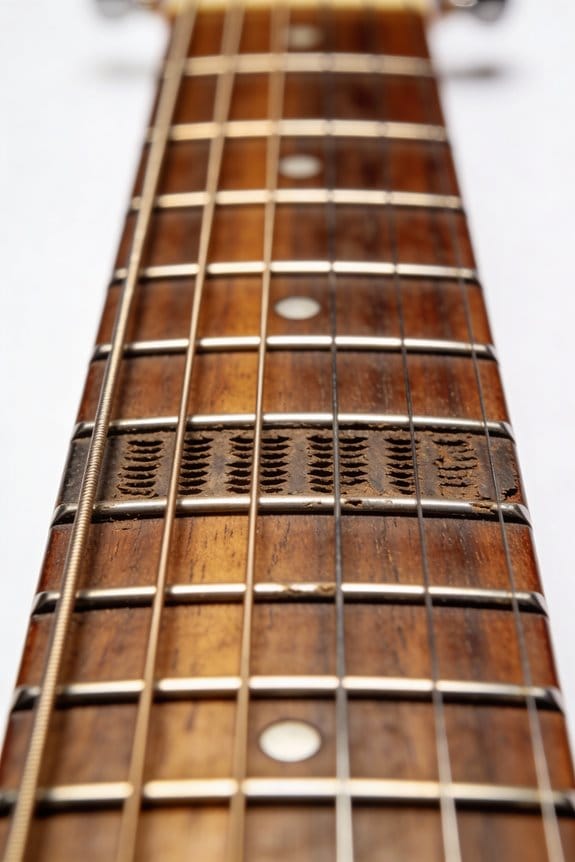
Now, if you’re tackling some built-up dirt on unfinished wood, you can carefully scrape it off with a razor blade held at a 90-degree angle. Just remember, a light touch goes a long way! Many guitar maintenance kits include fretboard oil and cleaning cloths that simplify this process and keep your fretboard in excellent condition. With all these cleaning tips, your fretboard will be in tip-top shape, ready for your next jam session! What do you say we move on to how to clean the body of your guitar next?
Why Conditioning Matters After Fretboard Cleaning
Alright, so after we clean our guitar fretboard, it’s super important not to skip the conditioning step. Conditioning helps to replenish the moisture and natural oils in the wood, which is key because if we let it dry out, the fretboard can crack. If you’re playing a guitar with an unfinished fretboard, like rosewood or ebony, conditioning is essential to keep those beautiful colors and grain patterns looking fresh. Plus, a well-conditioned fretboard makes playing a lot smoother—your fingers can slide around easily instead of sticking.
Think about it this way: if you live in a dry area or you tend to sweat a lot when you play, you might want to condition your fretboard more often than the usual every six months. If you’re feeling like your fingers are getting stuck or the wood looks a little dull, it might be time to give it some love. By taking these simple steps, you’re not just keeping your fretboard healthy—you’re also ensuring it feels great to play.
Using durable construction materials in your guitar can also help protect it from environmental stress, complementing your conditioning routine.
Now that we know how important conditioning is, let’s talk about the best products and techniques for maintaining that fretboard.
Avoid These Common Mistakes in Fretboard Care
Caring for your guitar’s fretboard is super important, and it’s one of those things where you really don’t want to just wing it. Trust me, skipping a few crucial steps can lead to some pretty costly mistakes down the line! First off, always make sure to remove the strings before you start cleaning. This gives you full access to the fretboard without worrying about accidentally damaging anything.
Next, avoid using those household cleaners that seem convenient. They can leave behind sticky residues that mess up the wood’s finish. Instead, go for a dedicated guitar fretboard cleaner or simply use a damp cloth to wipe away dirt. When it comes to oils or conditioners, don’t go overboard. Just a few drops will do—apply them, then wait a bit to let the fretboard soak it in properly.
Lastly, steer clear of abrasive materials like steel wool or rough sponges. They can scratch up your fretboard, which is the last thing you want. To keep it in great shape, think of regular maintenance as a little TLC for your guitar to ensure it sounds its best. Now, let’s chat about how to keep the strings in top condition too! Using a notched straight edge regularly helps monitor fretboard flatness and neck relief to avoid costly fret issues.
Frequently Asked Questions
How to Properly Clean a Guitar Fretboard?
To clean our guitar fretboard properly, we’ll gather essential tools, identify fretboard wood types, and heed cleaning supplies overview. Regular maintenance every six months helps avoid common mistakes and keeps our instruments in top shape—watch for wear signs!
What Is the 3 Fret Rule?
Like a gardener tending to their plants, we’ve found the “3 Fret Rule” essential for fretboard maintenance. Cleaning every three hours of play keeps our strings fresh and extends wood life, ensuring our music flourishes beautifully.
How Do I Clean My Fingerboard?
To clean our fingerboard, we’ll use eco-friendly cleaning options, the best fretboard oils, and essential cleaning tools. Regular maintenance benefits our guitar’s performance, ensuring it stays in top shape with our fingerboard care routine.
How to Clean Fretboard Gunk Without Removing Strings?
We can tackle fretboard gunk without removing strings! By using soft brushes and safe scrubbing techniques, we discover the best cleaning products and effective gunk removers, ensuring our guitars remain in excellent condition for years.